


NEW HANOVER COUNTY — The county is exploring moving its property revaluations to a two-year cycle after the strife caused this year by soaring home prices, though some commissioners were concerned more frequent assessments would not be the right response.
READ MORE: NHC cuts $36M and 70 people to downsize tax rate, abandons pre-K, food co-op
ALSO: New Hanover County property values increase 67% on average in last four years
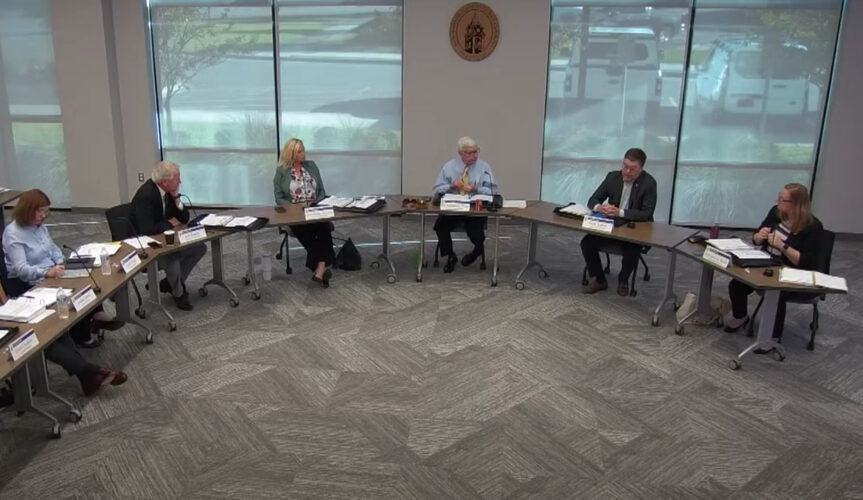
“No one called me and said: ‘The way you can solve this is to reevaluate my property every two years,’” Commissioner Dane Scalise said at the Oct. 16 meeting, though he noted he wasn’t completely against the idea.
County Manager Chris Coudriet explained he asked staff to consider going every two years instead of four, in the wake of the 2025 evaluation. Property values increased 67% on average, 63% in Wilmington and 77% in Wrightsville Beach.
“Our property values doubled in eight years and that’s created sticker shock, it’s created conflict for homeowners,” Coudriet told the commissioners. “The only way to take the friction out of that is to have a more frequent revaluation.”
New Hanover County currently operates on a four-year cycle. Most of the state — 49 counties — use this frequency, though 31 counties use the state’s requirement of eight years. If a more frequent cycle is approved by the New Hanover County commissioners, it would be one of two counties to have a two-year cycle; Wake County is already moving from three to two years.
“I think four years is the sweet spot,” Vice Chair LeAnn Pierce said. “I think we’re in the right place and I’m not inclined to change that.”
If passed, the two-year cycle wouldn’t begin until 2031 to give the county time to prepare; the next revaluation would occur in 2029 as currently scheduled.
The process to begin a two-year cycle would need to begin next year though, as the tax department would need to hire seven additional staff members in the next fiscal year. This would constitute an additional $550,000 annual cost, on top of around $40,000 in supply and operational costs every two years for the revaluation.
Commissioner Stephanie Walker asked if the county had any projections for property values in two years, and thus how much the county would gain in revenue, but staff didn’t have that information. The county is projecting nearly $460 million in ad valorem revenue this year.
Commissioners Rob Zapple, an NHC representative on the North Carolina Association of County Commissioners, noted conversations about more frequent revaluations are happening in many counties experiencing growth.
“I think there are a lot of people still moving here, I think our economy is still on the upswing, I think we’re going to continue to see market increases there,” Zapple said. “This is one way to kind of address that reality.”
Property is reassessed in order to bring taxes in line with inflation and market growth (or the opposite in cases of recession) so the citizenry isn’t over or under-charged for government services. The further a county gets away from a revaluation year, typically the less accurate the tax is; this discrepancy becomes more pronounced in high-growing areas like New Hanover County.
Thus, to bring in the same amount of money — or more when the government expands services — with the same property values, municipalities have to raise their ad valorem tax rate. The City of Wilmington demonstrated when it raised its tax rate by four cents between 2021 and 2024; after the 2025 property revaluation, it was able to reduce it from 42 cents to 28.25 cents.
New Hanover County was able to keep its rate at 45 cents over the last few years, though staff admitted it was a tight squeeze in the final year before revaluation.
Despite New Hanover County being able to reduce its tax rate based on the surge in property values, the commissioners fielded hundreds of complaints from homeowners about their price increase. The pressure to choose a revenue neutral rate — meaning it brings in the same amount of money as last year — was high, though the choice wasn’t that simple. The county had approved more spending than it anticipated in its 2024-2025 budget ordinance, thus requiring a $36 million reduction in funding at the time to reach revenue neutrality — or 30.6 cents
With the two-year revaluation cycle, the property value would be less of an affront and give them more assurances in the revelation process, which could reduce the number of appeals property owners submit contesting their value. The tax department has received 5,800 appeals this year.
Pierce thought differently.
“I think every two years our citizens are going to feel like they have to fight the government to keep their tax rate down and I’m concerned about that,” Pierce said. “Or are we trying to desensitize them to realize every two years your taxes are going to go up? Maybe in the other two years we didn’t evaluate it they would’ve paid the same property tax.”
While framed as a way to ease property owner woes, Scalise pointed out the more frequent process would help the government collect more revenue without having to raise its property tax, which often receives backlash from residents.
Zapple said he didn’t see it that way, noting it would increase the tax mechanism’s sensitivity to the market.
“I just think it’s a more fair way of doing it and eliminating that shock value,” Zapple said.
Walker agreed, though she said she didn’t think values would increase as much the next go-round. She said, ultimately, commissioners can’t control the market, only their alignment with it.
“If [the market] is cooling down, maybe it’s not a good idea,” Walker said.
The commissioners didn’t take a vote on the issue, Scalise noting he would like to hear from constituents on the issue before proceeding.
Coudriet said if the board wanted to move forward with the plan presented, it would need to decide sooner rather than later, else risk pushing back the implementation timeline.
“We will recommend where we think the majority of the board is, but it would have been likely my recommendation to you to accelerate it for the reasons Mr. Zapple spoke to,” Coudriet said. “This has been an issue the board has wrestled with multiple times because the default is eight years, at some point the policy a board made a decision to go to five, to delay to four, and now, is there, based on the market conditions the predicate to accelerate?”
[Ed. Note: A previous version of this article reported the City of Wilmington tax rate was 19.95 cents per $100 of value in 2021; the correct rate is 38 cents. PCD regrets the error.]
Reach journalist Brenna Flanagan at [email protected].
Want to read more from PCD? Subscribe now and then sign up for our newsletter, Wilmington Wire, and get the headlines delivered to your inbox every morning.
