


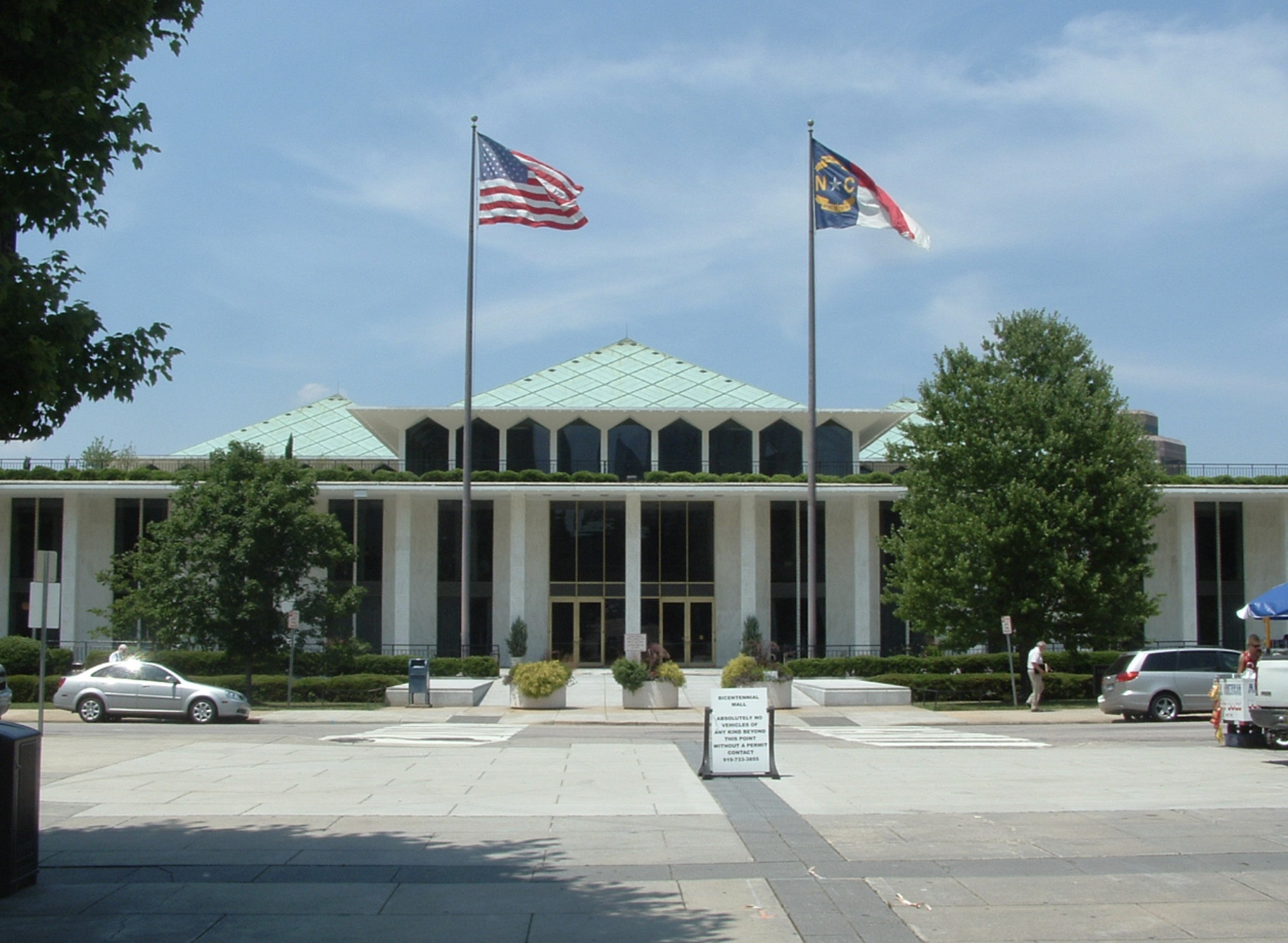
NORTH CAROLINA — Eight bills vetoed by Governor Josh Stein were overridden in both the North Carolina House and Senate today, including immigration enforcement, energy policy and firearm regulations. To successfully override the governor’s vetoes, the House needed at least one Democratic vote to reach the three-fifths majority.
READ MORE: Sen. Michael Lee’s anti-DEI bill advances in NC Senate, revives language from rejected bill
ALSO: State bill targeting immigration enforcement advances, draws criticism from activists
Among the bills whose vetoes were successfully overridden by both chambers, and thus passed into law, were:
- House Bill 318, “The Criminal Illegal Alien Enforcement Act”
- Senate Bill 266, “The Power Bill Reduction Act”
- House Bill 193, “The Firearm Revision Act”
Locally, Republican House members from Pender, New Hanover, and Brunswick counties consistently voted to override each of these three major bills (H.B. 318, S.B. 266, and H.B. 193), while Democratic Rep. Deb Butler (D-New Hanover) voted to sustain the vetoes.
In the Senate, Sen. Michael Lee (R-New Hanover), Sen. Bill Rabon (R-Brunswick), and Sen. Brent Jackson (R-Pender) voted in lockstep with their party to override the vetoes.
The Criminal Illegal Alien Enforcement Act
House Bill 318, titled “The Criminal Illegal Alien Enforcement Act”, was overridden by both the House (72-48) and the Senate (30-19) on Tuesday. H.B. 318 expands local law enforcement’s role in working with federal immigration officials like Immigration and Customs Enforcement.
Specifically, H.B. 318 will now require all county jails and judicial officials to check the immigration status of individuals arrested for any felony or a broad list of serious misdemeanors — impaired driving, stalking, and sexual battery included. If legal status isn’t confirmed by local law enforcement, ICE must be notified.
The bill was proposed on March 5 by primary sponsors House Speaker Destin Hall (R-Caldwell), Rep. Carson Smith (R-Pender), Rep. Brenden Jones (R-Columbus), and Rep. Brian Echevarria (R-Henderson), along with numerous other Republican co-sponsors. The bill first passed the House on April 29 with a vote of 70-45. It then passed the Senate on June 10 with a vote of 26-17.
Gov. Stein vetoed the bill on June 20, stating he could not sign it because it would “require sheriffs to unconstitutionally detain people for up to 48 hours after they would otherwise be released.”
Stein is referring to if ICE issues a detainer (a request to hold someone), jails must hold that person for up to 48 hours starting from their regular release time, even if local charges are dropped or bail is made. Because the law expands the types of crimes triggering immigration checks and allows longer detentions based solely on ICE requests, local law enforcement is now more directly involved in federal immigration enforcement.
Among proponents of the override, Rep. Carla Cunningham (D) from Mecklenburg County stood out as the sole Democrat to cast a supporting vote. She asserted that immigrants arriving in the U.S. should embrace American culture, laws, and language through adaptation and assimilation, rather than seeking isolation or imposing their cultural norms.
“We have been naive. We have been exploited and abused by the different tactics to gain citizenship in America,” Cunningham stated. “It’s time to wake up. Global migration in the past was not projected to be as it is today. We must establish new rules to address the distinct type of migration that we are facing in our country, state and cities. It’s time to turn the conveyor belt off and adopt a global migration suitable for the times that we’re in.”
Rep. Jordan Lopez (D), also from Mecklenburg County, disagreed. He spoke out against the bill during discussion, stating he was in support of the governor’s veto and “immigrants, regardless of their status, do not inherently make our communities less safe.”
“I know that it makes a good message for you. It gets your people riled up,” Lopez said. “Some of you have tweeted about it every single day since we left this city without passing a budget to get retweets, and that’s cute, but I know … none of that gets us closer to building sustainably, safer communities that all of our constituents would prefer, and they see right through the messaging.”
The bill will become effective on Oct. 1 to allow counties, jails and judicial officials time to prepare for and implement the new requirements.
The Power Bill Reduction Act
The House and Senate also voted to override the veto on Senate Bill 266, “The Power Bill Reduction Act”. The House voted 74-46 and the Senate voted 30-18.
S.B. 266 was championed by Republican leadership, including Senate Leader Phil Berger (R-Rockingham County) and Representative Dean Arp (R-Union County). It was originally introduced in March as a bill for Hurricane Helene relief, but its focus was significantly amended and championed by Arp in early June to reach its current form.
As previously reported by PCD, the bill eliminates North Carolina’s 2030 carbon emissions reduction target for Duke Energy and allows the utility to begin charging customers for the costs of new power plants while they are still under construction, instead of after they are completed. It also shifts a larger portion of the costs for power purchased from other sources, such as out-of-state energy grids, to residential customers.
Wayne County’s Rep. John Bell (R) voted to overturn the veto, arguing the bill’s primary purpose is to save consumers money on their electric bills. He cited nonpartisan reports from the North Carolina Utilities Commission which claim the bill would “save ratepayers $13 billion”, and dismissed criticisms from “special interest groups.”
In a press release, Donald Bryson, President and CEO of the John Locke Foundation, a conservative think tank, commended both chambers for overriding the veto.
“By overriding this veto, the General Assembly is standing up for energy affordability and sound economic policy,” Bryson stated. “North Carolinians deserve an energy strategy that prioritizes cost, reliability, and transparency — not one driven by expensive, arbitrary mandates.”
Guilford County Rep. Mary Price Harrison (D) argued against an override. She said the bill is detrimental to the environment by removing the 2030 carbon reduction goal, increasing consumer utility bills, and risks thousands of clean energy jobs. She countered Bell’s money saving claim, stating the bill will lead to rate increases between $19 and $23 billion based on independent analyses.
“Our planet is on fire. Look at the flooding we had in Chapel Hill two weeks ago, $50 million worth of damage in a simple rain event,” Harrison stated. “Look at Helene. Look what happened in Texas, all of our hurricanes, 1,000-year events happening every year. We have got to reduce our dependence on carbon and reduce our carbon emissions.”
While proponents like Bell cite NCUC projections of $13 billion in savings for ratepayers, opponents, like Harrison, refer to independent analyses suggesting the bill will lead to rate increases between $19 and $23 billion through 2050, primarily due to reliance on volatility priced natural gas.
The bill takes effect immediately.
The Firearm Revision Act
The veto of the “Firearm Revision Act” (H.B. 193) was overridden by both the House and the Senate. The House voted 72-48 to override, and the Senate followed with a 29-19 vote. The bill authorizes certain employees and volunteers at nonpublic, private schools to carry firearms or stun guns on educational property under specific conditions, and strengthens protections against threats to elected officials.
H.B. 193 was filed in the House on February 25 and is a Republican-backed bill. Primary sponsors included Rep. Jeff McNeely (R-Iredell). Proponents like McNeely argued the bill provides a low-cost way for private schools to enhance security and protect students, especially those that cannot afford to hire dedicated school resource officers.
More specifically, it:
- Permits employees or volunteers at nonpublic schools to carry firearms or stun guns on campus, provided they have written school authorization, a concealed handgun permit (or exemption), and complete annual gun safety training. Schools must also establish and distribute related operating procedures.
- Clarifies that individuals with concealed handgun permits can carry handguns on educational property that also serves as a place of religious worship, specifically during worship services.
- Increases penalties for threatening, assaulting, or retaliating against legislative, executive, court, and local elected officials.
- Provides civil liability and nuisance protection for sport shooting ranges regarding noise, and allows law enforcement ranges to conduct night operations with 48 hours’ notice.
Opponents, including Stein, raise concerns that increasing the number of firearms in school environments, particularly carried by individuals with less training than SROs, could actually make schools less safe.
“Just as we should not allow guns in the General Assembly, we should keep them out of our schools unless they are in the possession of law enforcement,” Stein said in his veto message. “We cannot substitute the protection offered by well-trained law enforcement officers by asking teachers and school volunteers to step in and respond to crises while armed.”
While he was against the majority of H.B. 193, Stein said he supports the provision to protect local elected officials from threats and “urged” lawmakers to send him a bill with only those protections.
Since both the House and Senate successfully overrode Stein’s veto, H.B. 193 will now become law effective Dec. 1.
Other vetoes overridden
In addition to the aforementioned bills, the General Assembly took up several other successful vetoes in both chambers. Senate Bill 254, “Charter School Changes,” Senate Bill 416, “Personal Privacy Protection Act,” and House Bill 805, “Prevent Sexual Exploitation/Women and Minors” will now become law.
While the House successfully overrode eight vetoes, bringing those bills into law, the Senate separately overrode 12 vetoes. The four bills overridden only by the Senate did not advance further, as the House did not take votes on them.
Notably, only the Senate voted to override Stein’s vetoes on two bills targeting diversity, equity, and inclusion initiatives: Senate Bill 227, “Eliminating ‘DEI’ in Public K–12 Education” and Senate Bill 558 “Eliminating ‘DEI’ in Public Higher Education” as PCD has previously reported.
If both were to become law, they would prohibit certain DEI initiatives and concepts across the entire spectrum of North Carolina’s public education, from kindergarten to public universities. While the Senate overrode the veto, the House has not yet taken a vote on either bill.
Have tips or suggestions for Charlie Fossen? Email [email protected]
Want to read more from PCD? Subscribe now and then sign up for our morning newsletter, Wilmington Wire, and get the headlines delivered to your inbox every morning.
