


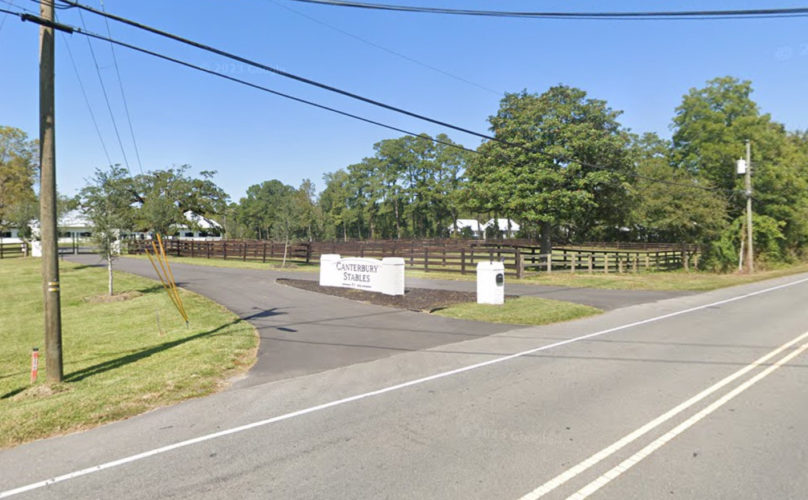
WILMINGTON — A few parcels within city limits may soon be exempt from City of Wilmington permitting requirements if officials approve a proposed code amendment requested by a local horse stable.
READ MORE: Poultry farm in the works near D.R. Horton subdivision with no recourse
Wrightsville Farm and Equine runs Canterbury Stable, a horse barn that has operated on the property since 1969, also hosts weddings on its 12.5 acres. According to the city, it has to apply for a temporary permit every time a wedding or event takes place. To cut down the process, it’s asking the city to allow bona fide farm over 10 acres exemptions within its limits.
Current proposed exemptions include the requirement to obtain building permits, floodplain development permits, temporary use permits or tree removal permits. However, concentrated feeding operations, known as factory farms, and slaughterhouses would still be prohibited in city limits.
Under state statute, counties are prohibited from imposing most regulations on bona fide farm operations, though municipalities may restrict agricultural land uses within their limits. Activities include harvesting of crops, planting and production of timber, livestock management, and aquaculture.
The state’s agriculture definition also includes construction and maintenance of land and buildings necessary to the farming operation, processing and packing items produced on the farm, marketing and selling agricultural products, certain grain warehouse operations and agritourism.
Wrightsville Farm and Equine’s weddings fall under agritourism use, along with festivals, meetings, demonstrations of farm activities, meals, and other events that are “taking place on the farm because of its farm or rural setting.”
Amy Schaefer with Lee Kaess Law Firm representing the farm said her client’s intention was to clear up what is allowed under the land code at the Wilmington Planning Commission meeting on Dec. 6. The stable has been undergoing a refresh over the last few years — mainly rebuilding structures — but Wilmington’s code was unclear on when the owners needed to apply for a permit for the changes to the property.
The code states permits are needed on any changes to property “except the use of land for agricultural purposes.”
Schaefer argued to the commission Wilmington Farm and Equine’s upgrades do not trigger permit applications because they are for agricultural purposes. The lawyer also said the property’s agritourism uses fall under the definition of agriculture and thus exempt the applicant from having to apply for temporary use permits when it hosts weddings.
Temporary use permits are required when a property wishes to utilize the land for any use prohibited in its zoning district. Applications for the permit also requests plans for parking and traffic, noise, waste management and utility connections.
City planning staff, such as zoning administrator Kathryn Thurston, argue the property is not exempt from obtaining the required permits just as any other property would not be.
But there is another wrinkle.
Because the property lies in a residential district, city staff have denied the property temporary use permits for concert-like events — i.e. weddings with live music or a DJ. Without one, the Wilmington Police Department will not grant noise ordinances exemptions for events on the property.
Scheafer explained the bona fide farm amendment represents a years-long compromise between her client and the city. If passed, it would allow the farm to host events without applying for a temporary permit each instance, nor rezoning the entire property.
However, ordinances, like noise regulations, would still apply. Though, with virtual permission from the city, the WPD may be more inclined to grant an exception to the noise ordinance.
With applicant and city staff both in approval of the amendment, the commissioners were tasked with evaluating the public welfare component.
Commissioners asked if the property had received any noise complaints. Schaeffer told commissioners she wasn’t aware of any.
“I don’t know that anything we do today would make her change the way she operates her farm or business,” Schaeffer said at the Dec. 6 meeting.
There has been at least one noise complaint made on the property, according to Lt. Greg Willet with WPD. He said officers responded to a complaint on Nov. 18, though no citation was issued. A records request for a full list of complaints was not provided by press.
The planning board also emphasized the amendment would apply to every 10-acre property with a bona fide farm certification, not just Canterbury Stable. To qualify as a bona fide farm, properties would need to present one of the following:
- A farm sales tax exemption certificate issued by the U.S. Department of Revenue
- A copy of the property tax listing showing that the property is eligible for participation in the present-use value program pursuant to General Statute 105-277.3
- A copy of the farm owner’s or operator’s Schedule F from the owner’s or operator’s most recent federal income tax return
- A forest management plan
According to city planning staff, they are only aware of one other property that would qualify — Oak Point Farms on Airlie Road, near Airlie Gardens.
“To be honest, I’m more worried about the other site than this site just because of what it is and where it is,” Commissioner John Lennon said. “Airlie Road is actually one of the very few roads in the state of North Carolina with no right-of-way, so I’m just trying to envision a garden party after-party.”
Bona fide farms could also include more traditional agricultural uses and be exempt from zoning and permitting regulations; it could include a small chicken farm (not classified as a CAFO), wheat fields or a vineyard. However, there is not an abundance of 10-acre parcels in city limits and most are already developed.
“It has far-reaching implications, even though there are only two sites we can see today,” Commissioner Ace Cofer said in the meeting.
Commissioner Danny Adams pointed out the big difference between a festival hosting 5,000 and a wedding for 50, and not having to submit permits for either one of those under a bona fide farm exemption, seemed to “kind of breakdown of reasonable guard rails.”
Still, most commissioners acknowledged there was a discrepancy in how the land code could be interpreted.
The item was continued in a unanimous vote to give the city and applicant more time to address the commissioners’ concerns, mainly with a component addressing noise violations.
Reach journalist Brenna Flanagan at [email protected]
Want to read more from PCD? Subscribe now and then sign up for our newsletter, Wilmington Wire, and get the headlines delivered to your inbox every morning.
