


[Ed. note: This is a developing story and will be updated with more information.]
NEW HANOVER COUNTY — The North Carolina General Assembly’s top brass have agreed to infuse more money into the state’s film incentive, opening up North Carolina to new projects after roughly three months of paused obligations.
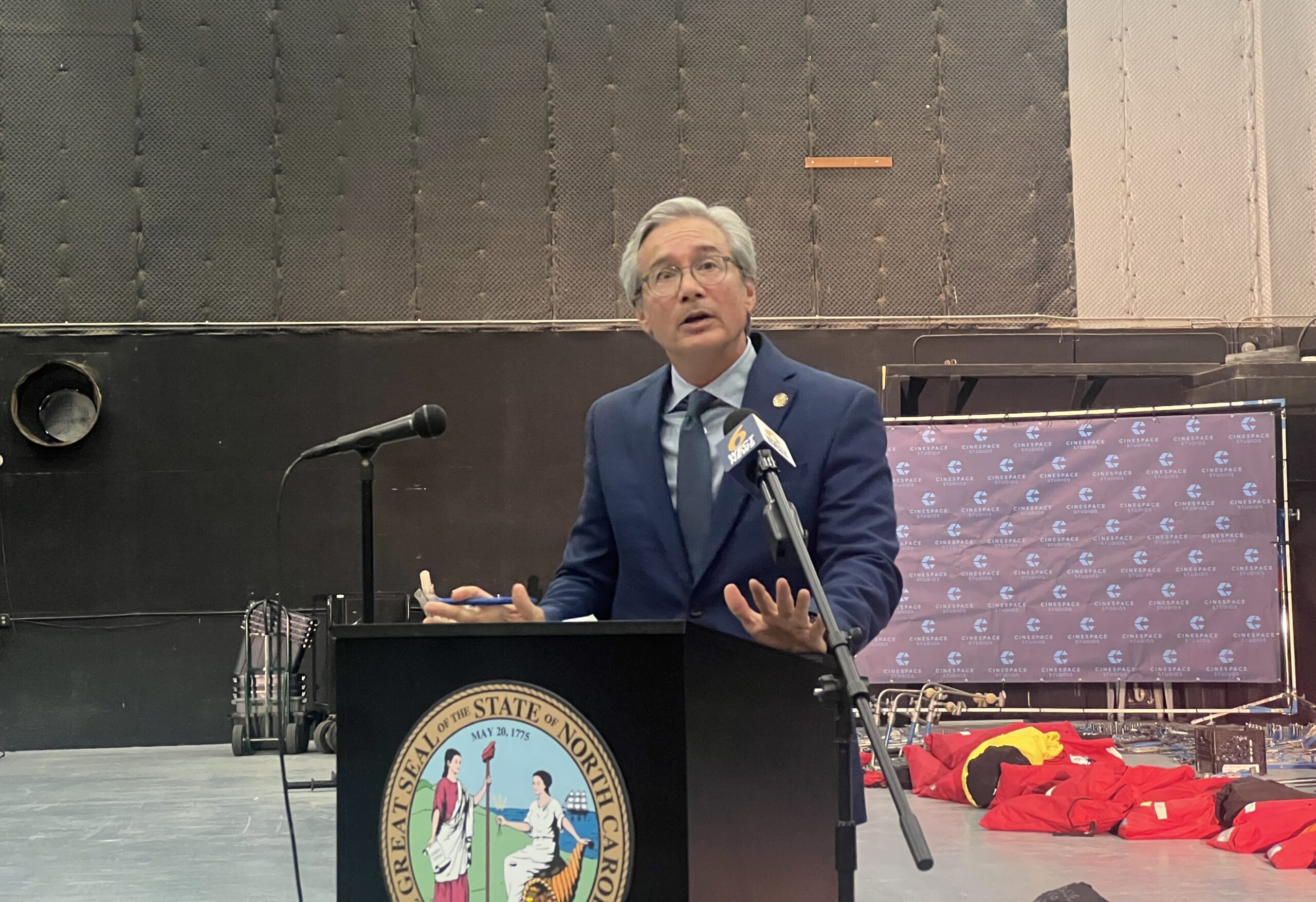
Two of New Hanover County’s Republican state legislators — Sen. Michael Lee and Rep. Ted Davis — along with New Hanover County Board of Commissioners Vice Chair Dane Scalise held a press conference announcing the additional $31 million made available by the end of 2026.
The money is a one-time infusion on top of the General Assembly’s annual $31-million contribution to the North Carolina Film and Entertainment Grant Program, run by the Department of Commerce. The program provides tax rebates on qualifying expenses to productions that spend in North Carolina up to $20 million on a film and $25 million on a TV series, after a post-production audit is completed.
READ MORE: Inside the NC film incentive fallout, according to state leaders
ALSO: Film productions on course to leave NC again unless changes made to incentive
CATCH UP: The multiplier effect: Wilmington film boosts local business during ‘One Tree Hill’ convention
Before the additional allocation to the funding pot, the state was to be closed to film productions seeking incentives through 2029 due to an operating change at the commerce department.
Essentially, Republican lawmakers, including Lee, have said the department mismanaged its operations of the grant as “cash-flow,” meaning obligating funds based on future amounts rather than what’s in the bank account. The Department of Commerce said it was instructed to do so by legislative staff, with the understanding the General Assembly would cover overages.
When the General Assembly didn’t include additional money in this year’s initial state budget — it gave $15 million in a technical corrections bill — the department halted new grantmaking. It was on track to spend the next three fiscal years spending its $31 million annual allocation on productions that already wrapped.
Now, with the additional $31 million announced Thursday, the state will be open to new grants.
However, because the state did increase the amount each production is eligible for this year, that money still could be depleted quickly. The caps were increased this year from $7 million for a feature film and $15 million for a television production. For example, with television now at a $25-million cap, one season could wipe out half the $31 million in additional money.
There’s also another catch: Sen. Lee told Port City Daily the additional $31 million will be prioritized for projects in New Hanover and “surrounding counties.”
Port City Daily asked the senator how this would work and when projects outside southeastern North Carolina would qualify for any remainder of funding. He did not respond by press.
IATSE Local 491 Business Agent Darla McGlamery said she was “stunned” by the additional money and happy the state can take off its “closed sign.” However, she expressed concerns over funneling the money to only one part of the state.
“North Carolina is a film hub outside of the two major production cities, and I don’t want to see people be short-sighted and just constantly focus on Wilmington,” McGlamery said.
As reported by Port City Daily previously, several projects were circling the state before the pause on new grants, including “The Hunting Wives” and a Nascar series, both looking to film in Charlotte. These productions would apparently be disadvantaged by the additional allocation, though local productions like the Disney mermaid series “Saltwater” (whose pilot filmed in town but hasn’t been greenlit for a full run), a third season of “RJ Decker,” or Jonas Pate’s “Outer Banks” prequel, “Kildare,” could be given the advantage.
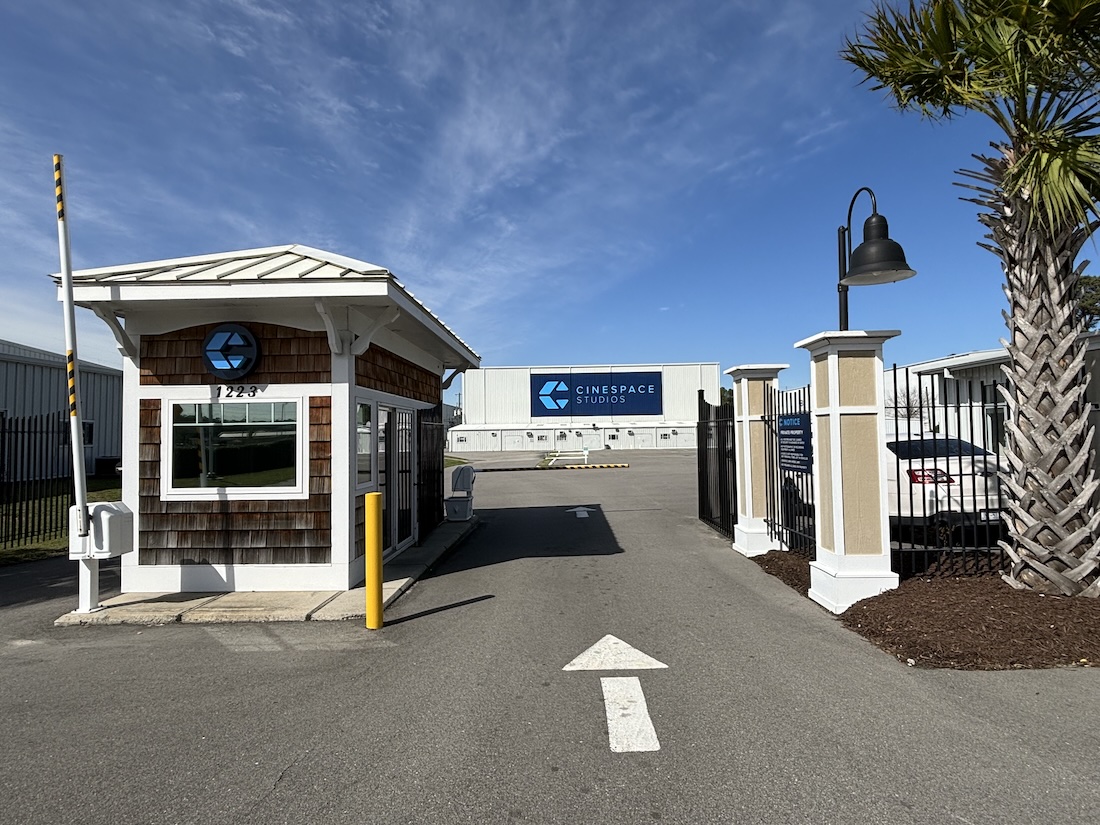
The press conference follows Gov. Josh Stein and Secretary of Commerce Lee Lilley’s visit to Wilmington’s Cinespace Studios on Sept. 15. The two advocated for leaders of the General Assembly to find a way unpause new grants for the film incentive; Lilley said one way to do this would be with permission from both House Speaker Destin Hall and Senate President Pro Tempore Phil Berger to return to the cash-flow operation.
Aside from the press conference, Berger and Hall have signed a letter granting an additional $31 million to the film grant. It is directed to Commissioner Scalise.
As Rep. Davis is not seeking reelection for District 20 this November, Scalise is running against Democratic candidate Tim Merrick for the seat.
Davis, a long-time advocate for the film incentive, previously told Port City Daily he had looped in Scalise, as his Republican heir, into the discussion over how to help the film incentive this year.
Scalise has not returned Port City Daily’s requests for comment about his involvement in the last month; ahead of the press conference Tuesday, he said he was tied up until later.
IATSE Local 491 Business Agent Darla McGlamery told Port City Daily ahead of the press conference that Scalise met with union representatives several times and has been “feverish” in his attempts to find a solution for the incentive.
The letter addressed to him doesn’t give the Department of Commerce permission to operate as a cash-flow; instead it calls for reform to the department’s disbursement methods.
“We are supportive of appropriating an additional $31 million for new film projects in fiscal year 2026-2027 and creating accountability measures while the General Assembly reviews possible reforms in the next biennium,” the letter indicates.
While the letter does not detail what accountability measures will be implemented, the letter calls for the Department of Commerce to provide a response to how it will prioritize southeastern North Carolina productions within 14 days.
“As we near the 2027-2028 session, our members will assess all internal protocols, procedures and processes at the Department of Commerce to ensure lawful allocation of funds in the future,” the letter adds.
The Department of Commerce told Port City Daily it isn’t in possession of the correspondence yet.
“We have not received a letter or any proposed legislation from the General Assembly that would make any changes to the latest direction to operate the film program on a strict annual appropriations basis,” a spokesperson wrote in an email on Tuesday. “We will operate the film program as directed by the General Assembly, and look forward to working with them to find a long-term solution that will ensure the program has the resources needed to compete for future film and television productions.”
At Port City Daily, we aim to keep locals informed on top-of-mind news facing the tri-county region. To support our work and help us reach more people in 2026, please, consider helping one of two ways: Subscribe hereor make a one-time contribution here.
We appreciate your ongoing support.
