

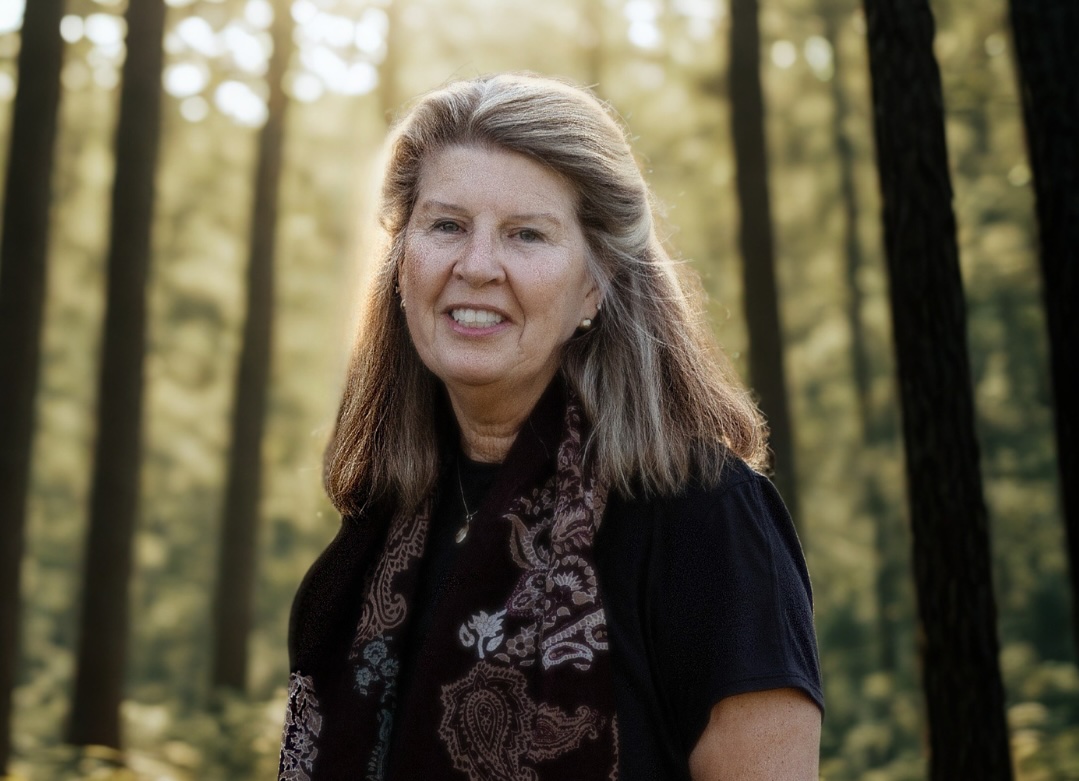
Susanne Duncan, Democratic candidate
Brunswick County Board of Education, District 3
Career: Retired Educator
Education: B.A. in biology (Mount Holyoke College, MA); M.S. in Biology (University of Maryland, College Park, MD)
Q: What qualifies you to serve on the Brunswick County Board of Education?
A: I believe my 30 years as an educator, combined with my 15 years as a member of this community, give me the experience and perspective to serve effectively on the Brunswick County Board of Education. During my career with Fairfax County Public Schools in Virginia, I taught biology and environmental science, developed curriculum, taught online, served as an AP coordinator and mentor, and worked on two curriculum advisory committees for the school board.
My family moved to Brunswick County 15 years ago, and my daughter attended and graduated from South Brunswick High School. I’ve seen firsthand how much our community and our schools have changed and grown.
Q: Name one top policy change you want to see and how you will get that passed.
A: I would like to focus on the retention of high-quality teachers. The current teacher attrition rate hovers around 10 percent in the county, and a stable faculty is essential to student success. Higher pay would certainly help, but at the county level, the school board needs to do more. When I first started attending school board meetings 15 years ago, teachers had the opportunity to address the board through the Faculty Advisory Committee. Today, the FAC no longer speaks at board meetings.
Teachers are stakeholders in our schools and they need to be heard; they should be able to share their concerns and ideas without fear of retribution. I would ask my fellow board members to join me in welcoming teachers back to regular board meetings through the FAC. I see that as an important first step toward making teachers feel valued, respected, and trusted by their school system and their community.
Q: Per the most recent state report cards, Brunswick County Schools reduced its “low-performing schools” from five to two in the 2025-2026 school year. What do you think is working to reduce the schools with this designation and what do you think the district should be doing to address the schools that are still low-performing?
A: The 2025–2026 testing scores were welcome news, and I celebrate the hard work of our students and teachers. I believe factors contributing to this improvement include better attendance and reducing non-essential screen time in the classroom. We’ll know more about strategies each school used when principals present their annual reports to the School Board’s Curriculum Committee in October.
We need to be careful, though, about assuming that what worked at one school will automatically be a roadmap for improvement at another. What the school board and administration need to do now is look closely at the performance of student subgroups at each school, identify where the greatest gaps exist, and focus resources and support on those students.
Reducing performance gaps requires both immediate and long-term planning. For example, establishing a pre-kindergarten program could be one way to reduce opportunity gaps that can contribute to performance gaps later. We need to address the challenges facing the two schools that remain low-performing while also looking upstream at what we can do to prevent students from falling behind in the first place.
Q: Earlier this year, the school district and county commissioners signed off on setting aside 12 acres of a 98-acre Supply parcel to become a teacher housing complex. Do you support this initiative; why or why not? Do you think the district should explore other opportunities like this?
A: I think the intention behind the teacher housing initiative is good. Brunswick County is a rapidly growing county, and the cost of housing has made it increasingly difficult for beginning teachers and other school employees to afford to live here.
At the same time, we need to ask whether this is what our teachers actually want. In talking with teachers, I’ve heard some hesitation about renting from an entity affiliated with the school system. Some would prefer the flexibility to choose where they live. I think BCS should continue to explore creative ways to help teachers afford to live in Brunswick County, but we need to listen to teachers and make sure the solutions we pursue are ones they value. Teacher housing could be one tool, but it should be part of a broader effort to recruit and retain good educators.
The superintendent and school board also need to make it very clear to county residents that, other than the donated land, no school funding is being used for this project. In speaking with voters, I’ve found there is some confusion over funding for the project.
Q: Is there a capital need that you would have liked to see make it onto the school bond? How would you work to fund that project in the future?
A: The capital need I would have liked to see included in the current bond proposal is another elementary school. Since the second elementary school was removed from the proposal, BCS will not be moving forward with the planned pre-Kindergarten program at this time, and I think that is a significant loss for several reasons.
First, a high-quality public Pre-Kindergarten program can help narrow differences in school readiness by providing children with early experiences in literacy, math, social-emotional development, and the classroom environment.
Secondly, high-quality pre-K options are currently limited to private licensed childcare facilities, and there simply are not enough of these facilities to meet the needs of a growing county. Access to quality childcare is an important concern for families, and expanding public pre-K could provide another option for families while also helping address the shortage of licensed childcare.
As for the future of public pre-K, the school board needs to start planning now for another elementary school. By 2030, elementary schools in the northern tier of the county are projected to exceed 90% capacity, even with the new elementary school included in the current bond proposal. Planning for a future school now would give the district the opportunity to consider how that facility could also support a public pre-K program. We need to be planning for the future and not playing catch-up.
Q: If the bond passes with a new elementary school and high school, the district would have to look at redistricting for these schools in the future. If you had to redistrict as a board member, how would you go about that process?
A: During my 30 years teaching at Fairfax County Public Schools, the county’s population grew by more than 80%, adding nearly 500,000 people. I experienced several school redistricting events both as a teacher and as a parent, and I know they can be contentious. Redistricting should not be something the school board does to a community. It should be something we work through with the community. That means the school board should be studying best practices for the process now, before redistricting becomes necessary.
To start, the school board needs to project enrollment, identify future capacity problems, determine whether boundary changes are necessary, and evaluate the transportation impact of different options. Once that data has been collected and analyzed, the school board needs to listen to parents, teachers, students, and other members of the community. That could include information forums where the community can understand the data and how it affects potential decisions, followed by focus groups or advisory groups where community members can express their concerns.
The school board and administration should then consider ways to reduce the disruption caused by boundary changes. That could include allowing siblings to stay together and/or phasing in a boundary change so that, for example, high school students can finish at the school where they started.
Another way to address capacity issues is to increase school choice within Brunswick County Schools by creating specialized programs in schools that have available classroom space. Language immersion, a pre-International Baccalaureate program, or a STEM program could give families additional options so they may choose to move their children to a less crowded school.
If I’m on the school board, I want the community to feel that they were heard and that their input mattered in the process. Transparency matters.
Q: Since Brunswick County is the fastest growing in the state and one of the fastest in the nation, how do you view your role in coordinating the management of that growth with the county commissioners?
A: Brunswick County is growing very quickly, and I believe the school board and board of commissioners need to be talking with each other regularly about the impact that growth will have on county services, rather than primarily meeting when the school system has a funding request. I don’t think the school board can manage growth by itself, and the county can’t plan for growth without considering our schools. We need to share information early, plan together, and make sure that the schools our community will need in the future are part of the conversation today.
I would like to see a liaison group between the two boards meet regularly, with staff from both organizations, to share information about population growth, new development, enrollment projections, school capacity, transportation, and county revenues. The current school bond is a good example of why this communication is important.
The original proposal was about $409 million and included a second elementary school and a pre-K program. As the proposal was reduced, those projects were removed before the final $349.6 million bond request went to the commissioners. I would like the two boards to have these conversations earlier, so both understand the long-term consequences of decisions about what gets included or left out.
Q: Do you think the schools are adequately funded, and if not, where do you think there should be improvements? How will you advocate for these improvements?
A: I do not think our schools in Brunswick County are adequately funded. As a school board member, I will actively reach out to our members of the General Assembly and advocate for North Carolina to meet its constitutional obligation to provide every child with a sound basic education and, at a minimum, move toward the goals outlined in the Leandro Comprehensive Remedial Plan.
North Carolina’s per-pupil spending has increased since the 2019–2020 school year, even after adjusting for inflation, but the state continues to rank near the bottom nationally in per-pupil spending. In 2023, North Carolina ranked 41st among the states in per-student spending. At the same time, the state has substantially increased funding for private-school Opportunity Scholarships, with the program’s recurring appropriation reaching $675 million for 2026–27.
For me, improving funding means prioritizing the resources that directly affect students and teachers: recruiting and retaining high-quality teachers, providing adequate instructional support and classroom resources, addressing the needs of students who are struggling, and expanding access to high-quality pre-Kindergarten. school boards cannot make up for state funding shortfalls on their own.
Q: Brunswick County teacher attrition has been creeping up over the last school years, from 9% in 2022-2023 to 10.7% in fiscal year 2024-2025. What do you attribute this increase to and how would you address it?
A: One of the main reasons I am running is due to my concerns about teacher retention in this county — it’s been a long-standing problem. I remember in 2012, at the end of my daughter’s first year in high school in BCS, more than a dozen teachers left her school. Some were retirees, but the majority were young teachers. Teachers leave for different reasons, and I believe the first step is to listen to our teachers and look at the data to understand what is happening in Brunswick County. Compensation certainly matters, but so do workload, administrative support, classroom resources, student behavior, and whether teachers feel valued and respected.
Teacher retention is important because a stable faculty provides continuity for students and school programs. This is especially important for programs such as exceptional children, where frequent staff turnover can make it more difficult to provide consistent support and services to students.
As a school board member, I would want to establish regular ways for teachers to have a meaningful voice in decisions that affect their work. I would support bringing the Faculty Advisory Committee back to regular school board meetings so teachers have an opportunity to share their concerns and ideas directly with the board. I would also look at compensation and working conditions, strengthen mentoring and professional development, and identify the factors contributing to attrition at the school and district levels. Teacher retention isn’t something the school board can solve with one program or one pay increase; we need to listen to teachers, identify the problems that are driving them away, and work systematically to address them so that good teachers want to stay.
Q: What is your view of the current board’s leadership? What are they succeeding at and what needs to be improved?
A: If you look back at my answers, some words and ideas stand out: transparency, listening, planning ahead, school choice, and including stakeholders in the decision-making process. I believe these are important characteristics of a high-functioning school board, and I would like to see more of them from our current Board.
I would also like to see more open discussion and debate among board members. Board members don’t have to agree on every issue, but I think the public benefits when they ask questions, consider different perspectives, and explain the reasoning behind their decisions. Other voices need not only to be heard but to be part of the conversation. Teachers, parents, students, and community members bring perspectives that can help the board make better-informed decisions.
I recognize that the current board, with the help of the current superintendent, has accomplished important things, including moving forward with the school bond proposal and overseeing a school system that is seeing growth in student achievement. I believe the Board can be more transparent, more proactive in planning for growth, and more deliberate about listening to its stakeholders.
At Port City Daily, we aim to keep locals informed on top-of-mind news facing the tri-county region. To support our work and help us reach more people in 2026, please, consider helping one of two ways: Subscribe here or make a one-time contribution here.
We appreciate your ongoing support.