


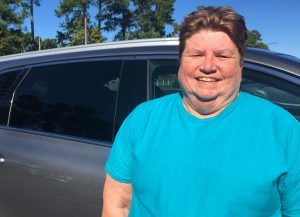
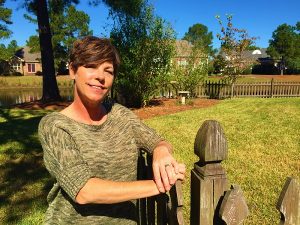
When Penny Walker walked out of her five-year appointment in the summer of 2013, it was as if a weight had been lifted.
She was cancer free.
Walker’s breast cancer experience began when she noticed a bump smaller than a pea during a self-breast exam. After going to the doctor, she still didn’t think too much of it, but went for a biopsy. When her test results came back as positive for breast cancer, Walker said she was “floored.”
“I was completely unexpecting it,” she said. “I thought there was nothing to worry about.”
The average U.S. female has a 12 percent, or 1 in 8, chance of developing breast cancer at one point during her life, according to 2017 American Cancer Society statistics.
The American Cancer Society projected there to be 252,710 invasive breast cancer cases in the United States and 56,900 new cases in North Carolina during 2017.
October is Breast Cancer Awareness Month, and as the month comes to an end, survivors continue to share their experiences and how they overcame it not only physically, but mentally.
The physical path
Once Walker received her diagnosis in January 2008, she received different options to treat the cancer, including a lumpectomy, radiation, chemotherapy, medicine or a mastectomy. She chose to have a mastectomy, but also opted for a double mastectomy.
“I felt like I was eliminating a lot of possibility; although, statistically from what I’ve read, it’s doesn’t make that much of a difference,” Walker said. “For me, it did.”
Marie Wilson, a retired LPN, found out she had breast cancer through a mammogram in August 2014.
“To me, it was more scary because of my knowledge,” Wilson said. “Sometimes, they say a little bit of knowledge is a bad thing to have.”
Since her mother had breast cancer, Wilson wanted to have a Breast Cancer genetic test (BRCA2) done to see if she carried the gene. Prior to the BRCA2 test, Wilson’s treatment was going to be a lumpectomy and radiation for six weeks. When the test came back positive, she chose to have a double mastectomy.
“Yeah, I had my moments. I had my horribly dark moments, but I think it’s just a sense of surviving that pushes you onward.” — Penny Walker
As an oncology nurse, Wilson prescribed medications and scheduled appointments with other medical professionals. Doing this as a career helped her know what to do when she was diagnosed.
“It was also reassuring because I already knew who I wanted for my oncologist,” she said. “I already knew what treatments I wanted and would do and wouldn’t do.”
But no matter the path, Walker and Wilson advise patients to have medical professionals whom they trust. For Wilson, finding medical professionals includes researching them. For Walker, that also means not being afraid to ask questions, second opinions, other options or clarification.
“You need to be your own advocate,” Walker said.
Support is key
Spouses. Friends. Family. It doesn’t necessarily matter who, but Wilson said once someone is diagnosed with breast cancer, he or she should get a support base.
Walker said her husband and two sons were sources of comfort for her, but one thing she was not expecting to happen was to lose friends who she thought would help support her and her family. She said she was devastated that happened; however, people who were initially just acquaintances or casual friends became closer friends and part of her support group.
“I realized what I gained was more valuable than what I lost,” she said.
That support group can also help the family of the breast cancer patient. She would ask her friends to get her husband or kids to help remove them from the situation — even if it was only temporary.
“People are so concerned with the person with cancer — how they’re doing and what do they need, but people forget about their family,” Walker said. “The person, at least the breast cancer patient themselves, is actually fighting it. They have a job. They are doing something proactive about it. The family is helping, but all they can do is kind of stand by.”
“We need to pass on the good stories, too.” — Marie Wilson
Another kind of support comes from those who have been through it themselves. According to Cancer.net, support groups can help with the coping process and help the individual find others who understand the feelings they might be having.
Walker was introduced to a group of women who had all gone through breast cancer. They called themselves the Pink Posse, and in that, they would talk, drink wine, laugh and have a positive experience bonding with each other over a shared experience.
It’s more than just physical
In addition to the challenge of actually fighting and beating the breast cancer, patients also have to overcome the challenge emotionally and mentally.
Walker said her sense of survival is what helped her start to overcome the breast cancer.
“I didn’t do anything that anybody else wouldn’t do,” she said. “Yeah, I had my moments. I had my horribly dark moments, but I think it’s just a sense of surviving that pushes you onward.”
January 2018 will mark 10 years since Walker’s diagnosis, but she said there are still days when she wonders “what if.” She held onto her medical records for years after in case she had a recurrence and needed a reference; however, she said shredding it all was “symbolic” in her journey forward.
“About six years after I was out of my diagnosis, I finally shredded everything,” she said. “I kept it forever, but I finally just shredded it.”
While the breast cancer may be behind them, the experience is something they will never forget.
Wilson said in overcoming breast cancer, “We need to pass on the good stories, too.”
Like us on Facebook to keep up with what’s going on in the community.
