


Amid a major rise in rates of PTSD, depression, and anxiety, a new treatment offers hope to those with debilitating mental illness.

During the last few years, Americans have experienced rising rates of mental health challenges. Increasing numbers of people across the nation are experiencing symptoms of depression, anxiety, and more. In fact, a 2023 Gallup poll found that 29% of U.S. adults had been diagnosed with depression by a mental health professional, up 10 percentage points from 2015.
These findings, while troubling, may actually be modest. The CDC reports that, “the percentage of adults with recent symptoms of an anxiety or a depressive disorder increased from 36.4% to 41.5%” between August 2020 and February 2021. In addition, the U.S. Department of Veterans Affairs estimates that 5% of the population has Post Traumatic Stress Disorder (PTSD) at any time. In 2020, that translated to 13 million American adults. While often associated with war or battle, PTSD can occur after any traumatic event. According to the VA, women are more likely to suffer from PTSD than men, often a result of sexual assault.
The Agency for Healthcare Research and Quality describes symptoms of depression such as “having trouble thinking and paying attention, having trouble sleeping or sleeping too much, eating too little or too much, feeling hopeless, helpless, worthless, or guilty, avoiding being with people, and having thoughts about your own death, harming yourself, or suicide.”
We all experience trouble sleeping or paying attention sometimes, but taken together these symptoms can be paralyzing. When experienced alongside symptoms of PTSD or anxiety (fear, terror, or panic, according to the Mayo Clinic), it’s enough to completely derail a person’s life.
By all accounts, we’re experiencing a surge in mental health challenges, the causes of which are likely myriad and intertwined. The solutions are also myriad and, at times, found lacking.
The first, and most common, intervention people tend to seek is talk therapy. This option is probably the most accessible, especially with increasing innovation in the realm of telehealth. Talk therapy can be very effective in some cases; sometimes we just need a professional to help us figure out the tangled feelings we’re experiencing. Other times, however, there’s a neurochemical element at play.
When this is the case, patients often turn to SSRIs (Selective Serotonin Reuptake Inhibitors), a suite of pharmaceuticals commonly prescribed for depression and anxiety. Serotonin is a neurotransmitter (a messenger chemical that connects neurons), and if it doesn’t travel reliably between neurons the communication gets dysregulated, resulting in depressive or anxious symptoms. SSRIs work by making more serotonin available to your neurons so they can communicate with one another more effectively. They’re also extremely widely used — reporting by the Winston-Salem Journal showed 37 million Americans taking a form of SSRI in 2020. And that was before the pandemic.
What happens if you’ve tried talking it out, taking the pills, taking the other pills, and you still struggle with PTSD, depression, and anxiety? For people around the world, this is a daily reality. A 2022 review of treatment options for treatment-resistant depression found that “approximately 30% of people with [major depressive disorder] are resistant to conventional treatments.” With nearly a third of people with depression unable to find relief, many medical professionals are exploring alternative treatments. The 2022 review delves into these alternatives, such as using ketamine, lithium, or “second-generation antipsychotics.”
Of all the options, perhaps the most exciting is Transcranial Magnetic Stimulation (TMS). This approach, pioneered by Dr. Anthony Barker in 1985, works by “applying powerful magnetic fields to specific areas of the brain that we know are involved in depression,” reports a Harvard Medical School publication. Prior to the advent of TMS, the gold standard for treatment of persistent PTSD and depression was electroconvulsive therapy (ECT) which, while effective, is very extreme, invasive, and comes with a lot of unpleasant side effects.
TMS is different. For one, it’s completely noninvasive — it doesn’t even require anesthesia! A medical professional simply creates a magnetic field around the areas of the brain known to be affected by depression, anxiety, and PTSD.
“When I first started practicing, the only options we had were hospitalization or electro-shock therapy,” says Dr. Aaron Albert, esteemed TMS practitioner and founder of The Center for Brain Stimulation in Wilmington, NC, “and then [TMS] came along. Not only does it have the highest success rate of any outpatient treatment, it also has the least side effects of any treatment.”
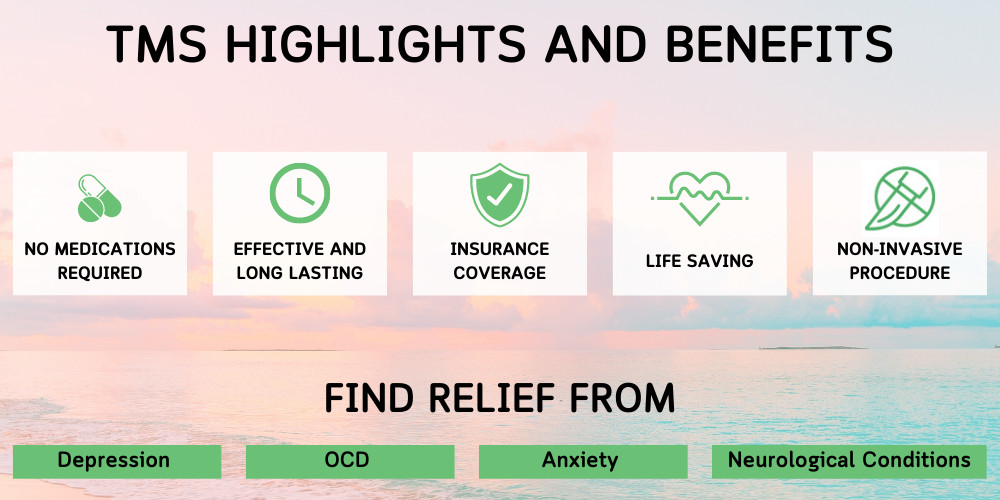
The FDA approved TMS for treatment of depression in 2008 and for Obsessive Compulsive Disorder (OCD) in 2018. Clinical controlled trials, which tested rTMS (repetitive transcranial magnetic stimulation) against a placebo, have found that “rTMS was 5 times more likely to help TRD patients achieve remission than the placebo.” In other words, it works very well.
Kate, a recent patient who received treatment at The Center for Brain Stimulation described the effects as that of “a fog lifting.” Another patient, Brian C, said opting to try TMS was, “the best decision I have ever made.”
Debilitating PTSD or depression can make life seem completely hopeless. This is especially true for those who have tried treatment and seen it fail. Thankfully, there are clinics like The Center for Brain Stimulation who are working to reverse these symptoms and provide hope in the darkness. To learn more, contact the team or explore TCBS’ Facebook page.
Sponsored content by

