

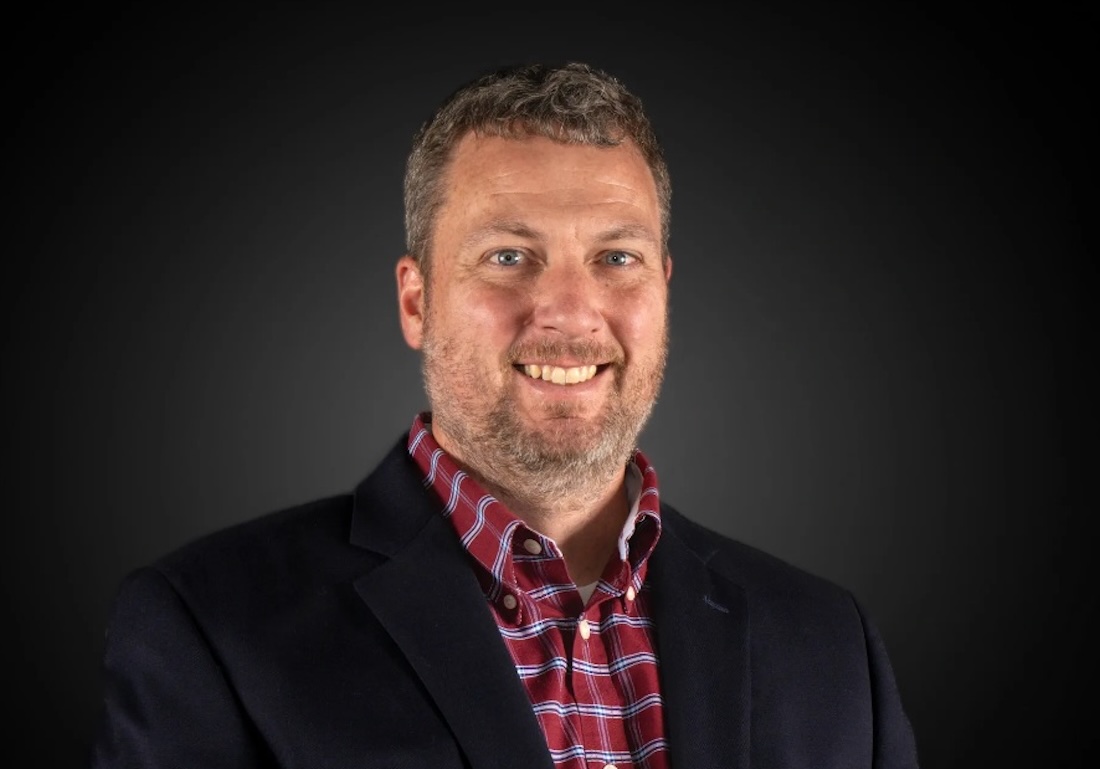
Ryan Collins, Republican
Pender County Board of Commissioners, District 2
Career: 20 years of Marine Corps Active Duty Service, retiring at the rank of Lieutenant Colonel; current training specialist, supporting Marine Corps units aboard Camp Lejeune
Degree: BA in political science; MA in international relations
Q: What qualifies you to serve on the Pender County Board of Commissioners?
A: I bring proven leadership, long-term management and planning experience, and a deep commitment to public service. Throughout my military career, I led complex organizations, managed significant resources, and balanced competing priorities, while remaining accountable to those I served. I listen first, ask tough questions, and focus on practical, results-driven solutions. I’m not running for a title; I’m running to do the work and represent Pender County residents responsibly. I bring conservative principles that have long been a part of Pender County’s character. My focus will remain on the issues that matter to Pender County and those blessed to live here.
Q: What is the biggest challenge facing Pender County currently and what steps will you take to help correct it?
A: Pender County’s biggest challenge is managing rapid growth while preserving the quality of life and affordability that make our county a great place to live. We are already seeing the effects through traffic congestion, rising infrastructure costs, and increasing demands on public services. At the same time, residents are rightly concerned about property taxes, public safety, and preserving Pender County’s rural character.
Growth is inevitable, but unmanaged growth is not. As a commissioner, I will work to ensure development keeps pace with available infrastructure and that we are planning for roads, schools, water and sewer, and emergency services before growth creates additional burdens on taxpayers. We also need to encourage responsible commercial and industrial development that expands our tax base and creates opportunities for residents without simply shifting the cost of growth onto homeowners.
Our responsibility is to plan ahead, exercise fiscal discipline, and make decisions based on what is best for Pender County, not what is easiest in the moment. If we do that, we can accommodate responsible growth while keeping Pender County affordable, safe, and a great place to raise a family for generations to come.
Q: Controversy over citizen surveillance and Flock cameras have become a topic of concern for many in recent months. If elected commissioner, do you plan to address the contract with the sheriff’s office and what will that look like exactly? Are you inclined to cancel the contract; why/why not?
A: I have serious concerns about Flock cameras. County government has a responsibility to protect the safety and security of Pender County residents, but that responsibility does not come at the expense of our civil liberties or right to privacy.
I am watching closely what New Hanover County has done on this issue. They reviewed the safeguards surrounding their program, found them lacking, and moved to cancel their contract. I believe Pender County should conduct the same type of review.
If elected, I will look closely at our contract, data access, retention policies, and safeguards against misuse. If adequate protections are not in place, I will have no hesitation supporting changes to the program, including canceling the contract if necessary. Protecting our communities is important, but so is protecting the constitutional rights of the people we serve.
Q: Many large-scale developments have been built in Pender County in the last five years and show no signs of slowing. What policy changes would you like to see to ensure infrastructure meets the needs of new residents, while also being mindful of the current population’s quality of life?
A: First, we need to follow and enforce our existing unified development ordinance and make sure zoning and development decisions are appropriate for the infrastructure available in each area. I do not believe we should routinely increase density through rezoning when the roads, schools, water and sewer, or emergency services cannot support that additional growth.
We also need to make better use of the tools available under state law to ensure infrastructure keeps pace with development. Where appropriate, I would support working with developers through development agreements and other legal mechanisms to ensure the infrastructure needed to support new residents is addressed as development occurs, not after the fact and at the expense of existing taxpayers.
Growth will continue, but it should not come at the expense of the residents who are already here. Our goal should be responsible growth that improves the tax base while protecting the quality of life and infrastructure of existing communities.
Q: Employee recruitment and retention has been problematic in the county government. For instance, the Pender County Fire and EMS merger is complete but two months in has 52 vacancies, and the county attributed a missed deadline to submit its financial audit to the state in June because senior finance staff left late last year. How will you address recruitment and retention in all departments of Pender County?
A: Recruitment and retention start with having the right people in the right jobs and giving good employees a reason to build a career with Pender County. I want to strengthen our ability to promote from within by investing in training, professional development, and clear career paths. The best employees will rise in an organization that gives them the opportunity to grow while holding them to high standards.
We also need to make sure our compensation and benefits are competitive enough to attract and retain qualified employees. But compensation cannot be the only answer. We need clear expectations, accountability, and performance standards at every level of county government. Taxpayers deserve employees who are equipped to do their jobs and leaders who hold them accountable for doing them.
Pender County has already invested in reviewing salaries and reclassifying positions. As a commissioner, I will want to see whether those investments are actually producing better recruitment and retention. We need to measure results, fix what isn’t working, and make sure we are getting the best possible return on every taxpayer dollar.
Q: Are the county’s current water and sewer utilities being adequately funded and managed; why or why not? What will you do to make corrections and will you make it a county priority to connect people using well water to the county’s water and sewer; how, if so?
A: Providing reliable water and sewer service is critical infrastructure and should be a priority for Pender County. But expanding that infrastructure, particularly into western Pender County, is a major undertaking that will require significant capital investment and long-term planning.
The first challenge is funding. I would aggressively pursue state and federal grants, low-interest infrastructure financing, and opportunities through organizations such as Golden LEAF, while making sure we are using local utility revenues responsibly. The county already has significant water and sewer capital projects underway, and I want to make sure we are prioritizing those investments based on need, growth, and long-term sustainability.
We also need to look at the economics of extending service. Building the infrastructure is only part of the equation; we need enough customers and economic activity to make those systems financially sustainable over the long term. That means coordinating infrastructure expansion with responsible residential and commercial development rather than building expensive infrastructure with no plan for its ongoing operation.
I absolutely want connecting more residents to reliable county water and sewer to be a priority. But I will not promise that we can connect every resident overnight. This has been a long-standing infrastructure challenge, and solving it will require a realistic plan, outside funding, responsible growth, and a commitment to making the necessary investments over time.
Q: The state legislature recently passed a temporary pause regarding the 2026 revaluation numbers being used in Pender County; however, it is only an interim fix to shield residents from escalating costs. In the last seven years (the revaluation timeline of the county), property values in Pender County have risen 115% on average, to much resident dismay. The pause lifts in January, but what do you see as a long-term solution when it comes to preventing sticker shock for residents and ensuring property taxes in Pender provide appropriate funding for county services?
A: I support the temporary pause because it gives Pender County property owners additional time to understand their new assessments and pursue appeals. But a pause is not a long-term solution.
We have to recognize what happened with this revaluation. Pender County went from a 2019 revaluation, following the effects of Hurricane Florence, into a period of extraordinary housing-price growth driven by historically low interest rates, the COVID-era housing market, and significant population growth. Those circumstances produced a dramatic increase in assessed property values.
The answer is to make sure rising assessments do not automatically become a windfall for county government. Pender County has already moved to a four-year revaluation cycle, which I support because it should help prevent large valuation shocks from building up over a longer period. But when property values rise substantially, the board of commissioners must exercise fiscal discipline and seriously consider the revenue-neutral tax rate rather than simply increasing the tax burden on homeowners.
My goal is simple: Pender County needs enough revenue to provide essential services, but government should live within its means. We need to protect homeowners, especially those on fixed incomes, from being taxed out of the homes they have worked to afford.
Q: North Carolina voters will decide on a constitutional amendment in November 2026 that gives the state legislature the power to limit annual increases in local property taxes; do you support this move? Why or why not?
A: Yes, I support the constitutional amendment. I believe there should be a reasonable guard against excessive increases in property taxation and that taxpayers deserve protection from government simply taking more because property values have increased.
That said, as a county commissioner, my responsibility will be to keep Pender County’s tax burden as low as responsibly possible. We should live within our means, prioritize essential services, and exercise fiscal discipline rather than continually increasing taxes on our residents.
My goal is for Pender County to manage its finances responsibly enough that a state imposed limitation would never become necessary. Taxpayers should not have to rely on a limit from Raleigh to protect them from excessive local taxation.
Q: The deadline for the Cape Fear Memorial Bridge grant is approaching. WMPO Director Mike Kozlosky has been clear the only options to fund a new bridge at this point is the toll or the local options sales tax. Since Pender County has representation on the WMPO, which do you support? Additionally, do you support the 65-foot, the 135-foot bridge option, or do you think a third design option should be explored?
A: I oppose asking Pender County residents to pay for the Cape Fear Memorial Bridge through either a new local sales tax or a toll. A toll would disproportionately affect the people who rely on that bridge every day to commute to work, school, medical appointments, and other necessities in Wilmington. I believe we should continue looking for state and federal transportation funding rather than placing another financial burden on local families.
As for the design, this is a regional project, and I believe Pender County deserves a seat at the table. I have serious concerns about the impacts of the proposed 135-foot fixed bridge, particularly its larger footprint and the potential effects on historic neighborhoods and existing traffic patterns in Wilmington. At the same time, I recognize that the bridge has to meet long-term transportation and navigation needs.
I would want to see all available information before committing to a final design. If a third option can meet the region’s transportation and navigation requirements while reducing impacts on historic neighborhoods, property owners, and surrounding communities, I believe it deserves serious consideration.
Ultimately, we need a bridge that improves regional mobility without asking working families to shoulder an unnecessary new tax or toll.
Q: Given the rapid growth in Pender County, schools recently faced a multi-million dollar operational funding gap just to maintain existing staffing and services. Moving forward, what is your specific strategy for collaborating with the board of education to ensure predictable, long-term funding for classroom teachers and student support?
A: Education is one of the county’s most important responsibilities, and our teachers and students deserve predictable, sustainable funding. But we also have to be honest about the financial pressures facing the county. The recent expansion of county government services created significant new recurring costs, approximately $3 million annually. Those costs have to be accounted for alongside our obligation to fund our schools.
The recent $2.7-million appropriation from the county’s available fund balance helped maintain existing staffing and services for the 2026–2027 school year without increasing the tax rate. Going forward, I want the board of commissioners and board of education working together earlier in the budget process to identify enrollment growth, staffing needs, and operating costs before we reach another crisis.
My approach will be to protect essential classroom services, especially teachers and student support, while requiring responsible budgeting and long-term planning from both boards. We should look for efficiencies, pursue available state and federal funding, and make sure local dollars are being used where they have the greatest impact.
Pender County is growing and our school funding needs will grow with it. We need a predictable partnership between the two boards, not last-minute fixes. We need to fund our schools responsibly while also maintaining other essential county services without taxing families out of their homes.
At Port City Daily, we aim to keep locals informed on top-of-mind news facing the tri-county region. To support our work and help us reach more people in 2026, please, consider helping one of two ways: Subscribe here or make a one-time contribution here.
We appreciate your ongoing support.