


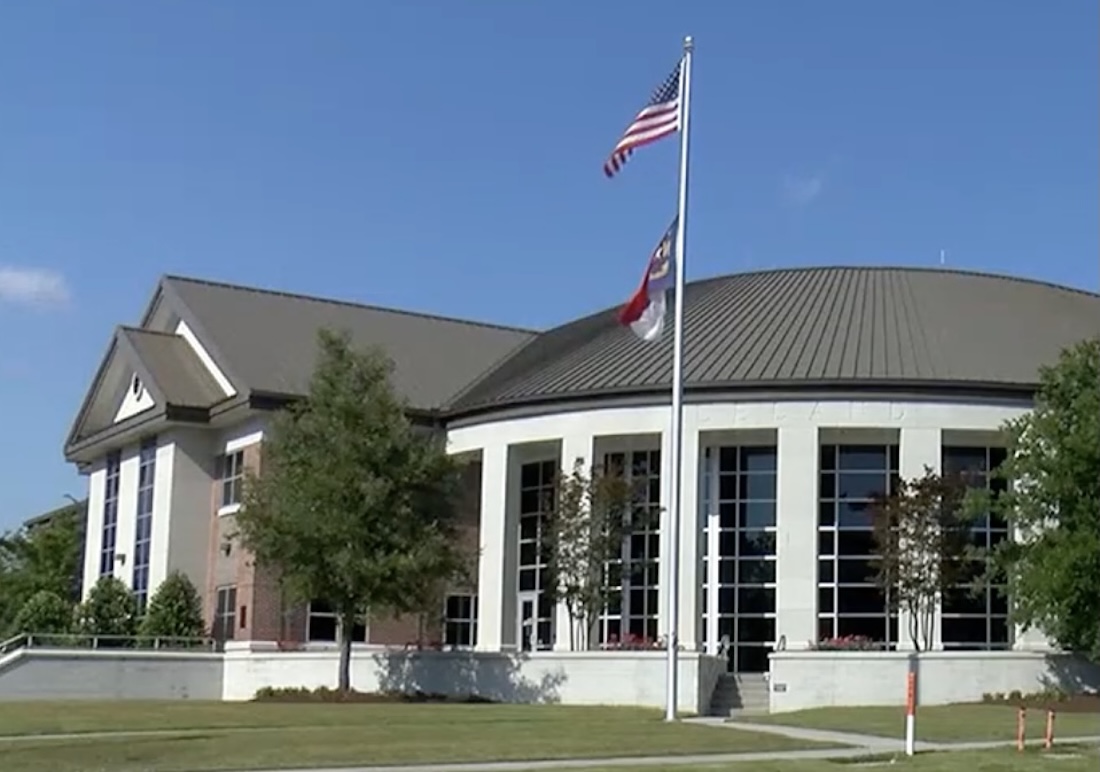
LELAND — Officials in Leland have published a proposed budget for the 2026-2027 fiscal year and it comes with a reduced tax rate for residents.
The document was formally submitted to the town council at its Feb. 19 meeting. The town has a $50-million balanced budget, with a tax rate of 25 cents per $100 value, which is 2 cents less than last year’s rate.
According to Leland spokesperson Jessica Jewell, the reduction was accomplished multiple ways, including the emergency contingency being half the amount it was last year.
“The collective property valuation of the Town increased therefore the new tax rate only decreases revenue by about $420,000,” she added.
The last revaluation in the county was done in 2023 and is scheduled again for 2027, though properties are looked at in years between, too. The increase in valuation comes from new residential and commercial properties coming online.
As well, sales tax has increased due to population growth, projected to be a $1.2-million increase and Leland’s emergency management department was merged into fire, leading to a $240,000 reduction.
Leland increased its tax rate two years ago by 17% — from 23 to 27 cents — though council had originally floated a 70% increase with a 39 cents rate. But the public pushed back, including hosting protests at council meetings and town hall.
There will be multiple opportunities for the public to provide feedback on Leland’s budget, including a forum at town hall and public comment periods hosted next month.
Staff addressed the budget with council Thursday evening, with Carly Hagg, finance director, saying they work from a “0-based budgeting framework.” This essentially means every department justifies every dollar it spends, rather than building upon last fiscal year numbers.
The staff began working on the budget in August 2025, with departments having to provide details by October. Meetings were held with council on preliminary estimates in January and staff met with council in small groups in February to go over details, line item by line item.
Aside from property and sales tax, the Powell Bill brings in $1 million for state-shared gasoline tax and highway user fee revenue and building inspections account for $3 million.
Most of the expenses will go to public safety departments and infrastructure. Fire and police make up roughly $18.3 million of the budget, with $9 million dedicated to police, who has 62 employees in its department. Next fiscal year will include the addition of two new officers in the traffic division and purchasing seven vehicles. Five are replacements and two cars will be purchased for the new hires.
As well, in both fire and police department budgets, there were some partial-year hires that are fully recognized in this budget. The fire department has 65 employees, with three added in for the next budget to help the town meet National Fire Protection Association minimum staffing requirements and strengthen response. Also, the fire inspector has moved into the fire budget, whereas before it was part of the building inspector department.
The finance department will have a 15.7% increase. It includes hiring a purchasing and contract supervisor. The department also pays the county 0.75% of taxes it retains for doing its collections, Hagg pointed out in the budget, noting she didn’t think they could hire staff and conduct billing for this amount.
“So in my opinion, it’s the best contract that we have in Brunswick County for a very high collection rate of 99.66%,” she praised.
The parks and rec department will increase 2%, with six full-time and five part-time employees. The town also wants to invest more in December’s Leland in Lights, to amount to around $200,000. Hagg called it a community booster but they’re also assessing a $55,000 grant to help cover costs.
A few changes were made in the operations department, which is seeing a 10% increase, including a new facility technician. There is also $200,000 put toward a metal roof replacement over the municipal operation center warehouse.
Moving from this budget, however, is the Leland Cultural Arts Center and Founders Park, to now be in the streets and grounds department. Hagg said the operations department only will oversee internal needs of government buildings like town hall, the fire department, etc.
Streets and grounds face a 12% budget increase due to the move but also for the addition of two new grounds technicians. They will upkeep the parks and pick up trash in the public rights-of-way and along Lanvale Road, highways 74/76 and 17, which the town is working with North Carolina Department of Transportation on as well.
Reductions from last year’s budget also exist in some departments. The largest is in IT, at 34%. IT operates with nine employees, but is reducing equipment and contracting, according to Hagg. The town has brought in-house mobile data terminals for police and fire and won’t have monthly fees. But the town will add one new analyst focused on public safety next fiscal year.
Engineering will amount to a 5% decrease on the budget from last year. This is due to completed stormwater work that won’t have to be replicated next fiscal year.
Some of the stormwater money is moving to community outreach, too, Hagg said. She cited the example of “Creek Week,” held next month which provides programming to the public about the area’s creeks, environmental stewardship and keeping waterways clear.
The governing body budget faces a 6% reduction, primarily since it’s not an election year. Jewell said Leland paid expenses of $29,000 Brunswick County Board of Elections for its 2025 municipal elections. But municipal elections only occur during odd-numbered years.
However, the administration budget — town manager, economic development, clerk’s legal, communications team — increased by 10%. Hagg said two positions were only partially funded in the current year and would become “fully realized” this year.
Newly elected council member Frank Pendleton questioned two departments that had a reduction year-over-year in salary and wages — one for Parks, Recreation, and Cultural Resources 2.7% less and the other Building Inspections decreased 2.3%.
“Is that due to a reduction in staff?” he asked.
Hagg confirmed it’s due to the fire inspector moving from the building inspection department into the fire budget, and parks and rec department being restructured from last year. Previously, there were more full-timers that have moved to part-time positions, though it’s two more staff members.
“But it’s part-time so their benefits and pay are different,” she answered.
Pendleton also asked about salary wages year over year, expressing overall it seemed to increase by 9% according to his quick calculations. He asked what an average percentage increase would be for all departments, when cumulatively adding four areas: salary and wages, 401K town contributions, retirement plan, and employment benefit taxes.
Hagg said she would have to dig a little deeper to get that number but clarified it’s not how Leland staff devise the budget — reiterating they start from zero and add actuals in, which may change annually.
“Changes could be because people have different employee benefits or salaries at a partial year,” she cited, pointing to the economic and tourism director only budgeted partially this year for $20,000 but whose full salary appears in next year’s budget. “So the amount, the percentage increase for one department in salaries is not necessarily the amount of raises that employees are getting.”
She said the town looks at market-rate adjustments, which comes out to around $2,600 per employee. They don’t do flat percentages, like 5%, but dollar amounts instead. That comes out to roughly $750,000. However, merit increases in the budget are around 1.5%, which comes in just under $400,000.
There was little council discussion otherwise. Mayor Pro Tem Bob Campbell expressed appreciation for staff’s hard work.
Hagg added during her presentation the capital improvement plan will have around $3.1 million, to include fleet maintenance facility, pedestrian infrastructure and roadway resurfacing. Around $250,000 is going to the pedestrian infrastructure capital project fund, with $2.5 million for projects as part of the town’s resurfacing of 5% of its roads annually for 20 years
The town budgeted $750,000 in emergency contingency funds — or 1.6% of the budget, under state law of 5% maximum.
Hagg said there was also a reduction in debt this year; they paid off the Leland Cultural Arts Center and fire truck. But the town has additional debt from two fire trucks added last year.
The public is encouraged to participate in the process with a question-and-answer forum held March 9 at 6 p.m. at Leland Town Hall, 102 Town Hall Drive. Staff will provide a brief budget presentation, and attendees will then have the opportunity to ask questions to council and staff. According to Hagg, it will be set up for audience members to ask one question at a time, but they can return to the line to ask follow-ups.
Residents can also schedule a meeting with council members and staff employees to ask more granular questions, she said at Thursday’s council meeting. There also will be a public hearing scheduled for March 19 at 6 p.m. at Leland Town Hall.
“I encourage everyone to go through the supplemental information,” council member Veronica Carter said during the meeting, noting that’s where budget documents and Hagg’s presentation is available. “It will have everything we have received so far and feel free to email me, but more importantly if you come on March 9, it will help you form questions and you’ll have specifics.”
By law, municipal and county budgets have to pass by July 1, 2026. Leland’s budget can be found in full here.
At Port City Daily, we aim to keep locals informed on top-of-mind news facing the tri-county region. To support our work and help us reach more people in 2026, please, consider helping one of two ways: Subscribehere or make a one-time contributionhere.
We appreciate your ongoing support.
