


WILMINGTON — Funding requests from the Film Partnership of North Carolina and Community Justice Center are in limbo indefinitely after members of the Wilmington City Council pushed them off once again Tuesday night. While one was funded in the state budget, another was not, but both cited county support so far.
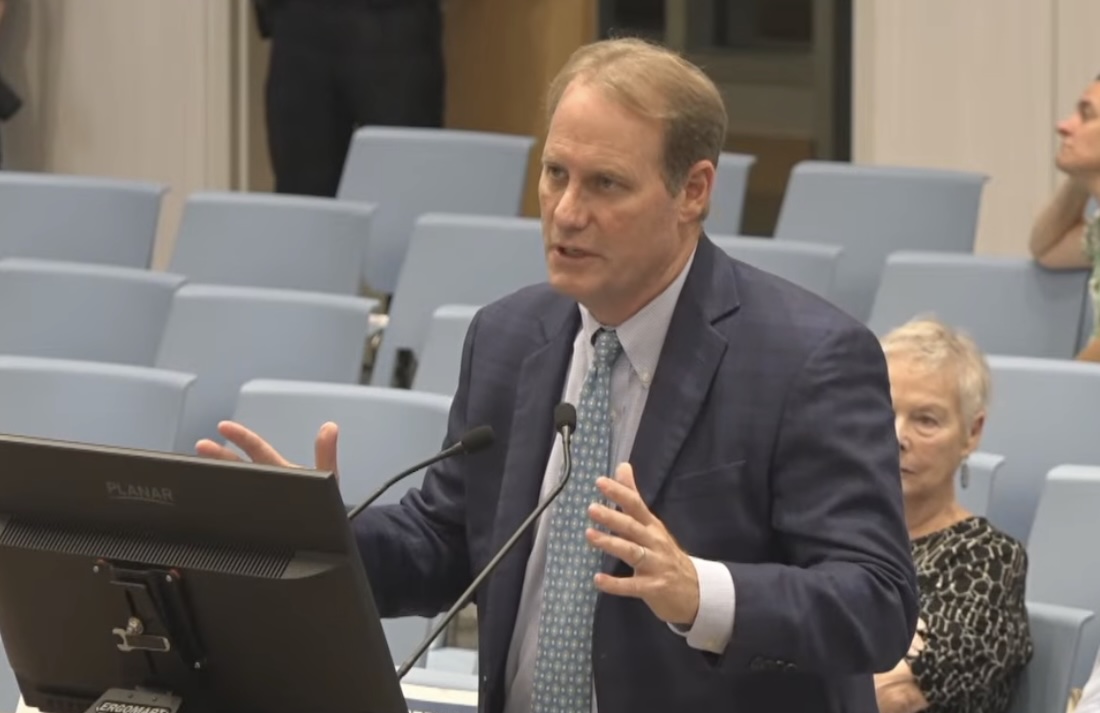
“This is the right thing by the people of Wilmington and New Hanover County and the State of North Carolina,” Community Justice Center CEO and former District Attorney Ben David said Tuesday. “New Hanover County has said that. The state of North Carolina has said that. I’m respectfully asking for you to say that tonight as well.”
Both organizations asked for $100,000 from the city in the spring amid city council’s budget discussions and outside the city’s typical grant processes. Council directed both items be brought before them after the budget’s passage in June amidst the elected leaders trying to shore up funding lines in other areas.
City Manager Becky Hawke presented information again to council at Tuesday night’s meeting, showcasing several options for funding one or both requests. She pointed to contingency funds earmarked in the budget as one option; the Council Contingency has $100,000 in it and the Economic Development Contingency Fund pot has $135,000. Funding the CJC and Film Partnership’s full requests would deplete both.
Council could also direct the organizations to apply for city grants. The Human Services grant has $783,000 available, viable for the CJC, while the Civic Development Partner Agencies grant is appropriate for the film partnership. However, Hawke informed community grants are turning to a request-for-proposals process, with details still being hammered out. Also, the Civic Development Partner Agencies grant won’t open again until 2029, with allocations accounted through 2028 unless more money is put in from council.
Council member Salette Andrews stated outright she was not in favor of using contingency money for the organizations. She values these pots for emergency needs only.
“When we talk about a contingency, we have the Living Hope Day Center that are literally out on the street right now and it’s 95 degrees,” Andrews said, referring to a nonprofit program that offers a place of reprieve to unhoused individuals. However, it is scheduled to close by the end of the month. “That’s an emergency to me. This is not.”
She also wanted more information on the CJC and film partnership before making any decision on funding them, including items like a budget, performance metrics, and an evaluation of accomplishments.
After the meeting, she told Port City Daily she thought the organizations should go through the established grant process.
“Because I believe funding decisions should be made through fair, transparent, and consistent processes, I am unable to support these requests at this time,” she wrote in an email.
However, council member David Joyner favored allocating contingency funds, with his fellow council member JC Lyle chiming in that she didn’t find it professional to tell the organizations at this point to go back and apply for grants.
“The idea that we have not had opportunities to ask questions of these organizations and to tell them what we needed to know and to get specific benchmarks from them — I disagree with that assertion,” Joyner said. “I think that it is time for us to give them an answer one way or another. Stop kicking the can down the road.”
Both Joyner and Lyle expanded on their positions to Port City Daily after the meeting.
Joyner said Tuesday’s conversation was an example of the city’s processes getting in the way of funding two “very worthy organizations.”
“If the problem is the process, rather than hiding behind the process, I think it’s incumbent on the elected officials to actually get this over the finish line,” Joyner said.
Lyle said both the Film Partnership of North Carolina and CJC are “two outliers that would have easily fallen through the cracks” as the city shifts to a new grants process, but she doesn’t expect the city to continue rewarding nonprofits outside this process. She noted both organizations are unique — the film partnership is an economic development service with a history of city funding while the CJC is a “government services provider” rather than a typical nonprofit.
Mayor Pro Tem Kevin Spears, council members Andrews, Cassidy Santaguida, and Chakema Clinton-Quintana pressed for more data Tuesday, to show the organizations’ work thus far and what they plan to use the money for.
“I don’t have any data to look at to say — and I’m not trying to be funny when I say this — is this worthy of $100,000?” Clinton-Quintana asked, noting it was important so it didn’t appear the council was playing favorites.
The nonprofit representatives were not asked to make a presentation Tuesday, which seemed to stir up frustration among some council members and the CJC and film partnership leaders, Ben David and Susi Hamilton, respectively.
Hawke explained the data that council was asking for would have been gathered in the typical grant process, but it wasn’t present Tuesday because council was proceeding in “uncharted territory,” addressing funding after a budget passes. She said staff weren’t directed to get more information.
Clinton-Quintana asked the city manager if she could hear from David and Hamilton regardless.
“I’m looking at Susi and she’s like, ‘I have it,’ I can get it to you,” Clinton-Quintana said. “I just want to see the data.”
‘Clear as mud’
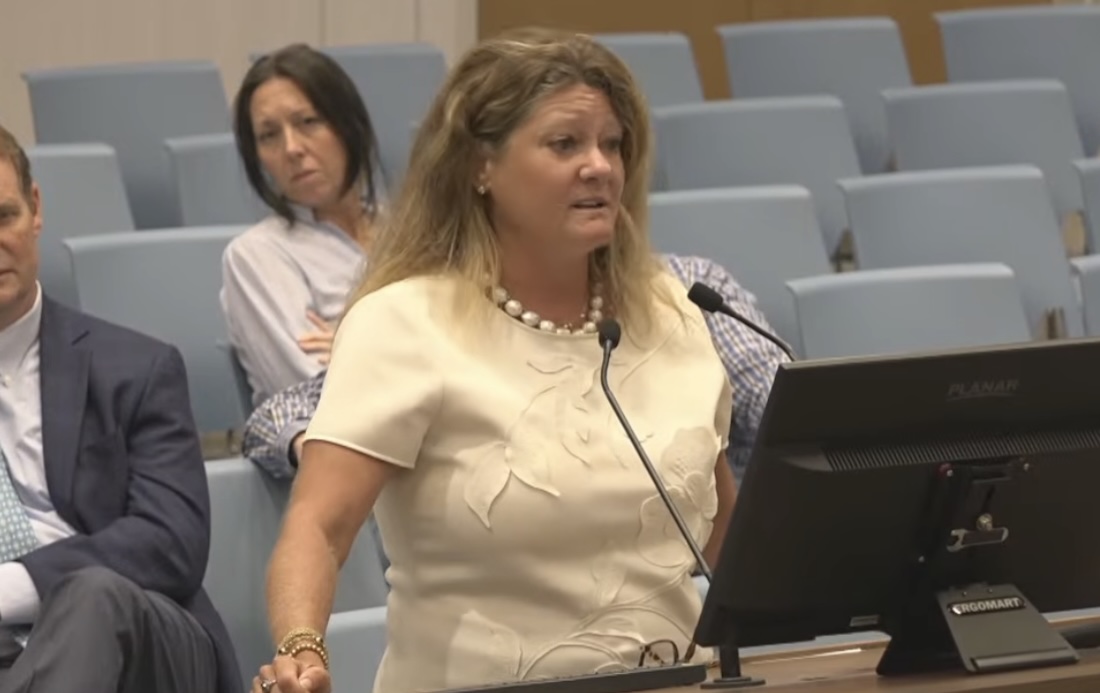
Hamilton — a former House representative and city employee — told council Tuesday her team has provided plenty of updates to the city and county in the last few years. Both entities funded the organization with a cumulative $1 million in 2023 using American Rescue Plan Act funds. Those funds have been spent as of 2025.
Hamilton told Port City Daily Wednesday ARPA funding protocols required detailed reports quarterly, also confirmed by the county.
“I’m sorry that your staff was unable to provide that for you today, but the record is there,” Hamilton told council Tuesday, adding this whole funding process has been “clear as mud.”
Hamilton indicated she went to the city council’s meeting this week because she saw discussion about the once-considered budget items listed on the agenda, but not because anyone from city staff asked her to attend. She told Port City Daily Wednesday she met with Chief of Staff Dennis LaCaria about a year ago to introduce herself and explain what the partnership does, and inquire about the process of receiving new funding. Though that process has remained unclear.
The Film Grant Partnership of North Carolina started in 2021 to increase the pipeline into the film industry with training and real-life workforce experience offered to paid apprentices.
“A lot of our industry is aging out,” Hamilton told Port City Daily Wednesday, citing the need.
Her meeting with LaCaria has been the extent of communication with city staff since, according to Hamilton. Though, she has been in contact with council, many of whom she said had shown support for continued funding.
During Hawke’s presentation to council about the film partnership, the city manager reminded elected leaders some metrics were provided in May upon the council first addressing the $100,000 ask.
According to the May 29 budget worksession memo, an infographic was shared, indicating the partnership in 2025 had worked on 13 productions, created 279 jobs, and facilitated $185.5 million in direct spending.
Council member Andrews said in the Tuesday meeting she found the infographic “hard to interpret,” particulaly when laying out how the taxpayer dollars are being spent.
After the meeting Andrews further explained to Port City Daily she’s only been given the Film Partnership of North Carolina’s original ARPA contract.
“I would like to understand how the partnership performed against the objectives of the original workforce development grant, how it has transitioned following the expiration of those one-time federal funds, and what its long-term funding model looks like,” Andrews wrote in an email.
So far in its infancy, Hamilton told Port City Daily the nonprofit has worked with roughly 450 interns and crew members, with 290 in New Hanover County alone. Hamilton estimated upward of 40 interns have exited the program and gone into the industry full-time, though said that number is in flux.
Interns have been placed recently on large productions like the Netflix series “The Hunting Wives,” filming in Charlotte, and “The Runarounds” — an Amazon series that filmed in Wilmington.
The nonprofit put 27 interns on “The Hunting Wives.”
“But they took 11 of our interns halfway through and changed them into regular crew,” Hamilton said about the efficacy rate on that project alone. “So then we were able to backfill with more interns.”
The paid intern rates are agreed upon between the production and nonprofit, with interns compensated through the production’s normal payroll. After the wrap, the Film Partnership of North Carolina audits the time cards and reimburses the interns’ pay.
Hamilton said payroll reimbursements were in the six-figure range for “The Hunting Wives,” while smaller independent projects, such as with Wilmington-based Honey Head Films, may be in the tens of thousands.
Payroll reimbursement makes up 90% or more of the nonprofit’s funding, she added.
Around 64% of the paid internships go to people who work in Wilmington and most are over the age 18. Though there is one exception: Once a year the partnership sponsors a GLOW Academy student to place a young girl in Honey Heads’ “Shoot Like a Girl” summer camp. The accelerator program has a mission to prepare girls with the necessary tools to seek a film career.
“I would really hate to leave here believing the majority of this city council does not support workforce development for the film industry in this state,” Hamilton said at Tuesday’s meeting. “We are the hub of the film industry in this state. New Hanover County has stepped up. If the City of Wilmington can’t do it, I’m not sure what we’re trying to do.”
The New Hanover County government has supported the film grant program with $600,000 of ARPA funds from 2023 through 2025. The county also granted the partnership $100,000 each in fiscal years 2025-2026 and 2026-2027, with county spokesperson Josh Smith noting the recent budget appropriation is contracted through June 30, 2027 and would have to be reconsidered in the next budget cycle.
The county said it requires performance measures and analysis to ensure the program aligns with the county’s mission. This came in the form of financial reports, summaries of initiatives and metrics quarterly for APRA money. However, under the economic development funding contract now in effect, the county asks for updates annually.
Mayor Bill Saffo mentioned Tuesday he would like the city to approach the program similar to the county’s economic development structure, done as a budget item.
The City of Wilmington funded the film partnership in 2023 with a $400,000 grant paid out from non-recurring ARPA funds.
That year the partnership also received $500,000 in state funding, but money was not allocated to the program in the recently passed state budget.
Andrews told Port City Daily regarding the legislators’ decision: “I also think it is appropriate to ask what role the City of Wilmington should play in funding an organization with a statewide mission, particularly when the North Carolina General Assembly did not include funding for it in the current state budget.”
Hamilton said the state’s funding helps pay for workforce development needs outside of New Hanover County and Wilmington. So far they have placed interns on productions in 29 counties. However, she repeated allocations from Wilmington and New Hanover County go toward local interns only.
Port City Daily reached out to Sen. Lee for insight into why the organization funding didn’t make it in the budget and if he’d be advocating for future money. A response was not received by press, though Hamilton said she is already working with Lee and Rep. Donny Lambeth (R-Forsyth County) to secure money in the next state budget, as the process begins in the long session in 2027.
While Hamilton confirmed plans to apply for the city’s Civic Development Partner Agencies grant when it opens in 2029, that would not help gap-funding needs now.
“If we have to wait another two years, that will be a huge hardship on the organization,” Hamilton told Port City Daily.
It would look like lessening the amount of interns placed on productions.
The program works with community partners like IATSE Local 491, Cape Fear Community College, and the University of North Carolina School of the Arts. Hamilton said council likely received numerous emails from supporters in the last few weeks, such as industry players — Jonas Pate, the local creator behind “Outer Banks” and “The Runarounds” and Erika Arlee at Honey Head Productions — and CFCC instructors and students.
During public comment Tuesday, Christopher “Kit” Johnson spoke, a former film and video production student from Cape Fear Community College. He said he was introduced to the Recognizing Individual Differences Exist program — an IATSE union program with industry professionals providing mentorships — through the Film Partnership Grant of North Carolina.
“It fostered connections with professionals in the industry and it developed my network,” Johnson said. “The first thing we are taught as students is 90% of the industry is who you know and the other 10% is who they know. Your work comes from your connections.”
He said he secured his internship with Hendy Street Productions, who has worked with Netflix and “Mr. Beast” but also with smaller organizations and companies, including the North Carolina Aquarium at Fort Fisher.
Hamilton told Port City Daily there are “tremendous job options” in film today as the industry has changed drastically and almost every corporate entity has some media or video component in its ranks. Currently, the film partnership is preparing to launch a multimedia program from Avid Learning Affiliate, which teaches video editing, coloring, sound and more. It will be covered by the partnership and offered for free to its interns.
Though the Film Partnership of North Carolina doesn’t place interns in corporate entities, it’s not off the table in the long run as the industry constantly shifts.
“I just think sometimes people overlook its importance,” Hamilton said of the film industry, also highlighting the significance of a program she helped found. “We’re creating jobs, we’re paying people — which is not something most workforce development programs do.”
Community Justice Center
Launched in 2024, the Community Justice Center provides wraparound services for domestic violence and sexual assault victims, with law enforcement, social workers and legal advocates located under one roof in The Harrelson Center.
David, the CJC’s director until the end of 2026, told council Tuesday if the city wants the center to continue being a place for synergy among all the organizations, the government needs to provide recurring funding.
“Put your money where your mouth is and fund the CJC,” David told council members.
The CJC’s first three years of operation have been funded with two grants from The New Hanover Community Endowment totalling $5 million. This covered capital improvements and rent — at a reduced rate of $280,000 annually — in the The Harrelson Center, along with eight district attorney’s office positions, four assistant district attorneys and four legal assistants. The Endowment money also covers two administrative positions, including director occupied by David.
On Tuesday, David said his operating and rent costs (not the district attorney positions) totals $400,000.
The Endowment grant expires at the end of 2026. Since inception, David has always envisioned the government picking up the CJC tab at the end of the grant, particularly the eight district attorney’s office positions. Though as a nonprofit, he told Port City Daily the CJC could apply for other grants to cover operating expenses; all other organizations located in the CJC, such as the Domestic Violence Shelter and Services and Rape Crisis Center, pay for their own operating expenses.
David’s request to the city is for $100,000, recurring for the next three years. If council chose not to grant the contingency funds, Hawke told council Tuesday it could direct David to the Human Services Grant Program.
Hawke pointed out the program has been “revamped” for fiscal year 2026-2027, switching to an RFP process for nonprofits seeking funds. The switch means the city will be able to direct what community projects it would like to fund rather than having nonprofits request money. RFPs should be coming to council for approval in the next few months before they are released for applicants, according to Hawke.
However, David argued before council he did not want to compete among other nonprofits because the CJC is an amalgamation of government agencies and multiple nonprofits.
Council could also consider a lease agreement with the CJC for the 500 square feet of space the Wilmington Police Department occupies in the Harrelson Center. However, the maximum amount the city calculated under this agreement would be $13,380; this amount, instead of $100,000, could be pulled from the contingency fund.
“Using the contingency fund for a lease agreement does create a clear differentiator from other funding requests that we might get from nonprofits, as far as why we might be looking to do something like this out of cycle,” Hawke said.
The city manager also noted the Community Justice Center has, unlike the Film Partnership of North Carolina, received funding from other sources.
The New Hanover County commissioners committed $300,000 in operating support for the CJC in their latest budget, plus $430,000 to cover the eight district attorney’s office positions from Jan. 1 through June 30, 2027; $100,000 from the city would reach David’s $400,000 operating figure.
However, the CJC was also granted $200,000 in the state budget. David told Port City Daily on Wednesday this money was not restricted to rent or overhead expenses, while the money from the city and county would be.
Because the state and county operating funding totals $500,000, Port City Daily asked David if the CJC needed the requested grant from the city. He did not respond by press.
Though the $300,000 from the county is intended to be recurring, the additional money the county provided for the eight prosecutor and legal assistant positions may not be, according to New Hanover County District Attorney Jason Smith.
“The [county] didn’t say: ‘Jason, it’s one year only’ but they didn’t say ‘Jason, we’re going to fund it for the rest of your career,’” Smith told Port City Daily Friday. “I know that we have to go and fight for them every year.”
The ideal, Smith said, is for the state to add the positions in their district attorney’s office budget; he told Port City Daily he was talking weekly with officials asking them to fund the additional positions. This year, the state did include money for 18 more assistant district attorney positions in its budget, though Smith said none are for his office.
A 2022 study of district attorney offices across the state noted the New Hanover County and Pender offices needed seven to eight positions, though none are included in the state budget yet. Plus, there is no timeline on when they should be filled, Smith said.
The DA said it was not unusual for the county to fund some positions through the DA’s office, though typically not this many, which he expressed gratitude for. He also noted he asked for more positions — last year he told Port City Daily he thought the office needed 10 positions outside the current funding level — but was declined.
Smith has told Port City Daily in the past he thought the CJC had been beneficial for his staff, allowing the caseload to be more spread out among assistant district attorneys. It also allows them to have nonprofits right down the hall to direct victims to for more help.
The DA is still working on the youth component of the CJC. Though David based the nonprofit on the national Family Justice Center model, founded by the Alliance for Hope International, the CJC differs in its mission by also focusing on curbing youth violence. However, the youth portion of the mission has yet to be fully realized at the CJC.
David also told council, though data hasn’t been asked for regarding CJC outcomes, he would provide it. He told them there is also a standing invitation to tour the center.
The CJC has also struggled to demonstrate its successes and impact in hard numbers. Recently, The Endowment paid $60,000 — outside of its typical grant process and without public notice — for Alliance for Hope International to assess New Hanover County’s Community Justice Center. The Endowment told Port City Daily the assessment will provide “valuable support and technical assistance” to the CJC by offering “opportunities for course corrections and continuous improvement.”
Next steps include council getting requested data, sooner rather than later as most members pressed, and letting the city manager know the dollar amount they want in a resolution for council to vote on at a future meeting.
At Port City Daily, we aim to keep locals informed on top-of-mind news facing the tri-county region. To support our work and help us reach more people in 2026, please, consider helping one of two ways: Subscribe here or make a one-time contribution here.
We appreciate your ongoing support.
