


WILMINGTON — The first all boys charter school in North Carolina is in the works in Wilmington and the nonprofit behind it is bringing a former New Hanover County Schools leader into the fold.
New H.O.P.E. CDC — which stands for Helping Ordinary People Excel Community Development Corporation — led by founder and CEO Pastor Robert Campbell, wants to open New Hope Tech Prep on Sixth Street, hopefully by August 2028, if all goes according to plan. Campbell submitted the 500-page application to the Department of Public Instruction with the help of Charles Foust, former New Hanover County Schools superintendent.
READ MORE: Brunswick schools eye affordable housing for staff
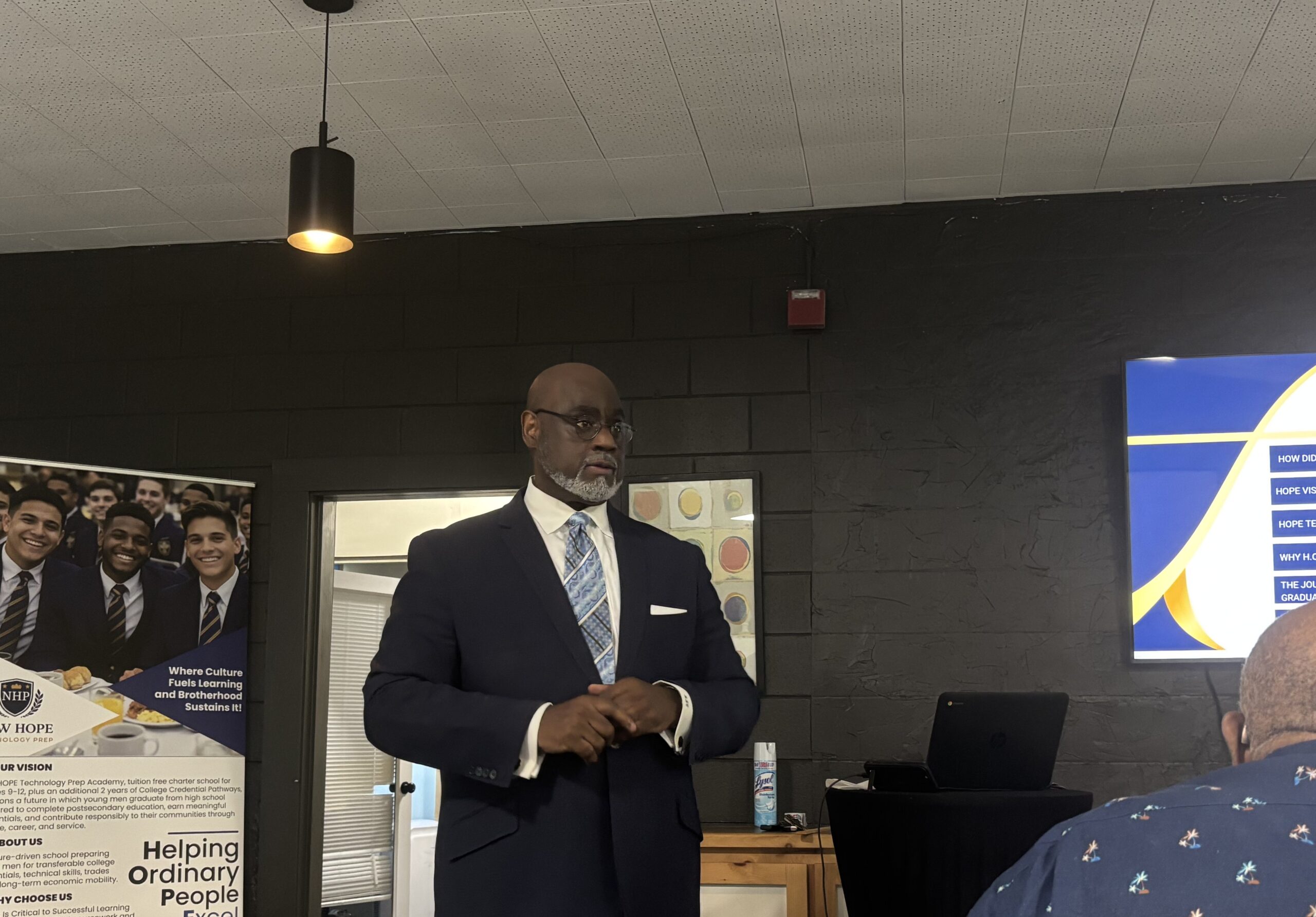
Campbell announced Thursday evening, during the first information session hosted about the school, that Foust was named superintendent almost three weeks ago; the news was met by immediate cheer from a small group of attendees.
“Our vision is to help these young men to graduate high school and be prepared to complete a post-secondary education,” Campbell said.
New Hope Tech Prep, if approved by the state, will serve male students in 9th through 12th grade, launching with 95 enrollees to start; the state minimum to open a school is 80. Enrollment will be accepted on a first-come, first-serve basis for now, though Campbell hopes to expand the school’s population to need a lottery system.
Within a week of being brought onto the team, Foust completed the charter application for the nonprofit; New Hope Tech Prep would have had to wait another year to apply otherwise, had it missed the April 24 deadline.
As part of the application process, the school’s board and founders will need to be interviewed by the Charter Schools Review Board at the Department of Public Instruction in Raleigh.
There are 214 charter schools in North Carolina, as of February 2026, according to a report from myFutureNC; since 2024, eight schools were added. Between 1997 and 2022, edNC reported 26.26% of charter schools were approved by the state, only a little more than a quarter of all applications over the course of 25 years.
“I know there is a need for it,” Foust said of the school, adding he will be focused on “consistency, expectations, level of rigor and making sure that we don’t forget about the person that’s in the back of the classroom. And we don’t forget about the teacher who is struggling.”
In an interview with Port City Daily, Foust and Campbell addressed out of the gate they would not answer questions regarding the superintendent’s firing from New Hanover County Schools. Foust was the first Black superintendent in the district but was ousted from his position in July 2024 following a unanimous vote from the school board, absent two members. Though the board had voted in August 2023 to reup his contract of $250,000 for four years, they took up his termination in closed session 11 months later.
Their vote followed results from a NHCS climate survey overwhelmingly noting the school board and district leadership were “out of touch” with the realities of teaching and the public school system’s challenges. Some comments pointed Foust out directly, stating he was not familiar with the needs of students and teachers because he did not visit schools nor check in regularly.
When asked if Foust harbored any hesitation or concerns about re-entering the education sphere in New Hanover County, he didn’t hesitate.
“When I came, I was highly effective, and when I left, I was highly effective,” Foust said. “The only thing that was taken from me was the position, the contract. I give no one power over me to make me feel less than. That’ll never, ever happen.”
His firing came on the heels of winning the 2024-25 Southeast Regional Superintendent of the Year, voted on by the 12 superintendents in the region. He said he was proud of his accomplishments while leading the school district, including placing 15 in the state in performance ranking, improving academic performances of 14 schools, and moving five schools out of the “low-performing” category.
Campbell cited the Superintendent of the Year recognition as a sign of the educator’s merits and called Foust’s firing “political” Thursday evening. Many Black members in the community spoke against his termination at the time as well, stating it came because the margin of error is smaller for Black than white leaders.
Foust and Campbell said, rather than focusing on the past, they were concentrated on the future and work being done for young men in the region in the charter school venture. Campbell said Foust was familiar with the culture and challenges of the student body the charter expects to enroll, primarily Black and brown students. While school founders have no intention of leaving out other races — nor can they, legally — outreach is happening in predominantly minority and low-income neighborhoods.
Campbell wants New Hope Tech Prep to address the “achievement gap” in young men of color. He referred to both a disparity in academic success and a chasm between predominantly rich, white schools and low-income Black and brown schools in regards to funding, engagement and resources.
According to 2024 numbers from the Nation’s Report Card, a data tracker measuring achievement gaps between student groups, in mathematics white male students scored 160 on average, while Black male students scored 34 on average, leaving a 126 point disparity. The numbers are based on the National Assessment of Educational Progress, a congressionally mandated program overseen and managed by the National Center for Education Statistics, a federal agency which collects, analyzes and reports data about U.S. schools.
The achievement gap is a culmination of years of systemic racism and socio-economic disparities, which also impact Black and brown communities primarily, according to the Center for American Progress. Also, schools with predominantly low-income students typically have less experienced teachers due to high turnover and budget restrictions, Learning Policy Institute details.
In New Hanover County 13 schools, with D or F grades, are considered “low performing” with the North Carolina Department of Public Instruction. Among them are The Rachel Freeman School of Engineering, Forest Hills Global Elementary and A.H. Snipes Academy of Arts & Design, all of which have high concentrations of minority students.
Campbell would like to see New Hope Tech Prep focus on STEM classes, incorporate entrepreneurship courses, lifestyle classes, trade classes and digital literacy courses. Reading and writing will be included as well.
Campbell added the charter will help students receive their associate’s degree from Cape Fear Community College — making sure graduates are being held accountable by advisors and providing them with resources.
There are about 89 possible faculty candidates considered thus far, though the board still is working through hiring needs. Foust said the goal is to get students “into small classrooms with highly effective teachers.”
Having teachers and staff with knowledge about the student body’s background and culture, Campbell said, helps navigate challenges specific to them.
“Curriculum is the car, culture is the gas,” he said.
According to Campbell, he wants to hire trauma-informed staff, as many Black and brown or low-income students often face different home-life issues. For example, 64% of Black children live in single-parent households, according to the Kids County Data Center from the Annie E. Casey Foundation. Parent engagement has proven to keep students accountable and supported, but can prove more difficult in single-parent households.
“We’re going to make sure they understand we see them, that we’re gonna be more committed to them when they fall down than when they’re up,” Campbell said.
Foust said fostering a culture of accountability, expectations and support will ensure “every child has the opportunity to learn.”
“And on the other end,” he added, graduates will become “highly successful citizens who go out into the community.”
Campbell also wants to implement what he calls “Hope Scholars” — involving students who graduate from New Hope Tech Prep. They are invited back to speak to current students, provide mentorship, and check in with the school about goals and needs while acclimating into adulthood.
In addition to core values focused on culture and curriculum, the school also will include community engagement. Campbell named the Wilmington Chamber of Commerce, the Latino Business Council and the African-American Business Council as local groups he hopes to involve in the school.
He said Atiba Johnson, founder of the Minority Chamber of Commerce and one of New Hope Tech Prep’s board members, wants to establish a partnership between the school and minority-owned businesses. Campbell foresees connecting students with internships, gaining funding from businesses, and having minority business leaders educate and inspire students through routine assemblies and meetings.
He explained students seeing minority entrepreneurs at work would be inspiring.
“We’ve come to this place where our kids are falling further and further behind,” Campbell said, “and I believe that the only way they’re gonna catch up is that our community … has to come to the table and make a difference.”
New H.O.P.E. CDC — which has created affordable housing developments in town and works to bridge gaps for marginalized groups with housing assistance, rehabilitation, and education — still must secure funding to open the charter. The cost for purchasing the building is about $1.8 million.
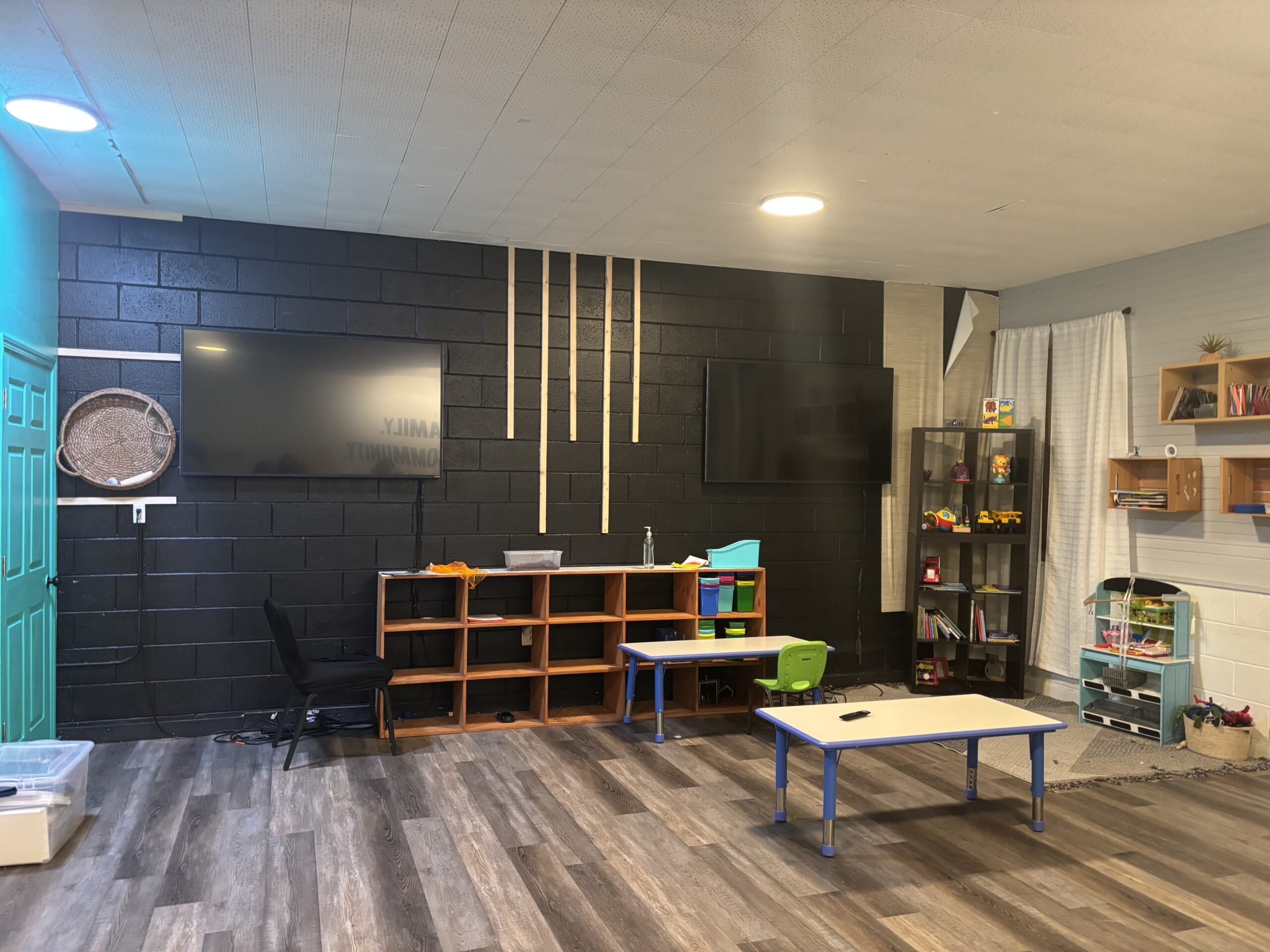
Campbell chose the Purpose Church International as the location, due to its geography on downtown’s Northside. Also, the church once served the Black community as James B. Dudley School, but closed in 1983 due to declining attendance following desegregation.
The church planned to sell the building to a developer, according to Campbell, but when he approached leaders about buying the property instead for a school, they struck an agreement. The property has an auditorium, a kitchen, several classroom spaces, and is about more than 13,000 square feet.
Port City Daily reached out to the church about the sale.
“As we’ve reflected, we’ve recognized that our facility — while a tremendous blessing — has been underutilized throughout much of the week,” a spokesperson said. “That realization has led us to explore creative, mission-aligned opportunities to better steward our resources while serving the broader community in meaningful ways.”
Campbell said he will rent the auditorium out to the congregation, so they will not lose worship space.
“It allows us to maintain a positive presence in Wilmington’s Northside area while expanding our community impact — particularly in education and youth development — without compromising ongoing ministry,” the church spokesperson added.
New Hope Tech Prep will receive roughly $665,000 from the state, Campbell said, but only after it opens; the money accounts for state-funded per-pupil allotments. By his calculation, he anticipates around $7,000 per student based on early enrollment numbers.
Campbell concluded the nonprofit would need an additional $700,000 to satisfy New Hope Tech Prep’s needs — to pay for student transportation, coursework, experienced teachers, student uniforms, and more.
Plans include applying to The Endowment, which funded New H.O.P.E.’s affordable housing project, and community fundraising. Campbell has pledged $100,000 of his own money but is in the process of hosting informational sessions, with two more planned on April 9 and 16, to push fundraising efforts and increase enrollment.
Campbell told Port City Daily he’s planning to invite elected officials and the mayor to the April 16 session. New H.O.P.E. CDC also has sent about 5,000 interest surveys sent to community members and families in New Hanover County and will extend invitations to Brunswick County.
Campbell, Foust, LINC director Frankie Roberts and Young Moguls executive director Travis Corpening are planning to host a forum on Facebook to answer any questions about New Hope Tech Prep as well.
“We want to prepare students for where they’re going,” Campbell said. “I want them to know that they are entrepreneurs. I want them to know that they’re business industry leaders. I want them to know that greater is available for them if they can see it, but you start here, you start now.”
Have tips or suggestions for Emily Sawaked? Email [email protected]
At Port City Daily, we aim to keep locals informed on top-of-mind news facing the tri-county region. To support our work and help us reach more people in 2026, please, consider helping one of two ways: Subscribe here or make a one-time contribution here.
We appreciate your ongoing support.
