


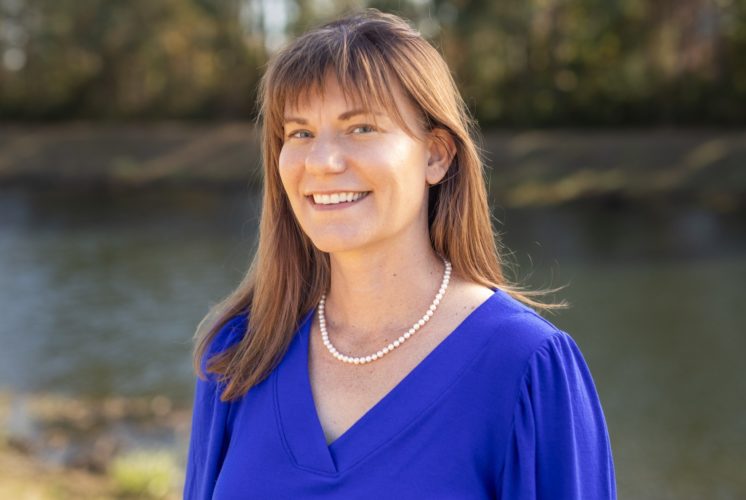
WILMINGTON — Cassidy Santaguida, a software product manager, is seeking one of three seats on Wilmington City Council.
Santaguida first entered the local public sphere in 2024 when she ran for New Hanover County commissioner seat.
“Wilmington is at a crossroads,” she wrote to PCD as part of her city council questionnaire, sent to all candidates. “Growth is happening quickly, and we need leaders who will ensure it’s sustainable, equitable, and benefits everyone, not just a few. I’ve never held elected office. I began my career as a public school teacher, and transitioned into a career in software technology. Those experiences taught me how to solve complex problems, bring people together from all walks of life, and focus on results. I believe Wilmington needs new voices and fresh ideas, and I’m ready to serve.”
The city council is a nonpartisan race, though Santaguida is affiliated with the Democratic party. She’s up against incumbents Luke Waddell (R) and Clifford Barnett (D), and newcomers Richard Collier (R), JC Lyle (D), Kelly Roberts (R), and Chakema Clinton-Quintana (D). Sean Guerrero (R) will also appear on the 2025 municipal ballot, though he dropped out of the race earlier this month.
Port City Daily asked all candidates a slate of questions about topics that are tracking high with voters and residents of Wilmington currently. Santaguida’s answers have been edited below for clarity.
A few things to consider this election season:
- A valid ID is required to cast ballot in North Carolina
- Election Day is Nov. 4, 2025, with voters required to go to their assigned precinct locations
- Early voting opens Oct. 16 and closes Nov. 1, and voters can cast a ballot at any of these four sites: Northeast Library (1241 Military Cutoff Road), Carolina Beach Town Hall’s Police Training Room (1121 N. Lake Park Blvd.), Cape Fear Community College’s McLeod Building, (411 N. Front St.), and New Hanover County Senior Resource Center’s Multipurpose Room, (2222 S. College Road). See all hours of operation here where you can also track the wait times at each early voting location.
- Anyone who wants to register to vote can do so here through Oct. 10 or register and vote in one stop during early voting
The paywall has been dropped on candidate profiles to help voters make informed decisions ahead of the election. Candidate opinions and statements are not a reflection of Port City Daily.
Port City Daily: What makes you qualified for a seat on council and sets you apart from other candidates?
Cassidy Santaguida: I bring a unique mix of experience as a former teacher, a technology professional, and a parent. I know how to listen, problem-solve, and adapt. What sets me apart is that I’m not a career politician, I’m someone who has lived the challenges of working families and wants to make local government more responsive, transparent, and accountable.
PCD: Homelessness continues to be debated among area leaders; what isn’t being discussed about it, in your opinion, that you think could help better steer its direction? Do you support implementing the former joint strategy that the city and county devised in September 2024? If not, why and what strategies do you think should be implemented? How much money would you support the city dedicating to the effort?
CS: What’s often missing in the conversation is long-term solutions that pair housing with wraparound services. Shelters are critical, but people need supportive housing, mental health care, job training, and recovery programs to truly stabilize. I support the spirit of the city-county joint strategy developed in 2024, and I’d like to see stronger accountability to the direct input from service providers and people with lived experience. I’d support a meaningful city funding commitment to fund this strategy, in combination with county, state, and federal dollars. We can’t afford to treat homelessness as temporary; it requires consistent investment and collaboration.
PCD: In development conversations, the supply of housing and affordability are often at odds with residents’ desire to keep density low. How would you propose tackling these issues respectively? Do you think it’s possible for the city to satisfy both desires? Why or why not?
CS: It’s possible to balance housing needs with livability, but it requires thoughtful planning. We should prioritize infill development where infrastructure exists and ensure new projects include affordable units, not just luxury housing. Residents are right to be concerned about overdevelopment, and we need to hold developers accountable for projects that fit our community’s character. With smart growth, we can expand supply, keep housing affordable, and still preserve the charm that makes Wilmington special.
PCD What does balancing green space with development needs look like in your view, such as when it comes to protecting wetlands or rebuilding the tree canopy? Do you have examples of cities or developments that have done this successfully?
CS: Green space isn’t a luxury — it’s critical for health, climate resilience, and quality of life. Development should be paired with strong tree canopy requirements, wetland protections, and incentives for green design. Cities like Asheville have paired growth with strict stormwater protections and tree ordinances, showing you can build while preserving the environment. Wilmington should do the same by investing in urban forestry, protecting waterways, and making green space integral to planning.
PCD: With the Cape Fear Memorial Bridge price tag escalating to more than $1 billion, how to fund it also remains debated. Both a toll has been floated and a transit sales tax, which would need voter approval potentially in a tri-county referendum that could include multiple projects in New Hanover, Pender and Brunswick counties. Do you support either and/or is there another option you think should be considered to fund the bridge replacement?
CS: The bridge is essential, but we can’t put the burden on working families through tolls. I do not support tolling commuters who rely on the bridge daily. A regional sales tax could be worth exploring, but only if paired with broader transportation investments and approved by voters. Ultimately, the state and federal government must play a leading role. City leaders should advocate aggressively for infrastructure funding that doesn’t unfairly burden residents.
PCD: Traffic is a main complaint for Wilmington residents — how do you envision the city’s role in addressing it? Do you think the city should promote public transportation or the expansion of it? How so? Do you think the city’s current plan to maintain and improve the roads it owns is/will be effective?
CS: Traffic is one of Wilmington’s biggest frustrations. The city must invest more in public transportation. We can start by advocating to bring public representatives back to the WAVE Board, introducing innovative programs and ridership models to expand WAVE routes, and making stops safer and ADA-compliant. At the same time, we need to coordinate traffic management with NCDOT and encourage multimodal options like biking and walking. The city’s current road maintenance plan is a good start, but without better transit and smarter growth planning, congestion will continue to get worse.
PCD: With a new police chief starting his post for the WPD this fall, what areas would you like to see him focus on to strengthen public safety and create a sustainable workforce? Explain.
CS: I’d like to see a focus on community-based policing, building trust, and ensuring accountability. Retaining officers requires fair pay and a supportive work environment, but public safety also means addressing root causes of crime: housing insecurity, addiction, and lack of opportunity. Expanding mental health crisis response teams would both ease pressure on officers and improve outcomes for residents.
PCD: As the city continues to see an influx of residents, how do you think city council should ensure Wilmington’s economy keeps pace and opportunities remain varied across all ages and types of households? What can the city do to ensure all its residents have a high enough wage to afford life in Wilmington?
CS: City council should focus on industries that create good-paying, sustainable jobs while also supporting small businesses. Workforce development is key: partnering with schools, Cape Fear Community College, local nonprofits, and local unions to ensure residents have the skills to fill these jobs. To ensure wages keep pace, I support policies that strengthen worker protections and encourage employers who provide fair wages and benefits.
PCD: Some residents have accused the city council of only representing a select few in the community, rather than the needs of all. Do you agree with this sentiment? Explain. What would you do in a leadership position to represent more equitably?
CS: I’ve heard the frustration that city council sometimes represents only a narrow set of interests. I believe leadership should be rooted in listening to all residents, especially those historically left out of the conversation. If elected, I will hold regular listening sessions and share city updates in neighborhoods across Wilmington to ensure my decisions are guided by transparency, equity, and accountability.
PCD: What is one other issue not discussed above that you have a plan to address if elected and how would you do so?
CS: One issue not discussed enough is climate resilience. As a coastal city, Wilmington faces risks from flooding and hurricanes. I would push for stronger stormwater management, investments in resilient infrastructure, and green building practices. Preparing now will protect lives, property, and our economy in the long term.
Want to read more from PCD? Subscribe now and then sign up for our morning newsletter, Wilmington Wire, and get the headlines delivered to your inbox every morning.
