


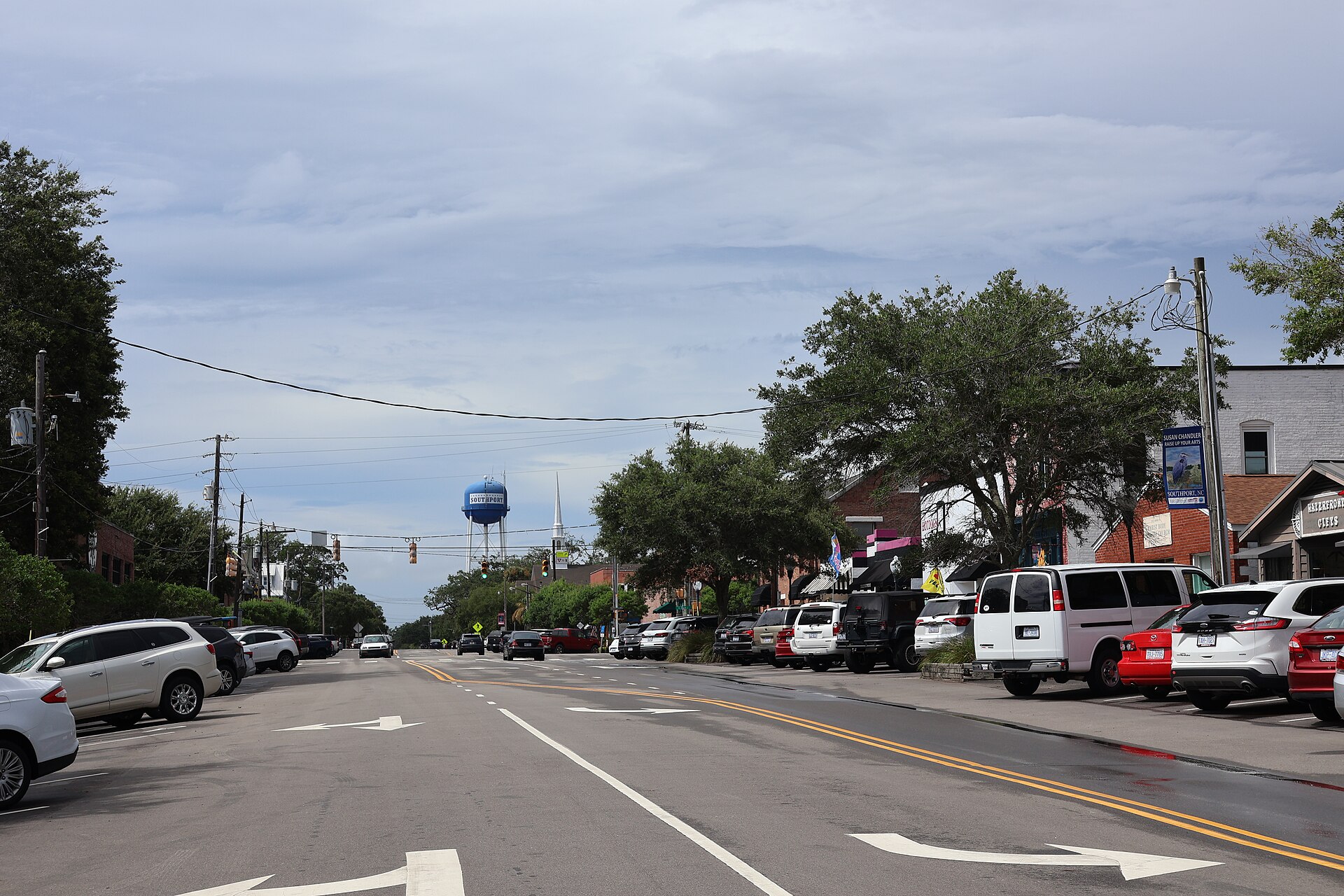
SOUTHPORT — A coastal town with a rich history is considering an historic district overlay to strengthen and preserve its heritage.
READ MORE: ‘Didn’t pass the sniff test’: Former Southport PB chair speaks about reappointment rejection
Fire Chief Charles Drew is the chairman of Southport’s Historic Preservation Commission and presented to the board of aldermen at its July 10 meeting a 200-page document the nine-board commission (seven regular members and two alternates) has been devising for three years. A public hearing was held about its potential adoption, with a mix of reviews from area property owners. Aldermen haven’t taken a vote yet on its adoption yet.
“It’s not too late to protect what we have left,” Drew told a packed house earlier this month, as a public hearing was held on the plans.
Established in 2022, Southport’s Historic Preservation Commission joins more than 100 in existence across North Carolina. The groups are governing bodies that work to protect and preserve the history of a municipality, including its buildings, cultural landscape and landmarks. They devise design standards, goals and guidelines, and educate the public on preservation efforts.
The group has held two forums with the public so far to gather feedback to help inform the execution of the district. Another meeting will take place Monday, July 28, at 2 p.m. at Indian Trail Meeting Hall, 113 W Moore St.
There are three areas that have to be approved by the aldermen, already unanimously agreed to by the planning board. It includes an update on design standards, a designation report and the overlay zoning map.
The Southport Historic District Overlay map envelops the entirety of its local historic district, designated in 1980, and a portion of the Historic District Boundary Amendment (created in 2010). Minor adjustments were made from the State Historic Preservation Office, which suggested including Kingsley Drive and the southside of Brown Street; areas in the Yacht Basin were redrawn due to noncontributing structures that exist there.
“That’s what we are trying to stop,” Drew said. “Because the Yacht Basin has been allowed to change. We don’t have the working fish houses where you could buy local seafood like you used to.”
He said Potters Seafood remains in the overlay map, however.
Though Southport is on the National Registry of Historic Places, it doesn’t offer regulatory standing. Drew gave an example.
“The oldest known standing residential structure in Southport is the Walker Pike House, built in 1800,” he said. “It’s currently in the 1980 historic district but it has no protection. It could be demolished and a modernized block structure could be built back in its place, as long as it met the requirements of the current UDO and zoning ordinances.”
While devising a map of the Historic District Overlay wouldn’t stop a property owner from choosing to raze their home or business, it could stall the process. Designating the overlay would give commissioners a year to delay demolition, study alternatives and attempt to work with the owners to show the property’s value to the community. If the property owner still wanted to tear down a structure, he or she would have to rebuild to the overlay’s guidelines.
The overlay map includes 386 parcels. According to Southport Historic Planner Penny Tysinger, 253 are dwellings (not including accessory buildings), 60 are commercial buildings, 11 are religious and institutional buildings and 20 are vacant lots.
Drew was clear: “We aren’t trying to regulate you to death.”
Some remained dubious, still.
Debbie Barnes, whose home is located along West Street, said she would be in the district overlay, though her home isn’t historical. Barnes praised the committee for their thoroughness and believed in having historic preservation. However, she was concerned she would have to remove her vinyl siding or vinyl windows, as the document indicates vinyl isn’t appropriate.
“Are we grandfathered in?” she asked, noting those changes would be a fiscal burden. “So if we’re not in compliance with these rules, are we going to be expected to make changes?”
“We’re not going backwards, we’re moving forward,” Drew said, noting it’s OK to replace materials with the same kinds installed currently. “We won’t require you to put something else in.”
Though the guidelines indicate vinyl or aluminum siding is not permitted, it does delineate it is allowed if already in use: “Where vinyl or aluminum siding exists, it can be maintained and replaced.”
Barnes also questioned her hurricane shutters, which are metal, noting the document puts emphasis on wood: “We use those shutters to protect us from hurricanes but also use them in the winter.”
Drew maintained they would stay as well.
Barnes was one of a dozen people who spoke during public comment. Some suggested standards put forth in the document should only be used as guidance but not be mandated.
The zoning map and building code would remain the same for affected property owners. The overlay would strengthen restrictions to some exterior changes made to a property and would require applying for a certificate of appropriateness if vast changes indicated altering the building’s historic character or could cause damage to historic materials.
HPC is a quasi-judicial board, so anything proposed for individual properties have to go through a hearing. This is conducted much like a court proceeding and only people with standing can present expert evidence and testimony. No ex-parte communication is allowed, meaning information is only provided to the commissioners at the hearing, not before.
Aldermen Karen Mosteller noted there is an appeals process. Her colleague, Lowe Davis, asked what would trigger going before HPC for a certificate of appropriateness.
Planning staff member Maureen Meehan said normal maintenance — such as painting, removing fences or plants — won’t require as much, while changing walkways or removing trees would prompt the certificate process.
Aldermen Rebecca Kelley gave an example of having purple shutters on a home in the district overlay and not having to contact anyone currently if she wanted to change them. However, she metaphorically described them as wood, but said she desired metal that gave the appearance of wood.
“It would help with insurance purposes,” she said, referring to protection efforts against storms. “Am I allowed to do that?”
That would require a certificate of appropriateness, Drew said.
He added the HPC, however, didn’t want to dictate the color in which someone can paint their home.
“That has been removed,” Drew explained. “We also are not trying to tell you to use alternative building materials.”
He said the goal of the historic commission has been to compromise with residents, noting the guidelines are a “living, breathing document.” In other words, it can continue to be amended and revised to suit the needs of the community, whether boundaries need to change or otherwise.
Resident Rich Bandara disagreed with the Yacht Basin being left off and thought some guidelines were “excessive.” He also took issue with the timing of the certificate of appropriateness.
“They have 180 days to issue it, which is six months from the time you apply to the time they have to reply back,” he said during public comment.
Drew clarified that’s the timeline for the whole process and a ruling has to be done by the commission, as set forth by the General Assembly.
“It’s not saying it’s going to take that long, it’s just saying we can’t prolong it beyond that,” Drew clarified.
Resident Jim Brown, who owns the historically registered Thompson-Williamson House on Howe Street, was in favor of the overlay. Having served as an alderman in Southport before, Brown said they considered acting on similar district 20 years ago but didn’t because the timing wasn’t right.
“But now’s the right time,” he said, “to preserve the character of the historical district.”
Tal West and Josh Kline-McGee, both members of the HPC, pointed to positive outcomes of having a district overlay. Kline-McGee said “growth and change” is coming to Southport, especially once the expansion of Highway 211 is complete.
“But what you want is quality development,” he said. “An historic district helps maintain the monetary value of the community and historic districts tend to have higher property values. And that attracts quality investment.”
Resident Jessie Pierce, a former law enforcement officer and firefighter, spoke against the move. He lives on College Street and said the town didn’t need to become an HOA.
“I think there are better answers than putting restrictions in place,” he said, suggesting letting individual homeowners put deed restrictions on their property on their own accord instead. “We have an amazing Fourth of July Festival in this town to celebrate freedom. I see this as, ultimately, you’re trying to restrict my freedoms.”
He lobbied for his tax money to be spent on other needs of the town, including public safety and infrastructure.
Alderman Marc Spencer, a Southport native, questioned putting limitations on taxpayers. If they want decorative shutters on their homes, for instance, he believed they should be allowed to showcase their creativity, saying that’s the culture of Southport. He also thought property owners should be allowed to explore resilience against storms at their freewill, no matter the materials used.
“When we talk about this overlay district, I’m concerned about building things that will survive hurricanes,” he said. “I’m afraid to get away from steel and concrete cause those are the things that survive hurricanes. I’m worried about limiting people and maybe they die because we don’t let them have a safe structure.”
Bonnie Bray, HPC commissioner, said during public comment the document will be used on a case-by-case basis.
Southport staff anticipates the document going before the aldermen on Aug. 14, with a request for action to adopt the designation report, the overlay map, and design standards.
Want to read more from PCD? Subscribe now and then sign up for our morning newsletter, Wilmington Wire, and get the headlines delivered to your inbox every morning.
