


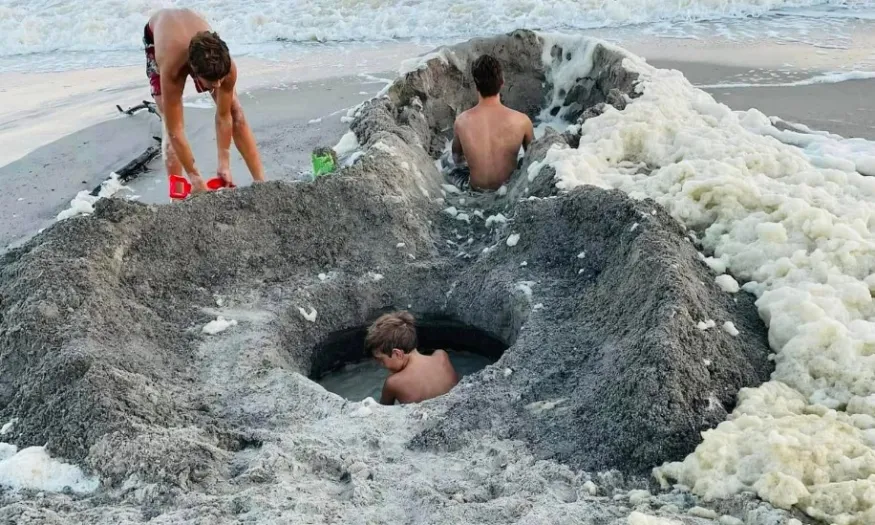
OAK ISLAND — A Brunswick County beach town is looking closer at beach safety measures, particularly when it comes to holes that are being dug along its shoreline.
READ MORE: More than a machine: How a robot is propelling beach conservation
This week Oak Island Town Council has further restricted what’s allowed by beachgoers who come armed with shovels, whether used for digging trenches to sit in, build sandcastles and such.
Ordinance 14-142 once stated, simply: “Holes dug on the beach are required to be attended at all times and filled prior to leaving the beach.”
A unanimous decision by council means the amended ordinance now indicates holes dug on the beach strand cannot be:
- Deeper than 12”
- Created with anything other than toy shovels (unless maintenance staff needs to use sturdier tools in an authorized areas)
- Left unattended at all and must be completely filled by 6 p.m. daily
Council asked at its meeting this week how it would be enforceable.
Oak Island Fire Chief Lee Price said OKI Beach Safety Unit or the Oak Island Police Department could now issue fines for $50. There will be a month grace period of pushing out messaging to communicate the change before fines are executed.
“We have had a tremendous issue with digging holes this year,” Price said, noting he received a photo last week of a gentleman who was buried in the sand and only his head was visible. “When I went out and investigated it, there were six other holes in the beach and it looked like bombs had gone off.”
According to the OKI Beach Safety Unit, since May there have been 205 large, deep holes the town had to fill after beachgoers left them gaping upon exiting the shore for the day. Price said his biggest concern is the danger it leaves behind for children.
People falling into the hole could find themselves in a perilous situation if rushing water comes in from the surf or at high tide. Last year, Oak Island Water Rescue endured additional training for this type of emergency.
“It only takes 100 pounds per cubic foot of sand to collapse on a child and it’s a rescue, it’s a recovery,” Price told council.
It also poses threats to pets and wildlife. In particular, it’s dangerous for sea turtles and hatchlings, which can be disorienting when trapped in large holes.
Price added first-responders are compromised when needing to access the shoreline quickly for a 911 call and don’t see unattended holes left behind. He added this year it’s averaged out so far to be two rescues a day.
“They’re focused on the person they’re trying to get to on the beach, not a 4-foot hole they’re getting ready to fall in,” he said.
At night, the trenches aren’t visible and can lead to further injuries as well.
Mayor Elizabeth White was concerned that tourists wouldn’t get the message, though she was confident residents more in tune with the town would.
“We have a new population every week right now,” White said, worried how to reach them.
Price assured her the beach teams are constantly patrolling and can spread the message. Last month alone, they made 750 contacts with people on the strand, he said, whether discussing rip currents, flags color codes or holes.
“That’s where we will focus first: on education,” he said.
The ordinance changes are now in effect.
Want to read more from PCD? Subscribe now and then sign up for our morning newsletter, Wilmington Wire, and get the headlines delivered to your inbox every morning.
