


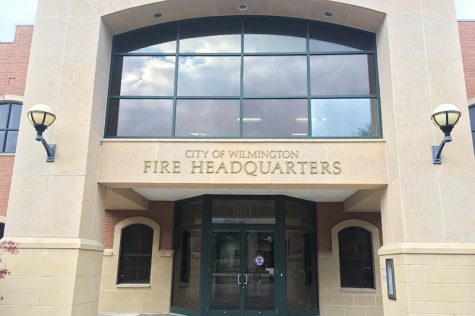
WILMINGTON — It may seem pretty straightforward, but still, structural damage caused by fires from improperly discarded smoking materials remains at the top of firefighters’ risk list.
In fact, in 2017, there were more than twice as many fires caused by improperly discarded smoking materials compared to last year, according to the Wilmington Fire Department’s records management system.
Assistant Fire Chief Sammy Flowers is all too familiar with the common sense issue that persists regardless of public education efforts.
“That’s probably one of our top three or four calls determinations on fires here in the Wilmington area,” Flowers said.
As of Dec. 2, the number of fires caused by improperly discarded smoking materials in Wilmington is 14. In 2016, that number was 6.
“We always put out on our fire safety messages about disposing smoking materials,” he said. “Whether it be cigarettes, cigars, pipes that type of stuff.”
Wendy Giannini-King, risk reduction coordinator for the Wilmington Fire Department, said it never stops its public education efforts.
“We do fire prevention literally 365 days a year,” she said. “We are huge advocates that prevention is better than cure.”
According to the National Fire Protection Association found the following information on fires caused by improperly discarded smoking materials:
- A majority of fire fatalities, injuries and structural damages are caused by smoking materials discarded in the home.
- 1 out of 4 fatal victims out of is not the smoker.
- Smoking material is the leading cause of fire fatalities.
- The risk of fatality caused by smoking materials in a home fire increases with age.
“It is 100 percent preventable,” Giannini-King said. “It’s just plain carelessness. It’s not a watchful eye.”
Giannini-King said there are a variety of factors smokers must consider, with location, environment and disposal method being of top priority.
Windy conditions can cause an amber to travel beyond sight. Sofas, potted plants, leaves and many other materials are combustible and are at a high risk of becoming inflamed.
“What are you putting it out in?” she asks. “If you aren’t hearing that sizzle, it’s probably not all the way out.”
While she was sure not to chastise individuals that choose to smoke, Giannini-King was clear that smokers that do not prioritize safety are responsible and a risk to the community.
“It’s not my no smoking talk, it’s my safe smoking talk,” she said.
Often, a fire in one residence can lead to a fire in a neighboring location. “If one person makes a mistake,” she says the community ultimately incurs the damage.
“We are really all in this together,” she said.
For more information on fire safety, statistics and information, visit the National Fire Protection Association.
Johanna Ferebee can be reached at [email protected] or @j__ferebee on Twitter
