


WILMINGTON — The tech industry isn’t just about jobs, it’s about the culture of those jobs. While many celebrate tech companies for their emphasis on progressive values and employee quality of life, tech seems to have a gender issue.
Brett Martin, CEO and founder of CastleBranch and TekMountain, is in many ways at the heart of Wilmington’s tech community. In his travels to other tech-hubs like Durham and Raleigh, Martin said he’s seen the gender dynamic across the industry.
“To be fair, the industry has come a long way. But I was just in Durham and, one of my takeaways from the trip was that, it is a boys’ club,” Martin said. “It’s certainly a hip start-up community in a lot of ways, but – like RTP (Research Triangle Park), it is one big boys’ club.”
Martin said the industry’s reputation for employee-centric workplaces and good pay sometimes obscure this issue (read about Live Oak Bank’s efforts to cater to its workforce).
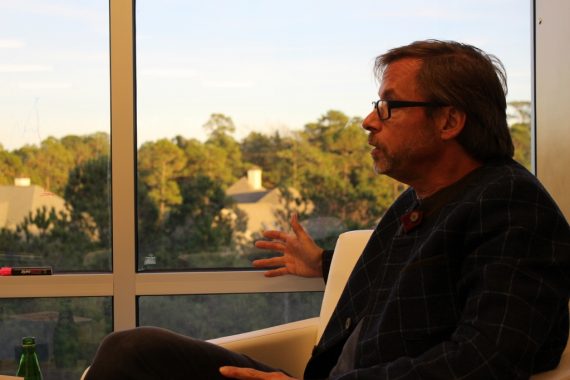
“Tech as a whole is more progressive, but it’s a constant fight,” Martin said. “There does need to be a place at the table for women, and it’s not always there.”
Emilyanne Atkinson has spent almost a decade in the tech industry as the senior database manager for CastleBranch. She’s seen the issue first hand.
“Tech is all about connections and networking, so I’ve been at a lot of events and it’s all guys and one unicorn,” Atkinson said. “So, there’ll be one other woman. And it’ll be Audrey.”
Atkinson means Audrey Speicher, who worked at TekMountain before moving to nCino. Together, CEO Atkinson and President Speicher founded Cape Fear Woman in Tech. The group was founded to address and deal with the gender gap in the tech industry.
“Like Emily said, this is about social things, cultural issues that are very subtle, but very profound,” Speicher said. “It’s much more difficult to quantify and define what we’re up against. We’re not talking about legal restrictions or anything you can address with legislation. We’re talking about changing the culture. It’s changing, to be clear, but we want that to continue.”
Speicher said the stereotypes about women’s roles in the industry were a major focus of Cape Fear Women in Tech (CFWiT).
“There’s definitely a secretarial stereotype,” Speicher said. “There’s an assumption that because women gravitate towards and do well in these emotion-based communication jobs, that’s their field.”
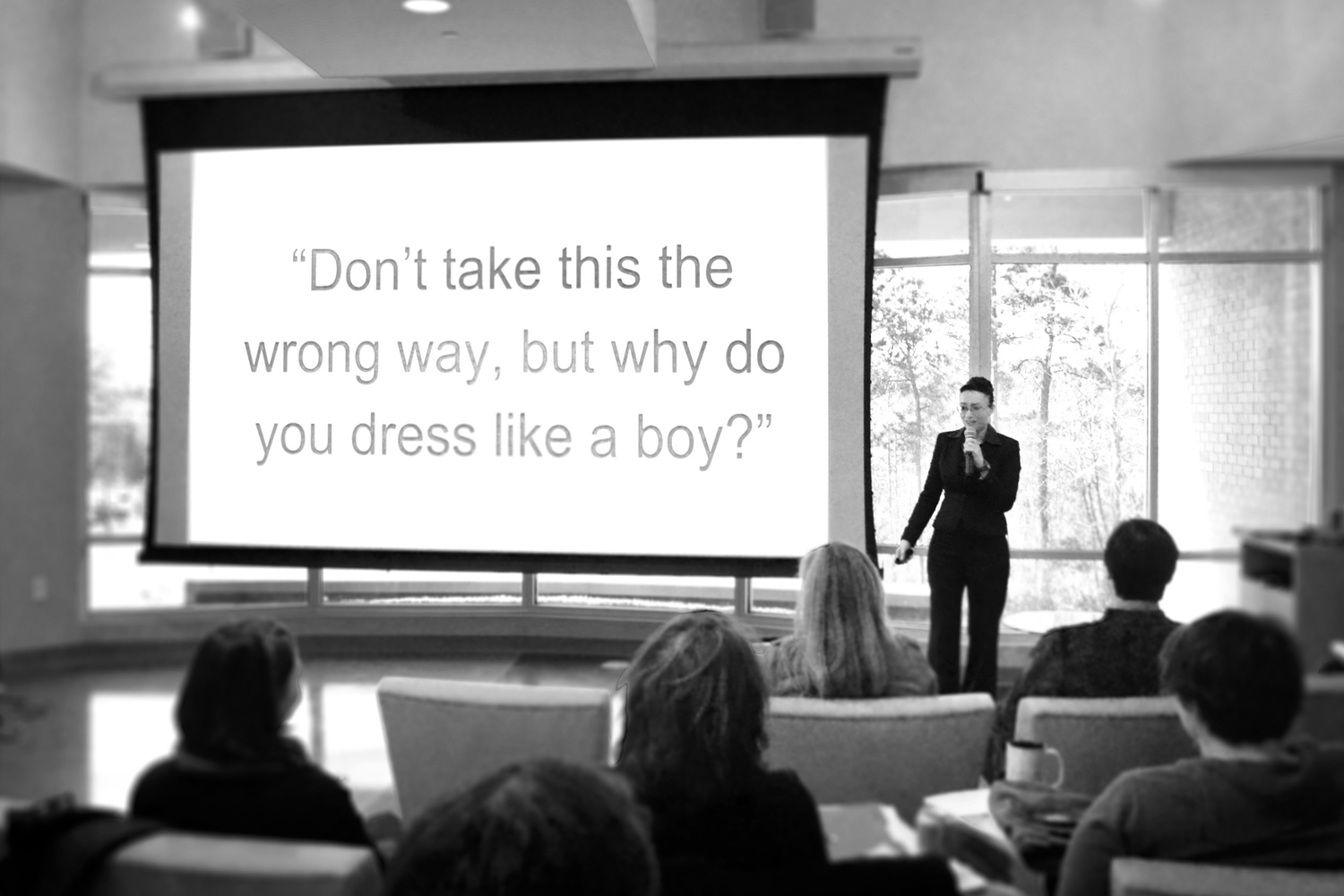
Atkinson added, “it’s happened to me, as the senior database manager, if I was the only woman in a meeting, people would look to me to take notes.”
Outside of the workplace, where many networking events and meetings occur, subtle and unspoken social rules come into play. Atkinson and Spreicher both recounted stories of investors declining to meet them alone.
“Investors want to keep their reputation above reproach,” Atkinson said. “A male investor would meet with a tech guy at a bar or restaurant, no problem. But if it’s me, or Audrey, we’ve both seen investors try to get other people to the meeting. The implication is that because it’s a man and a woman, it couldn’t possibly just be a business deal.”
Then there are more obvious – but no less delicate – issues of age and appearance. But beyond individual problems, Atkinson explained how addressing the culture as a whole is a catch-22 for women in technology.
“Look at it this way, there’s a stereotype that women are overly-sensitive, that they complain, get emotional or upset about things. So, if we do get upset – then we’re inadvertently reinforcing that stereotype. But if we keep quiet, well, you can see how that’d just as bad. It’s an issue, unless you have a safe space to talk about it, which is what we provide,” Atkinson said.
Meetings hosted by CFWiT are designed to let current and prospective tech employees hash these issues out. Speicher added, “there is a venting component, but at the same time, we want to move forward.”
Part of how CFWiT plans to “move forward” is by reaching out to local schools, working to shift stereotypes as they are being learned.
“So much of this comes into play around puberty,” Speicher said. “Statistically, girls are better at focusing, the sitting still and concentrating that’s necessary for math and engineering. But at a certain point there is an internalizing of stereotypes, that math and science is not what girls do.”
Atkinson added, “There’s the issue of attractiveness too, appealing to boys. If you want to be attractive, you’re avoiding certain interests.”
Speicher said CFWiT frequently arranges guest speakers to visit local high schools. The group also has outreach programs through Dr. Laurie Patterson, who runs the computer science program at University of North Carolina Wilmington and Melissa Watson, head of the business technologies at Cape Fear Community College.
While CFWiT hopes to defuse stereotypes about women’s role in the tech industry, Speicher said the group also gets a little more hands-on.
“Telling a child ‘you can do anything you want means nothing,’ by itself. You’ve got to follow up. We’ve placed interns, we’ve helped connect people, we’re helping to be that network,” Speicher said. “We’ve got so much local talent. These are the women I want to see running the next start-up, coding the next app, setting up the next database.”
Visit Cape Fear Women in Tech for more information about upcoming events and getting involved.
