


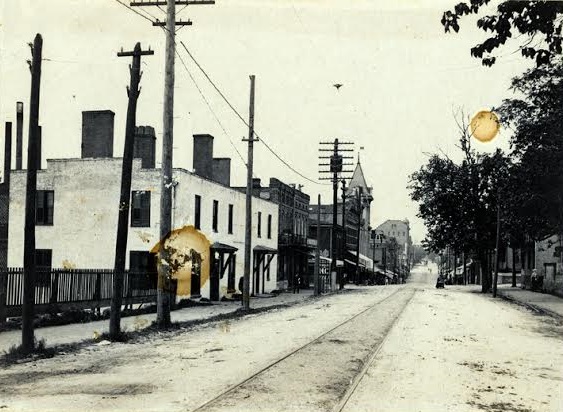
Editor’s note: Port City Daily spotlighted Wilmington’s 275th birthday year with a package of stories earlier this year. Below is the re-publication of a look at Wilmington’s 275 years.
Two hundred and seventy-five years ago , the City of Wilmington was founded—or was it?
Documents describing key dates in Wilmington’s history list the city’s founding as Feb. 20, “1739/40”—meaning: 1739, or 1740.
So which one is it? (Or more appropriately, was it?)
Is the city’s observance of its 275th birthday actually a year early?
The answer depends on which calendar is used: the Gregorian calendar, a solar calendar introduced by Pope Gregory XIII in 1582, or the Julian calendar, introduced by Julius Caesar in the days of the Roman Empire.
Since the Gregorian calendar is what is used today, the 1739 date is correct. But because the British Empire used the Julian calendar around that same period, historical documents that indicate Wilmington’s founding list 1740 instead.
“The Julian/Gregorian thing makes my brain hurt,” laughed Janet Davidson, historian at Wilmington’s Cape Fear Museum.
“The Gregorian calendar comes into play later, so there’s this weird period where other people are using the Gregorian calendar already—and that’s what we use now—but the colonies were using the Julian calendar up through the 1750s. So in those early years, depending on who they’re dealing with, the dates are different,” she said.
Joseph Sheppard, of New Hanover County Library’s North Carolina Room, concurred with that explanation, confirming the 1739 date is correct according to the calendar used and observed today.
Sheppard noted, however, another date discrepancy to add to the mix: the day the city’s founding actually became official. That wasn’t until Feb. 25, when the colonial General Assembly passed an act “erecting the village of Newton”—also called New Town and, previously, New Carthage and New Liverpool—“by the name of Wilmington,” in honor of Spencer Compton, the Earl of Wilmington, whose only connection to the city, Sheppard noted, was that he was friends with then-Gov. Gabriel Johnston.
Sheppard said the assembly’s action took place in New Bern on the 25th. The Feb. 20 date, Sheppard surmised, likely reflects when the request was made locally or filed with the assembly.
“It’s probably the date that the local town voted for it and proceeded to have it done, and then they sent their representatives to the General Assembly, who then passed it,” Sheppard said. “And of course, in those days, word traveled very slowly, and it would take two days to get to New Bern from here.”
Davidson noted the city has acknowledged its founding at different times of the year, further adding to the confusion. Its bicentennial was celebrated in June that year, while its 250th was celebrated in July.
Davidson said the actual date of the founding is less important than the overall history of the city that such an observation is meant to acknowledge.
“I don’t think it really matters what the first day of Wilmington was. What matters is this is a longstanding city, and its history is more than its founding date,” she said. “But for the city, it gives them something to promote: that the city has been here since the colonial period.”
Related story: 275 years: Wilmington marks big birthday, lots of history
Noting Wilmington’s beginnings, which she said stem from a dispute among settlers at Brunswick Town, the region’s first settlement, and led to the granting of 640 acres by John Watson that laid the foundation for the city, Davidson said plans for the city date back as far as 1733—six years before it achieved incorporation.
“So it exists before that official incorporation date, because you need to be here to do that,” she said. “But I expect, if you looked at any town’s history, that would be true too.”
So what did Wilmington look like then? No newspapers were published in the city at that time, and Davidson and Sheppard said the only descriptions available are in letters or journals of people who lived here or traveled here. Sheppard provided a synopsis of those descriptions: “Very muddy, very backwater, very uncivilized.”
“You’ve got to imagine a colonial town at that time period,” he said. “It was open sewage, horse transportation, horse dung everywhere, overdressed and under-bathed persons.”
As for buildings, only one from that period still stands today: the Mitchell-Anderson House at Front and Orange streets, which predates incorporation by one year. Sheppard noted the ballast stones that support the brick structure and are visible along the house’s foundations are among the oldest pieces of history in the city.
“You can see the old ballast stone foundations, and actually, what remains of the old colonial town is that particular corner there,” he said. “And you understand why—because it’s uphill; it’s highly elevated and free from flood.
“There’s relatively little left of the colonial town,” he said, “other than what’s underground or what’s been taken and repurposed, because Wilmington has burned down three times now.”
And 275 years later, it still stands.
