


Coastal visitors, take note and smile: a new, national report ranks area beach spots as “superstars” for consistently safe water quality.
Swimming areas at Wrightsville, Topsail and Sunset beaches have tested within federal safe water quality standards five years in a row, a rare standing in the 30 states monitored and reported on in the latest annual publication from the Natural Resources Defense Council (NRDC), an environmental protection and action group.
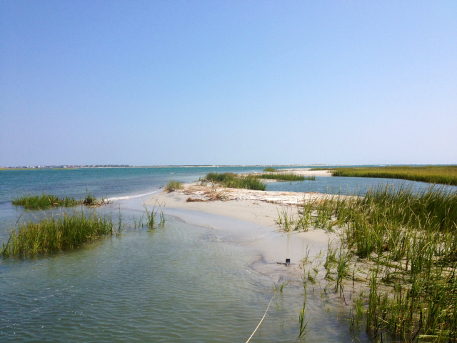
They were among just 35 “superstar beaches” nationally whose waters have remained clear and safe for human recreation under the Environmental Protection Agency’s previous national standards and its more recent, more stringent, standards rolled out last year.
North Carolina, which has 240 public beaches, overall ranked fifth out of the 30 states for beach water quality. Only 4 percent of samples exceeded national standards.
The praised swimming areas were at the pier off Salisbury Street at Wrightsville Beach; at Ocean Boulevard and Crews Avenue at Topsail Beach; and off Main Street and Sunset Boulevard in Sunset Beach.
The EPA’s former standard was 104 enterococcus bacteria colony forming units, and whatever exceeded that level raised an eyebrow in terms of safe swimming. The standard essentially allows regulators to watch out for areas possibly affected by human or animal waste. When samples exceed it, regulators are encouraged to issue notices.
Last year the EPA rolled out a more guarding 60-unit standard, referred to as “beach action value” (BAV).
Our “superstar beaches” still tested below that level.
There were, however, some local sites that exceeded BAV.
Pleasure Island had a few, including Carolina Beach Inlet at the north end (21 percent of samples tested above standard); the area adjacent to the Wildlife Resources Commission ramp at Fort Fisher (32 percent); the Cape Fear River on the west end of Snow’s Cut (15 percent); and the public beach area on Masonboro Sound at the end of Florida Avenue in Carolina Beach (26 percent), according to the report.
The Trails End Public Access area off Masonboro Loop Road also tested high, at 26 percent of samples above BAV.
Above-BAV sites in Brunswick County included Dutchman Creek Park on Fish Factory Road near Southport (35 percent); the Cape Fear River beach area next to Southport’s city pier (25 percent); the Intracoastal Waterway beach area at markers 28 and 29 at Oak Island (21 percent); and the public access at the west end of Oak Island Drive (26 percent).
Pender County’s few monitored beach areas all tested within 11 percent excessive, though three sites did not exceed BAV at all.
Each monitored area is tested multiple times a year.
Click here to view the full list for North Carolina beaches.
Click here for the national “superstar” list.
While North Carolina ranked fifth-best nationally, out of 30 states, South Carolina ranked a low 24th.
The worst was Ohio. That state’s 63 beaches included 60 that were monitored. Thirty-five percent of them of them exceeded a 190-unit mark.
“NRDC and public health advocates continue to push for improvements in beach water quality standards and test methods,” said the report’s executive summary.
It encourages greater adoption of development standards and infrastructure to minimize stormwater runoff impacts. They may include minimizing impervious surfaces and greater use of porous pavement and vegetation to handle rainwater where it lands.
Such an approach “effectively reduces the amount of runoff that makes its way into beach water or triggers harmful sewage overflows, transforming a source of beach pollution into a tremendous local water resource,” the report said.
