



For coastal towns in this age, new sources of funding for beach nourishment are like buried treasure. But there might be some flexibility with money already hitting the coffers.
That’s if the state’s legislature approves of an idea raised by New Hanover County’s beach towns Friday morning: free up more room occupancy tax revenue for sand placement projects.
Currently, a portion of that revenue is, by law, only supposed to pay for the area’s marketing and promotion. But, the towns argue, the beaches have to be in marketable shape.
“The truth is, we don’t have any tourists to bring down here unless we have our beaches and waterways,” Carolina Beach Councilwoman Sarah Friede told the Cape Fear coast’s legislators.
Elected and staff officials from Carolina Beach, Wrightsville Beach and Kure Beach gathered at the latter town’s community center Friday morning for breakfast with the delegates. The current setup of the room occupancy tax–levied on stays at hotels, motels, inns and other tourist accommodations–was first on the agenda.
As laid out by law, the beach towns collect a 6 percent room occupancy tax. The first 3 percent goes toward beach nourishment and to the New Hanover County Tourism Development Authority’s work to promote visitorship countywide.
The second 3 percent collected in each beach town has two dedications specific to each beach. At least half must go to approved promotion; the rest is for tourism-related activities, which according to TDA chief Kim Hufham is fairly broad and can cover lifeguard pay as well as beach nourishment.
It’s the chunk reserved for promotion that the beach towns want to tap for sand–or at least have the option to. Friday morning they asked their legislators for that flexibility.
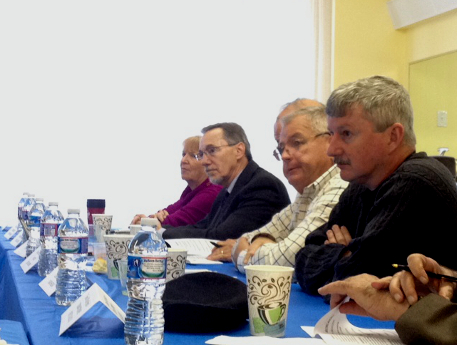
“As money for sand is getting more and more tight, I think the towns feel … that the flexibility to assign that money to sand would be better use of the money,” said Kure Beach Commissioner David Heglar.
It could allow for about $170,000 more in sand savings for Kure Beach, Mayor Dean Lambeth said.
Beach towns are often encouraged to stock up as much local funding as they can for nourishments, which can cost millions of dollars each.
Carolina Beach Mayor Dan Wilcox presented the occupancy tax proposal as a needed adjustment in changing times. The federal funding flows of yesteryear were more generous to beach projects than they are presently, he noted.
“The dynamics have changed for all of us,” he said.
The congressional ban on earmarks has stopped appropriations specific to local projects like beach nourishment; instead, the federal funds go directly to agencies like the U.S. Army Corps of Engineers (USACE), which then program projects they’ve prioritized based on the dollar amount available.
The good news is that USACE’s funding level in the Consolidated Appropriations Act of 2014 is, at $5.5 billion, 10 percent higher than 2013’s enacted level.
But for the long term, without certainties, the coast has had to plan. Likely to come is a set of resolutions from the three beach towns encouraging the change in how they spend the currently restricted room occupancy tax money.
Rep. Rick Catlin (R-20)–who attended Friday’s breakfast with fellow local legislators Sen. Thom Goolsby (R-9) and Reps. Ted Davis (R-19) and Susi Hamilton (D-18)–said it would probably have to come up as a local bill, specific to this area’s beach towns, versus a statewide change.
If filed this year, it would have to be by May 16, the deadline for local bills in the upcoming, short legislative session.
Recent stories:
State-federal agreement in place to keep shallow-draft inlets open
County ultimately pays millions less in Pleasure Island beach nourishment
Ben Brown is a news reporter at Port City Daily. Reach him at [email protected] or (910) 772-6335. On Twitter: @benbrownmedia
