


Bald Head Island is having to contemplate its long-waged erosion case against the U.S. Army Corps of Engineers after another loss in federal court this week.
“The Village of Bald Head Island is reviewing the decision and will consider whether additional action is warranted,” a statement from the village said Friday.
The U.S. Court of Appeals for the Fourth Circuit on April 15 ruled a district court was right when, in 2011, it dismissed Bald Head Island’s case holding the Corps responsible for chronic shoreline erosion there, particularly along the beach strands adjacent to a major navigation channel the Corps maintains.
Bald Head had essentially asked the court to order the Corps to fix the situation with a rejuvenated shoreline protected from the Wilmington Harbor Shipping Channel’s effects.
The island’s attorneys alleged the Corps broke from a commitment to dredge beach sand from the channel, on a set schedule of every other year, and pump it back onto the adjacent shorelines. The alleged break happened in the winter of 2010-11, when the Corps said it didn’t have money programmed to perform that roughly $15 million job.
The island said it documented heavy and fast beach erosion around the time.
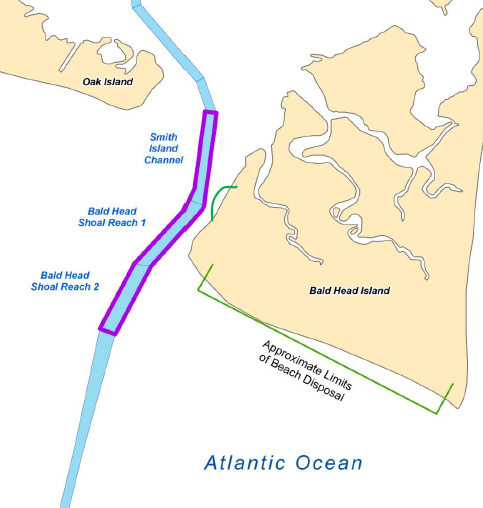
Officials with the Village of Bald Head Island have said the channel’s proximity to the convergence of South and West beaches–the channel was relocated there more than a decade ago from a previous alignment farther west–has caused instability, heavy sand losses and a situation where beachfront homes and infrastructure are threatened.
An agreement called the Sand Management Plan (SMP) provides for the Corps to return sand to Bald Head from the channel–on a fixed and mandatory schedule, according to the island’s case.
The Corps denied responsibility in the damage claims, said the work was discretionary and noted its reason to maintain the channel at all was for the large container ships that navigate it.
U.S. District Court Judge Terrence W. Boyle in November 2011 granted the Corps’ motion to dismiss the case on the grounds that it wasn’t in the federal court’s jurisdiction.
One of Boyle’s key points concerned the Administrative Procedures Act (APA), which allows judicial review of damages or other wrongs a federal agency allegedly committed. Bald Head’s legal team had argued the Corps did harm by failing to adequately consider what might happen when it relocated the channel closer to the island.
According to narratives supplied to the courts, the Corps relocated the channel to get away from the rocky bottom of the previous alignment at the mouth of the Cape Fear River. Despite the level of precautions and study ahead of the relocation, Bald Head argued the current alignment exacerbated erosion along the island, and that the Corps continued to cause damage by viewing the channel’s dredging work–and associated beach nourishments–as discretionary.
But the lawsuit’s dismissal was more technical than that. Judge Boyle said the question to consider was whether any of Bald Head’s arguments or allegations concerned a true federal “agency action” for the court to review under the APA. Boyle ruled they did not, rendering Bald Head’s case out of federal jurisdiction and moot.
The 2011 ruling explained that the Village of Bald Head Island “does not complain that the Corps has failed to properly examine the environmental impact of realigning the Wilmington Harbor channel, nor has it alleged any deficiencies in the Corps’ [environmental assessment] or [determination that the project wouldn’t have adverse impact], or that the Corps has abandoned its duty to maintain the Wilmington Harbor channel.”
Boyle determined Bald Head was just concerned with getting sand from the channel on a regular basis.
His opinion additionally addressed the SMP, the agreement that afforded Bald Head the sand dredged up from the channel. (The SMP also gave sand periodically to Caswell Beach, on the other side of the channel.)
“Indeed, the SMP itself recognizes that ‘while the intent of the sand management plan is to return [the sand] to the beach, the primary purpose of the project is to provide safe navigation through the entrance into Wilmington Harbor,'” the judge wrote, quoting from the SMP itself.
He added that nothing in the SMP required the Corps to nourish the Brunswick County beaches during the channel dredging, which he ruled was indeed discretionary work.
Arguing Boyle erred in his judgment, Bald Head took its case to the appellate court in January 2012.
The village said the judge should have seen the Corps’ actions, and its alleged failures to protect the island with a set schedule of sand, were damaging and absolutely subject to federal review.
“The village admonishes that, without judicial review of such agency action or inaction, federal agencies will be left unaccountable….” the appellate judges acknowledged in their opinion this week, though it ultimately sided with Boyle’s 2011 findings.
The village said Friday it was exploring its options and weighing whether to continue with the case, first filed in 2010.
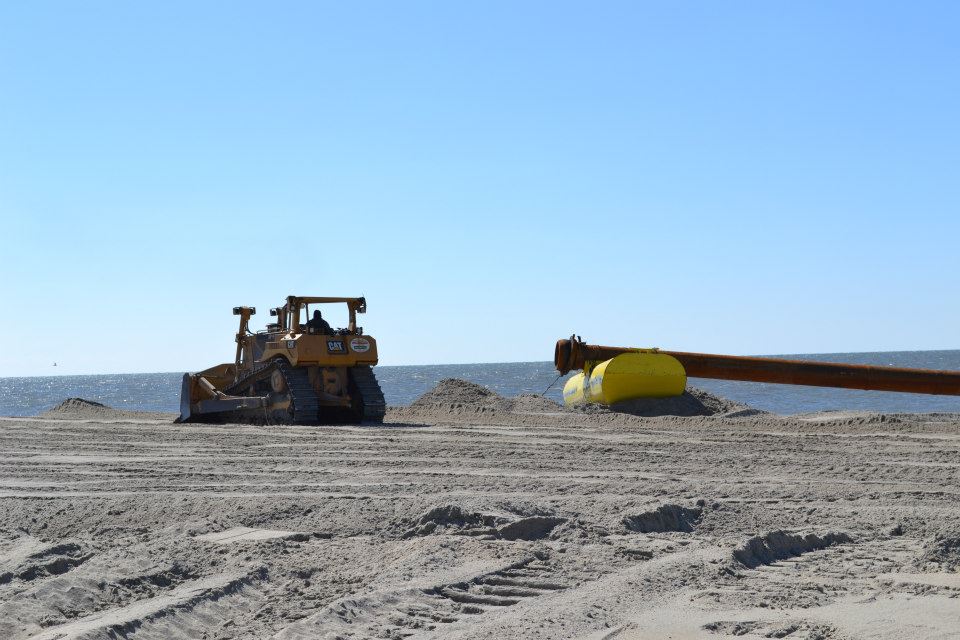
While the 2010-11 winter didn’t see the Corps arrange for dredging that would put sand onto Bald Head, such a project is happening now per an enabling federal budget (related story) and may wrap by the end of the month, according to project officials.
The maintenance dredging is a $17 million job, all paid for federally, deepening the channel to a safe depth and pumping restorative sand onto South and West beaches.
The crew is currently working on the latter strand, which the village said is slated to widen by 200-250 feet.
Ben Brown is a news reporter at Port City Daily. Reach him at [email protected] or (910) 772-6335. On Twitter: @benbrownmedia
