


Increasing the fees on coastal fishing licenses and boat registrations might not be the best way to fund North Carolina’s inlet dredging needs—but dividing the coast into project districts could be.
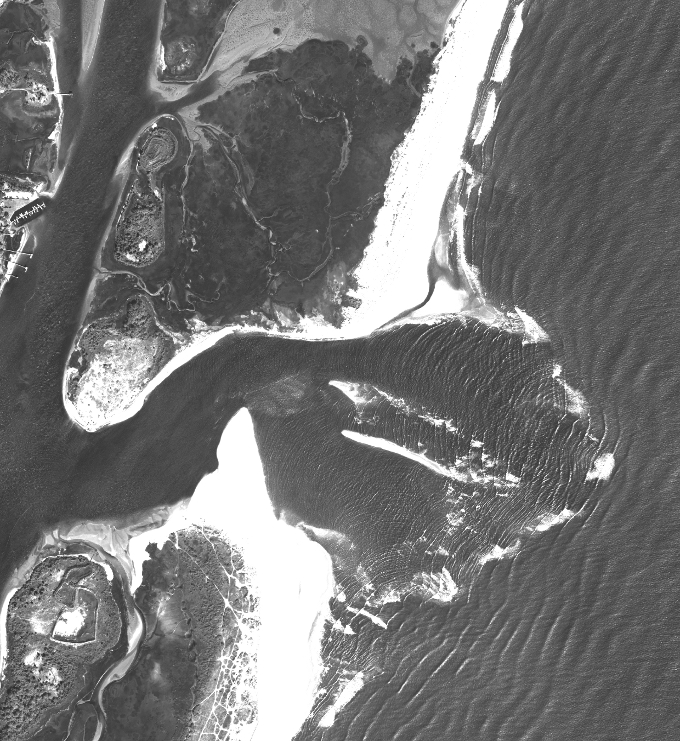
That’s per a report handed to the N.C. General Assembly’s Marine Fisheries Committee this month, as ordered by a Senate bill that sought to address whether the state could generate adequate revenue for inlet dredging by charging those who use the inlets. The idea pointed to possibly hiking the current fees associated with recreational and commercial fishing licenses and vessel registrations on the coast.
But the report—titled “Funding Options for the Dredging and Maintenance of the State’s Coastal Inlets from Fees Charged to Those Who Makes Use of the Inlets,” authored by the N.C. Wildlife Resources Commission (WRC) and the N.C. Division of Marine Fisheries (DMF)—suggests that raising those fees might actually worsen the situation.
Any considerable hikes, it warned, could cause “a decline in sales of the affected license. The decline in sales in inversely proportional to the increase in fees. It is possible that significant increases in fees could result in revenue reduced below current levels.”
So, WRC and DMF propose an alternative: possibly instating inlet-project districts and charging them for the maintenance dredging.
The districts, they said, should be eligible for state and federal funding assistance and the local governments within could impose property assessments to meet project costs. Additionally, the legislature could consider removing the cap on the sales and use tax of boats and drive the revenue toward a capital fund that could allocate dollars for the projects.
Whatever the solution, the state knows it will have to take a greater role in inlet dredging, whether with straight-up funding or enabling new mechanisms for local governments. “Since federal funding has continually decreased (for maintenance dredging), even zeroed out in many cases, many states and local governments have looked to other funding sources to backfill this revenue,” the report says.
But stakeholders have not roundly embraced the agencies’ specific recommendations. N.C. Beach, Inlet and Waterway Association (NCBIWA) Executive Director Harry Simmons said he would instead encourage an expansion of the state’s current approach: the N.C. General Assembly appropriating capital funds to the Division of Water Resources, which programs money for dredging.
Simmons said the topic could come up at NCBIWA’s annual conference in Wrightsville Beach this November. He also noted that the mindset of hiking fees on boaters and fishermen who use the inlets is probably the wrong approach, though not because it might affect related revenues as the report says.
“Putting all of this on the backs of the users of inlets may be wrong specifically because there are benefits across the state to having maintained inlets,” he said.
Sen. Thom Goolsby, R-9, agrees the coastline is golden. He said the number-one reason people plan daytrips and vacations to this area is fun on the sand and for the boating and fishing opportunities in the inlets.
Goolsby—who sits on the legislature’s Marine Fisheries Committee, which will examine the report—said he too recognizes the shrinking financial role of the federal government in inlet dredging and the demand for greater state participation. But he said there’s one idea to that end he’s prepared to fight.
“I do not think the answer to any of this should be more taxes,” said Goolsby. Instead, the state should consider rerouting current revenue streams, he said, and perhaps look to the general fund or transportation sources.
He noted that the Marine Fisheries Committee’s Sen. Bill Rabon, R-8, is also the chairman of the Senate’s Standing Committee on Transportation.
“We automatically have his ear,” Goolsby said.
Rabon, who along with Goolsby was a co-sponsor of the bill that ordered the report, was not immediately available for comment.
One thing seems fairly certain though with respect to the idea of raising fees on boats used mostly in inlet waters. As far as WRC and DMF are concerned, it would be “practically impossible” to differentiate between them and the boats used mostly in inland waters.
New Hanover County Commissioner Rick Catlin, also an NCBIWA member, agreed there seemed to be no reliable way to isolate them. “How would we know?” he said.
What WRC and DMF do acknowledge is the value of coastal inlets to the state’s economy and culture. Their report notes a 2006 study that found Oregon Inlet had an annual economic benefit of nearly 10,000 jobs and $682.7 million to Dare County and the surrounding area.
“To do nothing, and allow these vital passages to disappear, would cause significant economic harm to our coastal communities,” the report said.
Although the Senate bill that ordered the report did not discuss what would become of the sand dredged from inlets, it is typically used to replenish beach strands.
Goolsby said when the legislature convenes this January, the issue is “going to be at the top of our agenda. Because it can’t wait.”
