


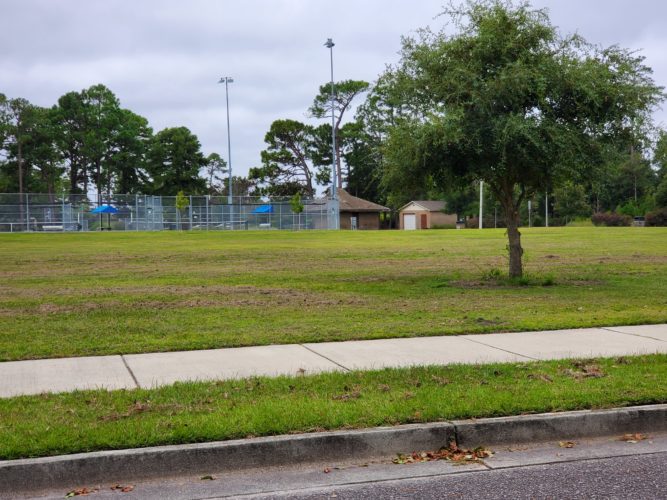
WILMINGTON — The City of Wilmington’s planning department has been exploring a major change to its land code with an additional zoning district for open space, though its initial momentum has now been stalled.
At September’s parks and recreation advisory board meeting, the city’s planning director, Linda Painter, said her team is contemplating one or multiple districts just for parks, natural areas for conservation and recreational activities.
Currently, the city allows these land uses in some other zoning districts, including all residential districts and several commercial districts. An open space district would allow the city to more precisely tailor land-code restrictions on open-space uses and signifies to the public what areas it thinks open space is best placed.
READ MORE: Wilmington releases vision for downtown, larger execution questions remain
Port City Daily asked the city if parks and the like would continue to be permitted in other districts, among other questions about the new district proposal. A city spokesperson told Port City Daily the idea has actually been put on hold.
“The reason it’s on hold is that there are many details staff are still working through, including most of the questions you’ve asked, for which we don’t have answers just yet,” city spokesperson Amy Willis said.
At the parks and rec meeting, Painter said she was hoping to get a draft proposal for the district to the Wilmington Planning Commission in November; now, it will not. The unveiling before the advisory board was to gain feedback before drafting; the board mostly asked questions but didn’t express disapproval.
Painter told the parks and recreation board her team has been considering a new open space district for several years — notably, it wasn’t part of the department’s 2021 overhaul of the land code. It has recently “come to a head” due to discussions about the Flossie Bryan tract.
New Hanover County purchased 60 acres at 3990 Independence Blvd. from the Bryan family in 2025 with the intention of preserving the land as green space. In March, the county considered an offer from the nonprofit North Carolina Coastal Land Trust to buy the acreage and maintain it as a park. The trust has a standing contract to close on the purchase until December 2027; on Tuesday, a spokesperson told Port City Daily it is currently raising funds to complete the acquisition.
Should ownership transfer to the North Carolina Land Trust, the land would not fall neatly into a city zoning classification.
The land code allows “public parks” in the residential zoning districts and many commercial districts, but to be a public park, the land has to be owned by a government entity. The land trust is a nonprofit, though its goal is to maintain the property as a public nature preserve.
Another land use classification it could fall in is outdoor commercial recreation, though this use is allowed in fewer zoning districts — no residential districts, only some commercial and light industrial.
After publication, a city spokesperson told Port City Daily staff are planning to bring an amendment to the planning board next month to give nonprofit-owned parks the same allowances under the code as public parks, so long as the nonprofit-owned park is open for public use.
Additionally, a portion of the tract needs to be rezoned from industrial to a city zoning district that allows parks. Because the city doesn’t have a district intended for open or recreational space, the closest thing would likely be a residential district.
“And any time you’re saying I want to rezone to R10 or R15, neighbors are going to say, ‘You’re going to build on it,’” Painter told the parks and rec board.
Aside from the Flossie Bryan tract, an open space district could also help the public understand which parcels the city is keeping for future development as a park, recreational facility or nature preserve, as opposed to properties it may be keeping for another purpose or open to selling.
The city could not tell Port City Daily how many undeveloped parcels or properties not used for a city purpose could be subject to a rezoning to the new district, if it passed.
However, Painter said the city owns many properties with single-family homes or zoned for residential use. She explained these could have been acquired for stormwater use, floodplain protection or other city needs, but because they are zoned for residential, the city often receives purchase offers.
“We do think that identifying properties that are owned by the city — and really ones that we see as being held long-term for an open-space use, whether it’s conservation, floodplain, stormwater, active recreation — is something that we think is going to be beneficial to the public because it starts to send the message of, this is what we have, this is our long-term plan, and no, we are not interested, please don’t contact us to say ‘Will you sell this to us to build a house?’” Painter said.
Painter demonstrated that several of Wilmington’s peer communities have established open space districts.
For example, Savannah, Georgia — a city known for its small public squares scattered across the city — has three designations for open space. The city separates them into marshlands, recreation and general conservation. In North Carolina, the City of Raleigh has one district — conservation management — to “preserve and enhance land as permanent open space to meet the passive and recreational needs” of the city.
The parks and recreation board asked Painter if she had a list of properties the city planned to submit for rezoning to the new district, if it was approved. She said she did not.
When asked if private property owners could also zone their parcels to this use, Painter said they would be able to submit a rezoning request. She added the city would not be rezoning any of those properties without a request to avoid legal challenges associated with the state’s downzoning prohibition. The law bans municipalities from taking action that would limit a property owner’s development options without their consent.
The potential new district comes as the Wilmington region continues to grow and develop, with residents and elected officials pushing for the city to prioritize green space.
In partnership with the county, the city has purchased land off Greenville Loop Road that it plans to develop into a park over the next few years; additionally, the city’s Greater Downtown Plan calls for the city to create more green spaces.
One of the goals in the parks and recreation advisory board’s work plan is for the group to identify parcels that could be converted into city green space. At the board’s September meeting, Parks and Recreation Director Amy Beatty noted the board has submitted more than 20 properties to the planning department for consideration; Painter acknowledged they were under review.
The city did not tell Port City Daily when the open space district proposal would be taken off hold but suggested checking back in a few weeks.
At Port City Daily, we aim to keep locals informed on top-of-mind news facing the tri-county region. To support our work and help us reach more people in 2026, please, consider helping one of two ways: Subscribe here or make a one-time contribution here.
We appreciate your ongoing support.
