


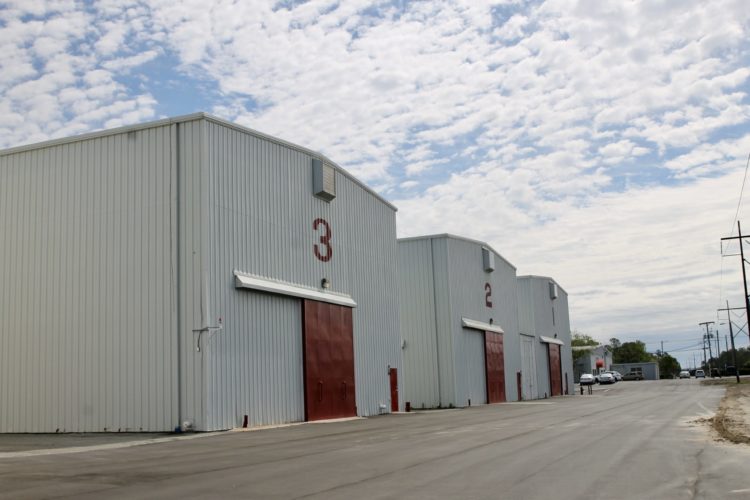
NEW HANOVER COUNTY — The additional, one-time $31 million for the state film incentive has been approved by both the state House and Senate. It is still unclear how the stipulations that accompany the infusion — mainly that the money be set aside for New Hanover County productions — will come into play.
Both chambers of the North Carolina General Assembly passed a conference report on Tuesday containing the $31 million among several other budgetary adjustments. A conference report is legislation negotiated and compromised on by both chambers; it largely passed along party lines.
The money will allow the Department of Commerce, which oversees the incentive program, to fund more productions after an accounting change at the department halted new grantmaking earlier this year.
READ MORE: Inside the NC film incentive fallout, according to state leaders
ALSO: Film productions on course to leave NC again unless changes made to incentive
The new, non-recurring appropriation will be added to the $46 million the General Assembly already allocated to the film incentive program this fiscal year — the $31 million base appropriation and $15 million in a technical corrections bill to shore up the Department of Commerce’s obligations with its actual account balance.
However, the $31 million may only cover grant amounts for a couple projects due to the higher caps that passed this year for individual productions. The caps were increased from $7 million for a feature film to $20 million and $15 million to $25 million for TV productions; one season could wipe out more than half the $31 million in additional money.
New Hanover County’s Sen. Michael Lee and Rep. Ted Davis — both to be replaced by Democrats in the new year after Lee was voted out and Davis decided to retire — were behind the push for the additional $31 million. Both announced they had secured House and Senate leadership’s support for the allocation at a press conference in October.
The additional money came with some strings attached; Lee and Davis’ instructions were for the Department of Commerce to prioritize projects filming in New Hanover County and surrounding counties.
When questioned on how these projects would be decided, Lee said he would let the Department of Commerce inform the General Assembly how that would work.
However, the conference report’s text does not stipulate the money be directed to New Hanover County or any specific area of the state. Additionally, Sen. Brent Jackson (R-Pender) described the additional $31 million as a “statewide effort” during Tuesday’s Senate session.
The only limiting factor in the conference report is that, for the remainder of the 2026-2027 fiscal year, grant awards may only be made to productions in the state for which no grant agreement has been executed as of June 24, 2026.
Port City Daily asked Lee — majority leader until the end of his term — about the status of the New Hanover County prioritization after the Senate vote. He did not respond by press.
On Oct. 29., Lee told Port City Daily he was still waiting for the Department of Commerce to present a prioritization plan. However, a representative for the Department of Commerce said they had not received a formal notice with instructions from the General Assembly.
Lee disputed that assertion, saying the letter accompanying his announcement was sent to the department. He added staff from the House speaker and Senate president pro tempore’s offices met with the Department of Commerce to discuss prioritization and accountability measures.
The following day, Oct. 30, Lee shared an email he received from Commerce Secretary Lee Lilley. The email asked for his staff to meet with Lee’s staff to “review potential legislation” and ensure the department has “clarity and a path forward.”
Still, Lee further insinuated the ball was in the Department of Commerce’s court, indicating the needed list will include projects from New Hanover and surrounding counties that will be first in line for funding.
The message came with a list of “known film projects considering North Carolina.”
Port City Daily requested the list of projects but was denied on the basis they are economic development opportunities not subject to public records requests. According to prior Port City Daily reporting, “Outer Banks” creator Jonas Pate is trying to film his prequel series “Kildare” in Wilmington, while series like “Saltwater” and “RJ Decker” could hope to return if greenlit to continue. There is also a Nascar series, “Thunder Road,” looking to film in Charlotte.
“We are hoping they will send what we requested in the letter regarding prioritization of qualifying projects prior to our going into session,” Lee told Port City Daily. “Since we will need to enact it into law, we will need time to move the language through the appropriations process.”
Port City Daily reached out to the Department of Commerce for additional explanation on its disconnect with the General Assembly.
“The next step is for the NCGA to provide the necessary authorization that would allow us to award film grants supporting thousands of production jobs across the state,” a spokesperson provided in a statement.
A source familiar with the matter told Port City Daily on background the Department of Commerce needed Lee and Davis’ instructions — to prioritize New Hanover County and surrounding counties — to be set out in legislation.
The source pointed out the department has been burned in the past for following guidelines from the legislature that weren’t explicit in law, only for the guidelines to change and the department to be blamed for mismanagement. Lee has been critical of the department’s way of running the film incentive program, accusing it of spending beyond its means without permission from the law.
Since 2019, the department has run the program on a cash-flow basis, meaning obligating funds based on future amounts rather than actual amounts in the program’s bank account.
This mode of operation was not explicitly sanctioned in law, thus the department was relying on the interpretation of legislative staff and assurances of lawmakers in 2019. In the years since, the operation has failed to cause a problem due to surplus funds accrued during the Covid-19 pandemic and two industry union strikes.
This fiscal year, the projected amount of funds needed to pay out productions for the current fiscal year was more than the film grant program had in its account. To correct it, the state legislature would have needed to provide more funding — on top of $31 million in recurring appropriations — to shore up this fiscal year’s obligations.
According to several sources, the Department of Commerce was told this would happen if it ever overobligated itself; however, no additional money came initially in this fiscal year’s budget.
With the additional money, Lee and Davis said the Department of Commerce would need to follow new, yet-to-be-determined accountability measures. Those have now been set out in Tuesday’s conference report.
The report calls for Secretary Lilley to vet any proposed grants through the Economic Investment Committee. The committee must find all of the conditions are met:
- The grant is consistent with the goals of increasing the number of entertainment productions occurring in the State and developing the filmmaking industry within the State.
- The grant awarded under this section is necessary for completion of the production in this State.
- The proposed grant amount is appropriate for the benefit of the production to the State.
- The priority for the use of funds for the production that is the subject of the grant is consistent with the factors set forth in subdivision (a)(5) of this section when compared to other productions that have received grants and compared 43 to other productions for which an application has been submitted.
- The Department has made reasonable efforts to ensure that the percentage used to calculate the grant does not exceed the average of the range allowed.
- The amount of the grant, when considered with all other grants awarded under this section, does not exceed the amount available for awards from the Fund.
The report also calls for the Department of Commerce to make a spending report within one month after the end of each fiscal quarter.
The House passed the report 66-49; all Democrats voted against the report aside from three, including Rep. Deb Butler (D-New Hanover County). Butler has been vocal about providing more money to the film incentive; she told Port City Daily the ideal program would not cap incentive spending.
The Senate followed up the House’s review with a 26-19 vote; all Democrats voted against the measure, though New Hanover County’s representative.
None of the Democrats indicated their dissenting votes were due to the film incentive; during the Senate session, Sen. Jonah Garson (D-Caswell, Orange, Person) stated the bill’s good components were “held hostage” by the bad ones. Its 60 pages were packed with multiple provisions, including emergency relief provisions Garson hoped the General Assembly could review.
At Port City Daily, we aim to keep locals informed on top-of-mind news facing the tri-county region. To support our work and help us reach more people in 2026, please, consider helping one of two ways: Subscribe here or make a one-time contribution here.
We appreciate your ongoing support.
