


WILMINGTON — A local transportation authority is requesting to join the North Carolina Department of Transportation’s advanced air mobility program, which will explore bringing new aircraft technologies to North Carolina cities.
The Wilmington Urban Area Metropolitan Planning Organization voted unanimously to submit an application to NCDOT at its board meeting Wednesday. NCDOT has committed $750,000 in consulting funding for its second round of the program.
“NCDOT is very aware of the increasing demand on transportation infrastructure due to North Carolina’s population growth,” WMPO grants coordinator Krysden Burden said in the meeting. “NCDOT wants to ensure that, you know, transportation is accessible, it’s efficient, and resilient.”
If accepted into the program, the WMPO would be awarded a grant to develop a “community-focused” plan incorporating “cutting edge” advanced aircraft technologies. These include drone-based delivery systems and electric vertical takeoff and landing, or eVTOL, aircraft.
“Is this something realistic for Wilmington as we look ahead to the future?” Burden asked. “Is this something we can start to incorporate? Is this something that could be of interest for the airport, for the port, military, tourism?”
At the meeting, Burden showed a video demonstration of eVTOLs from CNBC International. It explained how the different categories of the aircraft, which are electrically powered and take over vertically from the ground.
There are four main types of eVTOLs, the first being the wing-less multicopters, which operate like drones. They are efficient at taking off and hovering but inefficient over long distances. Thus, they are generally limited to urban areas.
Another eVTOL is called the Lift and Cruise, a combination of the multicopter and helicopter to make longer distances possible, though the shorter propeller blades make it very noisy.
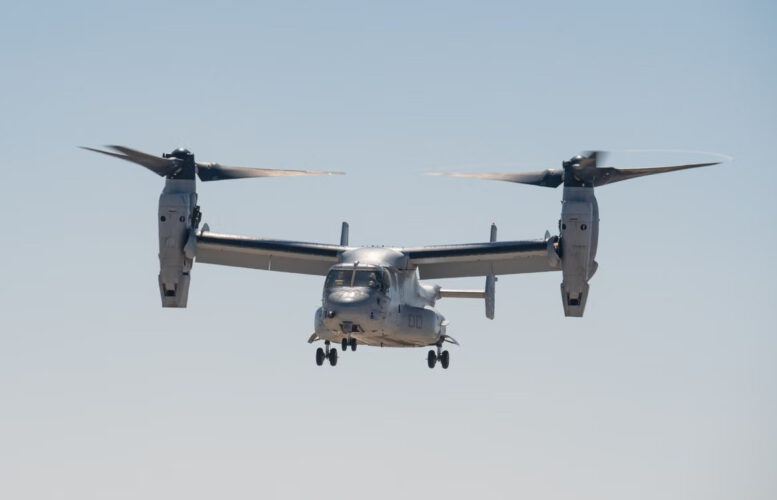
The Tilt Rota is a type of eVTOL technology used by the Osprey military helicopter. The design features one or more powered rotors mounted on the ends of the vehicle’s wings. Though they have long ranges and low noise, they can’t carry as much weight as the previous two models.
The last eVTOL shown to the WMPO was the ducted vector thrust model, which doesn’t use a propeller at all. Instead, they utilize multiple individually controlled electrical duct fans to push the vehicle upward. Though it is quieter and can fly longer distances, the model requires two times the power consumption of regular open rotor models.
While China is the only country offering commercial eVTOL flights for passengers, other counties and some U.S. cities have begun using the aircraft for deliveries and are exploring ways it can be used to fill gaps in the supply-chain, particularly from a port to a factory. The eVTOLs could also be developed for emergencies, especially in difficult-to-reach areas or in search and rescues.
As of July 2025, 14 states had two or more vertiports planned to be built in the next three years and 15 states have begun strategizing on at least one vertiport site. New York’s Port Authority is using the aircraft to connect Manhattan heliports to airports like JFK, aiming to reduce a 1-to-2-hour ground commute to a 5-to-10-minute flight; Florida and Texas are exploring regional flight networks to connect major cities.
The Federal Aviation Administration has promoted the development of the technology, with U.S. Transportation Secretary Sean P. Duffy announcing a new pilot program in September 2025 to accelerate the deployment of advanced air mobility vehicles. The pilot’s goal is to build public-private partnerships with state and local government entities, along with private sector companies like Archer Aviation, Joby Aviation and Wisk Aero, to develop new frameworks and regulations for enabling safe operations.
North Carolina has joined in the development, with several cities already participating in NCDOT’s first round of its advanced air mobility program. This included the City of Greensboro, Town of Cary, the Capital area’s MPO, the Mid-Carolina Council of Governments and Forsyth County.
If selected in the second round, the WMPO would need to make a 10% contribution to funding its plan, which the WMPO noted typically costs around $250,000.
“The Jetsons are coming to life,” Burden said.
At Port City Daily, we aim to keep locals informed on top-of-mind news facing the tri-county region. To support our work and help us reach more people in 2026, please, consider helping one of two ways: Subscribe here or make a one-time contribution here.
We appreciate your ongoing support.
