


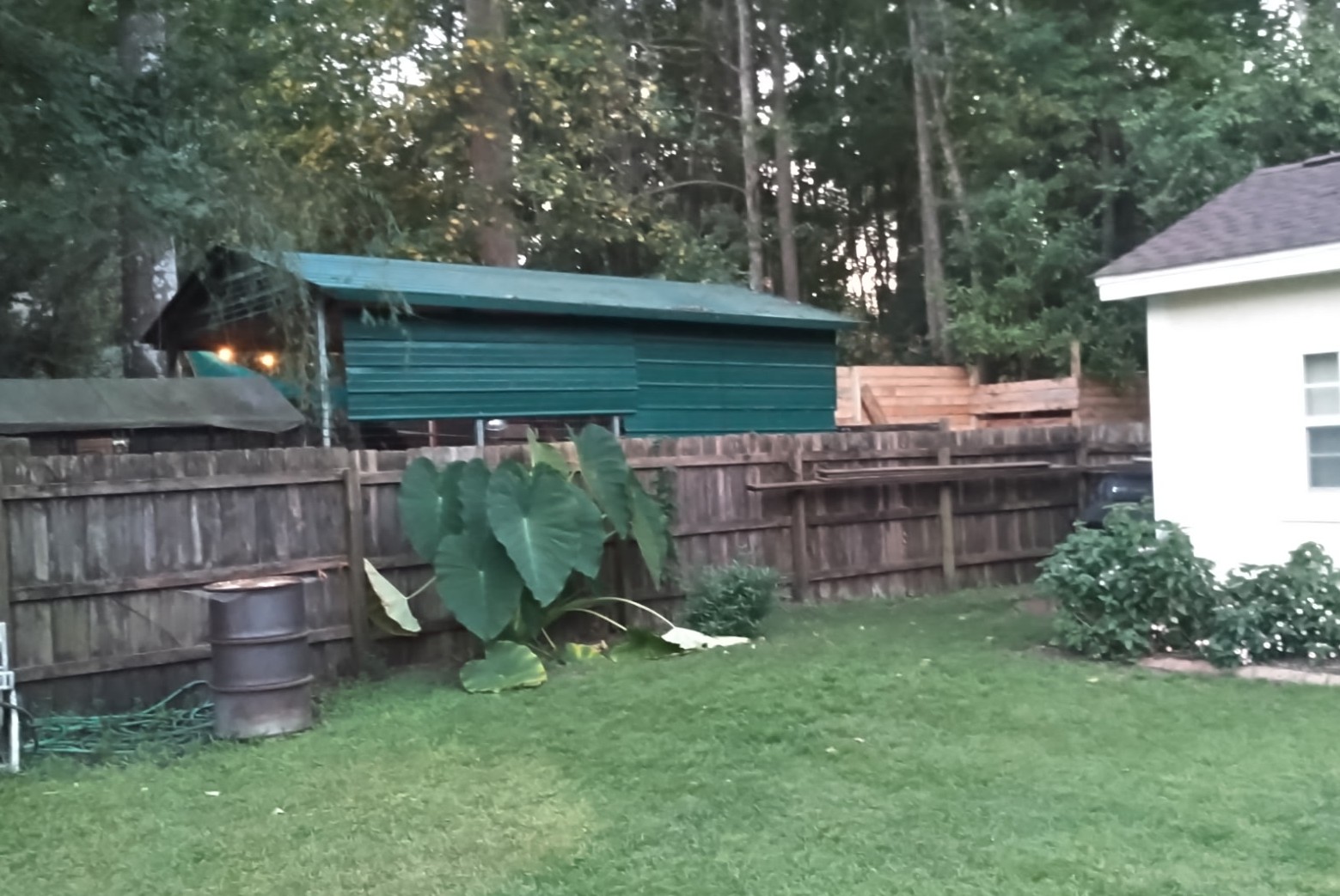
LELAND — After a couple’s repeated nuisance complaints regarding their neighbors’ mini “farm,” Leland officials have rewritten its animal ordinance to restrict livestock in suburban neighborhoods.
The Leland Town Council unanimously amended its ordinance on March 19 to explicitly ban peafowl and set strict acreage requirements for livestock in residential zones. The update comes six months after George and Beth Gibblet first complained to the town about their next-door neighbor’s collection of pigs and peacocks.
READ MORE: Leland councilmember pushes back after probe finds policy violation, no legal wrongdoing
ALSO: Leland braces for AI surge with strict proposed data center rules
“Peacocks are pretty noisy,” George Gibblet told Port City Daily Monday, adding when his neighbor first obtained them, “it was like constant chatter all the time. And that’s right next to our property, you could practically reach from our fence and touch their peacock pen.”
The pen was located along the Gibblets’ property line. Then the situation escalated; pigs were added to the existing peafowl, with the number of animals on the residential property steadily increasing.
“Maybe late November, we knew he had up to 18 pigs, and we just found out that they have had piglets,” Gibblet said. “Now, we don’t know how many piglets they have.”
Port City Daily reached out to the neighbor to discuss the Gibblets’ concerns and the council’s updated ordinance. The neighbor responded but declined to comment at this time.
The ordinance previously prohibited chickens, domestic fowl, and livestock from running at large and defined livestock broadly to include pigs, cows, goats, sheep, horses, and other animals kept for productive or commercial purposes rather than as pets. However, it did not set specific lot size requirements, limit the number of animals per property, or restrict exotic birds such as peacocks.
Under the new rules, a variety of avian animals can no longer be kept or owned within town limits, including peacocks, geese, ducks, and turkeys. Livestock, like pigs and cows, must be kept on at least 40,000-square-foot lots, with at least 20,000-square-feet of space allowed per animal, while poultry is limited to five hens on parcels 15,000 square feet or larger.
All enclosures must be at least 10 feet from property lines, 25 feet from neighboring homes, and maintained in a clean, sanitary condition to prevent odors or health hazards.
Council last amended the livestock ordinance in 2009, though specifics of those changes are unclear, according to town staff. Leland Police Department records show there have been 10 animal nuisance calls between 2020 and 2025, six of which involved domestic animals, such as dogs or cats.
The Gibblets live in the Marion Estates neighborhood and said the neighbors’ animals have become a frequent disruption, affecting their homelife — and not only due to noise. Odors from animal waste also permeate the area, infringing upon the Gibblets spending time outdoors.
“How would you like to go swimming or have a cookout in the backyard and have to smell livestock?” Gibblet asked.
More so, the couple said the presence of animal waste and feed led to an increase in vermin, particularly rats, on their property. George reported the rodent population has grown enough to impact their storage and drainage areas.
“We’ve had rats on our property that we never had before. They got in our shed, they got in our French drain, they got in our well house, they got in our pool shed. And they’re just a nuisance. They’re all over the place,” Gibblet said. “My dog, I have a Westie, he’s killed about a half a dozen rats just in the past year.”
The vermin are a problem, though the Gibblets are now worried about groundwater contamination. The couple utilizes a private well to fill their swimming pool and water plants. The Gibblets said the proximity of the livestock pens to their well is a constant worry, especially with a drainage ditch carrying runoff toward the back of the property.
“We’re pretty sure that the ditch is contaminated … it looks awful, awful, and you can smell the waste in the ditch,” Gibblet’s wife, Beth, added.
According to the Environmental Protection Agency, untreated livestock waste can introduce high levels of E. coli, which can cause illness or skin infections, as well as nitrates, which can make groundwater unsafe for humans and pets. Waste can also carry pathogens like Salmonella, which may persist in soil and water for months.
The couple said they brought their concerns to state officials, namely the North Carolina Department of Environmental Quality. However, under state law, NCDEQ’s animal feeding operations program regulates larger permitted facilities — defined as feedlots with more than 250 swine, 100 confined cattle, 75 horses, 1,000 sheep or 30,000 poultry — meaning it does not have enforcement authority for small residential livestock sites like their neighbor’s. As a result, the Gibblets said their complaints have resulted in no formal water testing to this point.
However, Planning Director Benjamin Andrea noted accumulation of animal waste, even on private property, can be considered a nuisance under town code, and the town can pursue enforcement remedies to protect public health and safety if required. Port City Daily has asked the town what, if any, enforcement actions have been taken in this case; the story will be updated upon response.
Regardless, the Gibblets said they are pleased to see action in the ordinance update.
As the ordinance amendments were approved, Councilmember Veronica Carter apologized to the couple, who attended Thursday, March 19’s meeting: “I’m sorry you guys had to wait so long.”
The board also discussed broader changes to the ordinance, with Councilmember Frank Pendleton advocating for restrictions on the number of dogs and cats per property. The ordinance does not specify a limit on dogs and cats, though it prohibits dogs and other domesticated animals from roaming freely off an owner’s property.
Council ultimately decided to move forward with the ordinance as presented at the meeting, leaving the possibility for additional changes for discussion at a later date.
They also moved the effective start date to June 1, 2026, instead of July 1, collectively acknowledging the couple deserved timely relief after bringing the issue to the town’s attention last September. Councilmembers noted the 60-day window would give property owners adequate time to come into compliance.
Once effective, violations will be treated as a public nuisance, allowing town staff to require owners to remove animals or correct unsanitary conditions under Section 34-55 of the Code of Ordinances. Owners who fail to comply face a civil penalty of $50 per day, accruing until the violation is corrected and may be subject to further enforcement such as town-initiated abatement.
Have tips or suggestions for Charlie Fossen? Email charlie@localdailymedia.com
At Port City Daily, we aim to keep locals informed on top-of-mind news facing the tri-county region. To support our work and help us reach more people in 2026, please, consider helping one of two ways: Subscribe here or make a one-time contribution here.
We appreciate your ongoing support.
