


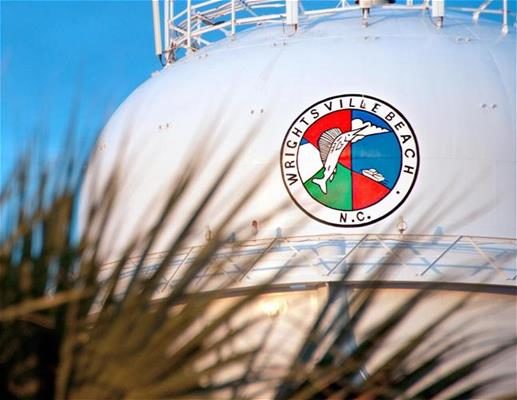
WRIGHTSVILLE BEACH — With infrastructure repairs needed and employee costs conceivably increasing, as revenue remains flat, officials in the town of Wrightsville Beach are weighing options on the 2026-2027 budget. It includes discussions about potentially raising property taxes for the first time in more than a decade.
In the second budget workshop hosted last week, Town Manager Haynes Brigman informed the board of aldermen about the reality of the town’s financials not increasing enough to meet the town’s needs. Staff and the aldermen will need to consider alternatives to strengthen revenue streams and one possible solution has been avoided by town officials for quite some time.
READ MORE: WB foregoes parking rate increase and reduces all-day cost, forms parking committee
“If we raise our property tax rate, then we would collect not only more ad valorem taxes, we would collect more sales tax as well,” he said.
The tax rate for Wrightsville Beach is 5.31 cents per $100 value. The rate has been slowly decreasing since 2017 as the town has brought in more parking revenue, but the last time the rate was increased was in 2012, from 0.099 to 0.133 — or 13 cents per $100 value. The town is projected to collect $3.5 million in property taxes in fiscal year 2026-2027, which is roughly the same as last fiscal year.
“We have, right now, the lowest property tax rate in the state of North Carolina,” Mayor Ken Dull said at the town’s budget work session on Feb. 17.
“For a full service municipality, yes,” Brigman replied.
Dull called the low property tax rate Wrightsville Beach’s “sacred cow” for the town and expressed his desire for it to remain untouched as long as possible.
However, the town has planned several large capital improvement projects — including bulkhead repairs and accessible bathrooms — and wants to increase compensation for town employees. Both would require more revenue than the town currently brings in.
Brigman commented to the board members that the town’s revenue increase from year-to-year has come to a standstill.
“That’s not necessarily a bad thing because we’re not going down,” Brigman said, referring to the difference in income made between the years. “But it’s also not a good thing because our revenues are essentially a flat line for us. We have very limited opportunities to grow our revenue.”
In other communities, he pointed out, growth stems from new developments, but Wrightsville Beach doesn’t have a lot of land and thus few new large-scale developments are coming in.
The town’s other revenue streams include sales tax, occupancy taxes and parking fees, though sales revenue is bringing in the maximum amount of money at roughly $1.5 million. The board could choose to raise parking fees, as discussed during its first budget workshop in January. However, this year the board of aldermen, instead, decided to decrease all-day rates by $5 and avoid hourly rate increases.
Parking fees already make up the town’s highest revenue source, expected to total $7.2 million by June 30, though the town originally projected making $6.7 million. The revenue stream is more than double what the town anticipates collecting in property taxes ($3.5 million).
Local sales and use tax was at $626,116 during 2024-2025 and is projected at $1.5 million this year. Room occupancy tax totaled $974,088 in 2024-2025 and is expected to be $2.3 million this fiscal year.
The town manager added the nature of the municipality being a beach town meant most of the town’s revenue sources were “volatile” because inclement weather could bring the island town thousands of dollars in revenue loss. If people don’t come to the beach because of a storm or bad weather, both parking fees and room occupancy tax decline.
“When you think about our four pillars of revenue for the town … three of those four are heavily dependent on weather or the economy or other visitor behavior factors that are likely out of our control in most situations,” Brigman said.
Infrastructure
Though the idea of a tax rate increase was broached, specifics on what the town needed to cover its projects were not divulged and council members didn’t indicate whether they would support a tax increase.
Some of the projects the town hopes to include in the next fiscal year are the completion of the Historic Square parking lot that was supposed to be paved within the 2025-2026 fiscal year and the municipal complex improvements.
Part of the town’s capital improvement plan, drawn in 2025 by the town’s financial director Brian Murray, is to replace the bulkheads around Wrightsville Beach over the next five to six years. There are 11 bulkheads, according to Brigman, to be changed out and the current plan is to complete two a year.
The project will cost roughly $4 million to complete.
In 2024, the first phase of the bulkhead repair project was completed by contractor Evans and Sons, along the Wrightsville Beach Boating Access Area.
In the board of aldermen’s first meeting of 2026, it voted unanimously to allocate $600,000 to the replacement of the bulkheads at Oxford Street and Fayetteville Street along Banks Channel. The design for the repairs was completed by Andrew Consulting Engineers, and the contractors, Span Builders LLC, which specializes in bridge improvements, was awarded a $517,000 contract.
The project has already begun and is anticipated to be completed by this Memorial Day.
Wrightsville Beach is hoping to mitigate costs and Brigman said the town has a “very strong chance” of receiving $4 million in federal funding. However, given the more precarious situation of the bulkheads at Oxford and Fayetteville streets, the town would shoulder the expense temporarily.
The costs were supposed to originally have been covered by federal funding already, but as previously reported by Port City Daily, the funding was put on pause until 2028.
A concern to board members and town staff was Wynn Plaza, susceptible to flooding from King Tides due to the degradation of its bulkhead. The area includes a park, parking lot, and boat access point off of Causeway Drive. If awarded the grant, it would not cover it because it was not submitted as a part of the original grant application.
Brigman said it would be added to town staff’s “bulkhead list,” to track maintenance, repair, and replacement.
Workforce Development
Another proposal from Brigman included improvements to staff pay and merit bonuses. Brigman noted some of the town’s employees were becoming increasingly overwhelmed.
“With increased workload comes higher demand and more burnout,” he said. “Employees are feeling like their plates are full.”
He suggested improving benefits and compensation packages especially as the town grows and continues to expand its services, such as introducing more park improvements, public safety, pedestrian and bike safety, and more.
“We’ll have to cut some things and we’ll have to push some things,” he said. “I want to emphasize that we really hit our cap in terms of the money we bring in versus the money it takes to provide services and pay employees.”
Currently, staff have the ability to earn up to 4% for a merit bonus. Last year, the town implemented a cost-of-living adjustment at 2.6%.
This year Brigman proposed up to 5% of a merit bonus and 2.4% cost-of-living adjustment.
“So a very solid, strong employee has the potential, in this scenario, to earn a 7.4% increase,” he said, “which I think is competitive across the board.”
In 2025, Wrightsville Beach gained nine new employees across several departments, including in public safety, and the hiring of Bailey Hartsell, the communications manager for the town. That increased the town’s employee total from 70 to 79, a significant jump to Brigman, which cost roughly $800,000.
Included in these new employment numbers is the police force, which has a high chance of being fully staffed at 30 public safety personnel for the next fiscal year. The new recruits are set to cover the 3 p.m. to 3 a.m. shifts, as the town puts more of a focus on what they call “nuisance” hours — having more thorough and effective coverage during peak disturbance periods.
Wrightsville Beach officers will also be given e-bikes in order to address the “finger streets” — or residential side streets and cul-de-sacs — which Alderman Margaret Baggett noted to be more cumbersome with police cruisers.
Have tips or suggestions for Emily Sawaked? Email emily@localdailymedia.com
At Port City Daily, we aim to keep locals informed on top-of-mind news facing the tri-county region. To support our work and help us reach more people in 2026, please, consider helping one of two ways: Subscribehere or make a one-time contribution here.
We appreciate your ongoing support.
