


BRUNSWICK COUNTY — After years of community pressure, Brunswick County has taken a formal step toward extending a new water line to the North Mulberry Road neighborhood.
READ MORE: Brunswick County criticized for missing water grant deadline
ALSO: Brunswick County lawsuit halted, insurer to complete delayed water treatment plant
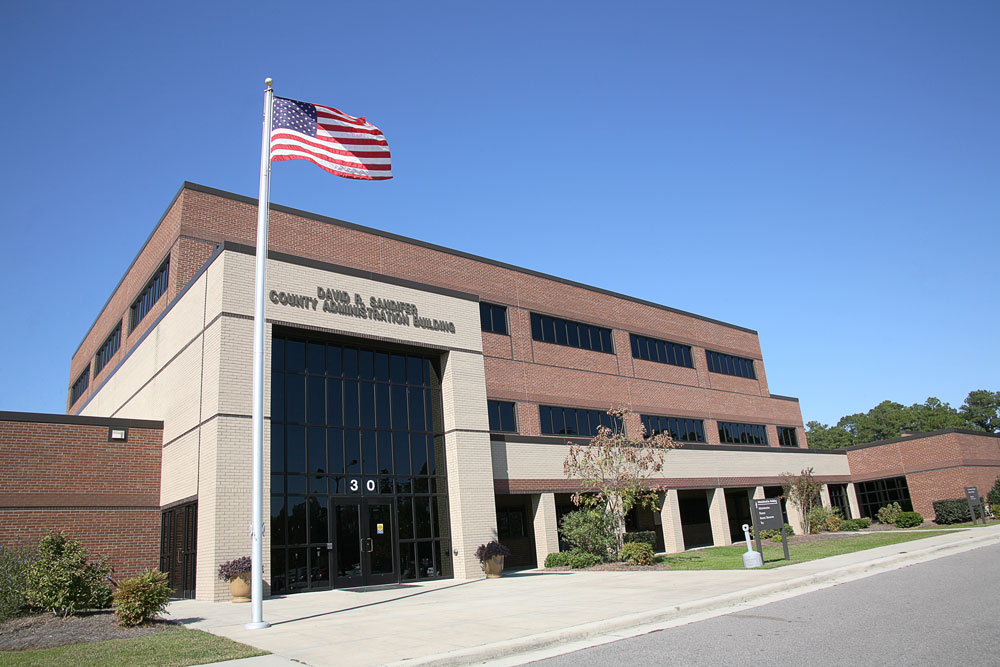
The Brunswick County Commissioners unanimously approved applying for a Community Development Block Grant-Infrastructure (CDBG-I) grant to help fund a water line extension project at North Mulberry Road during their Sept. 15 meeting.
The county is requesting $3 million in state grant funding, with a $2 million commitment from the county’s own water system operating fund, for the estimated $5 million project. If approved, the project will bring clean drinking water to historically Black and lower-income areas that have relied on contaminated well water for decades.
The water line improvements will entail the installation of approximately 12,000 feet of new water lines in the North Mulberry Road neighborhood, located in Shallotte. The work will involve trenching, laying new pipes, installing fire hydrants and connecting existing homes to the county’s public water system, to combat emerging contaminants like PFAS in residents’ well water.
A 2020 national study by the Environmental Working Group found Brunswick County’s public drinking water had a total PFAS level of 289 parts per trillion, the highest among 44 areas sampled nationwide and significantly exceeding EWG’s 1 ppt recommendation. The figure, which included contaminants like PFMOAA and PFPrA, represents a combined total of chemicals that the Environmental Protection Agency has linked to adverse health effects, including liver damage, thyroid disruption, and developmental issues.
While the county’s public water system has taken steps to filter out many of these chemicals through projects like the pending Northwest Water Treatment Plant expansion, residents in the North Mulberry Road neighborhood who rely on private wells have not had access to any conventionally treated water.
The decision to apply for the grants comes after decades of calls for clean water access from residents. The Brunswick County chapter of the NAACP have routinely pressured county officials to provide clean water for residents living in those neighborhoods.
Speaking during public comment, Brunswick NAACP President Carl Parker addressed commissioners, emphasizing the long history of the issue.
“I’m coming here with the tone of a can that we’ve been kicking for about 22 years… The NAACP has been fighting this battle for a long time, and we don’t want to continue to kick the can,” Parker stated.
The issue dates back to the early 2000s, when residents first presented commissioners with petitions and public testimony about their well water’s foul smell, color, and sediment. More recently, the struggle gained momentum when human rights and environmental group EarthRights got involved in 2023, submitting a petition with 400 resident signatures to the county requesting they apply for CDBG grants for the affected communities.
In a press release, EarthRights campaigns officer Audrey Schreiber said the grant application is an important first step but there is more work to make sure all Brunswick residents have access to clean water.
“We will continue to stand alongside residents who for too long have seen the county and developers prioritize water line extension projects for new developments while their neighborhoods remain without water lines and their families forced to consume well water that smells foul, dyes their hair and clothing orange, has sediment in it, and tests for PFAS or other contaminants,” Schreiber stated. “Clean water is a dignity and a human right that must be afforded to all people.”
While the county has formally applied for the Mulberry Road grant, county communications director Meagan Kascsak provided an update on other communities pointed out by EarthRights as needing access to clean water.
Kascsak confirmed the county had already applied for a Federal Appropriations Grant for the Brown/Albright Road neighborhood, as part of the Bolivia Area Water Project. Kascsak noted the county had been working on this project before Earthrights started contacting them. While the Bolivia Area Water Project was approved last year, the grant was canceled last winter as part of the incoming Trump administration’s funding review process. The county has since resubmitted the project for approval.
Speaking during public comment, Amy Johnson, a resident of Albright Road, asked commissioners to continue to work to secure federal grants for those living in the Brown and Albright Roads area.
“I understand infrastructure projects take planning and funding, and I’m here to ask you to continue on to make that happen,” Johnson stated. “Clean water is a basic need and we need it on Brown and Albright Roads.”
As for the Goodman/James Way Road and River Road communities, Kascsak said those residences are closer to H2Go’s existing service lines. The county has reached out to H2Go’s leadership to discuss connecting those homes to their lines.
Pressure from EarthRights and the community intensified after the county missed a grant application deadline in April. According to previous Port City Daily reporting, the county decided not to pursue federal and state grants, citing their designation as a Tier 3 county by the Department of Commerce. A Tier 3 county is considered one of the most prosperous in the state, which makes it less likely to receive certain grants intended for communities with greater economic need.
However, the North Carolina Department of Environmental Quality does not necessarily consider the wealth of an entire county when evaluating applications. Instead, NCDEQ considers the economic status of the residents of the particular area that would receive the state funding.
This is where the CDBG-I grant presents a different kind of financial hurdle. While the North Mulberry Road area is located within two census block groups, only one of those groups is officially classified as a low-to-moderate-income community. The grant requires a project to primarily benefit LMI individuals, defined as at least 51% of residents in the area. Since a lower LMI percentage in the service area would result in a lower score, this could negatively impact the county’s chances of receiving the grant.
Parker asked commissioners to fund the project on their own if the Mulberry Road grant application is ultimately denied by NCDEQ.
“If this grant is applied for and it does not go through, we are hoping that you’ll reach back into your budget and pull this through for us, for clean water, putting in some new pipes [and] hooking them up free of charge,” Parker stated.
The approval process for the grant can take time. The CDBG-I grant program, managed by NCDEQ, typically operates on one funding cycle per year. Applications are received in September and are approved or denied by the following July. If the grant is approved, it could face a timeline of up to 36 months from the award date to project completion.
Have tips or suggestions for Charlie Fossen? Email charlie@localdailymedia.com
Want to read more from PCD? Subscribe now and then sign up for our morning newsletter, Wilmington Wire, and get the headlines delivered to your inbox every morning.
