


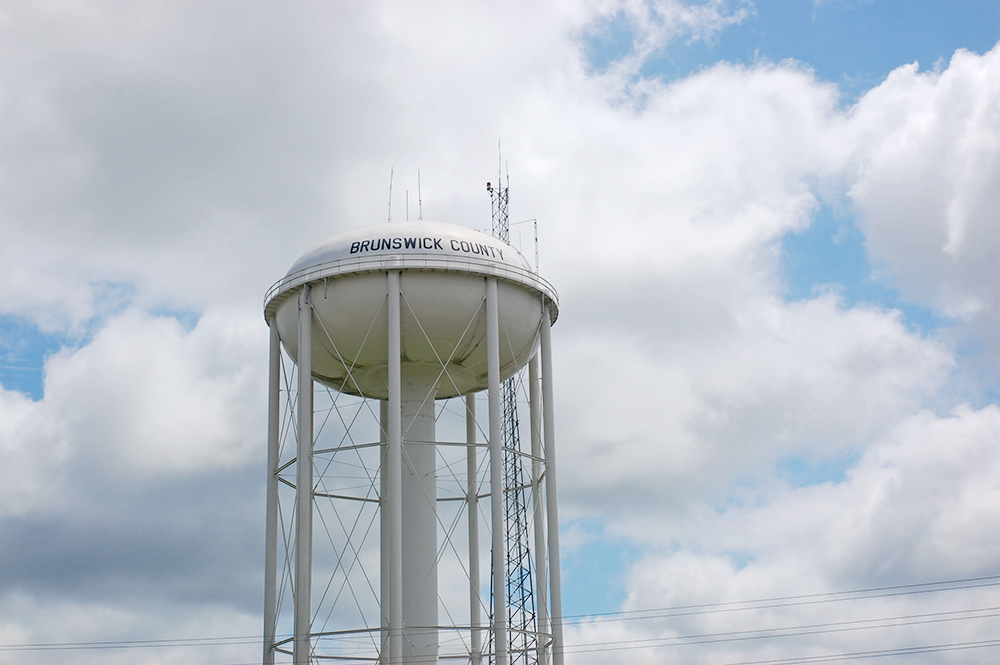
BRUNSWICK COUNTY — A long-simmering debate over who controls development in Brunswick County took a turn at a recent commissioners’ meeting, as a motion was put forward to strip the planning board of its final authority on major projects.
READ MORE: More than 1,900 homes to be reviewed in Brunswick County
ALSO: Brunswick residents argue planning board has too much authority
During an Aug. 4 meeting and after a lengthy discussion on the county’s unified development ordinance modernization project, Commissioner Pat Sykes motioned to explore the authority of the planning board. The motion passed by a 3-1 vote with Chair Mike Forte against. Commissioner Marty Cooke was not in attendance.
“I don’t think that the planning board should be the authority for these projects. I think it should be us as elected officials,” Sykes said. “We’ve been elected by the people and for the people and we should be the ones making the final decision.”
Currently, the seven volunteer members of the planning board are appointed by the county commissioners. The board’s composition includes five members who each represent a commissioner district, along with two at-large members.
The relationship between the planning board and commissioners has been contentious for the last several years as rapid population growth has led to increasing calls from the public about overdevelopment. County residents have expressed concerns the planning board has too much authority and is more influenced by developers than by the community.
Discussion on the UDO modernization project updates sparked Sykes’ motion because the UDO defines the authority of the planning board. Basically the county’s rulebook, the UDO sets the ground rules for all development and governs everything from lot sizes and building heights, to parking and storm drainage. The UDO update is a chance for the commissioners to rewrite how development is handled by transferring that authority and has become a central point of contention for some.
Commissioner Randy Thompson, who voted in favor of Sykes’ motion, told Port City Daily Tuesday he supported the measure to address overdevelopment before it further strains existing infrastructure like roads and sewers.
“I don’t want to say it’s not keeping up, but we have infrastructure issues associated with the growth,” Thompson said. “What I’m lobbying for is for us to slow the process down and have the county commissioners have the authority to approve projects from this point forward.”
Thompson previously put forth a measure in September 2024 for a moratorium on all development to assess the county’s infrastructure needs, following flooding from Potential Tropical Cyclone 8. However, the motion failed in a 3-2 vote due to worries it could open up the county to litigation.
A similar refrain was stated by Chair Forte Tuesday when discussing the county’s UDO changes. Forte was the only commissioner opposed to Sykes’ motion, saying he was cautious to make any changes to the UDO due to the risk of lawsuits which could be triggered by pending state legislation.
Senate Bill 382 passed last year as part of a Hurricane Helene relief bill but included a provision disallowing local governments from pursuing downzoning ordinances. Currently, House Bill 24 and House Bill 765 are put forth to remove downzoning restrictions. Though stagnant in committee since May, they are expected to be heard in the coming months, but Forte said the outcome is uncertain.
“If I were to change the UDO, in as little as a month-and-a-half to two months, I might be out of compliance, so why would I change it now?” Forte asked rhetorically. “We’re handcuffed. There’s nothing I can do until the General Assembly makes a decision.”
He said he was satisfied with the commissioners appointing the planning board, as they follow the rules of the UDO as approved by commissioners.
“If Bob the Builder comes before the planning board and he has dotted every ‘i’ and crossed every ‘t,’ there really is no choice but to approve as long as it follows every guideline,” Forte said.
Forte specifically said planning board member Jason Gaver, who he appointed in 2023, has his trust.
“I have explained my philosophy, what I would like to see him support, but I also give him all the latitude in the world,” Forte stated. “If you see something that you know is egregious, don’t support it — kick it back.”
Brunswick County Planning Board member Jim Board does not see a commissioner takeover as a viable solution, but wants increased communication and collaboration between the two bodies. Board explained the current system is dysfunctional because it creates a fundamental disconnect: Elected commissioners are held accountable by the public for overdevelopment, even though the final authority on those projects rests with the planning board.
Board said the commissioners seem to “wash their hands of any involvement or any accountability” for the board’s decisions.
He voiced his opinion at a planning board meeting on Aug. 11, reading a prepared statement arguing the current process is flawed. Board said it leads to “unchecked developments” and presented several suggestions to fix what he sees as a broken system.
“I’m not a guru. I don’t know what all the answers are, but I do know that there’s something that’s not right in the way that we’re approaching this,” Board told Port City Daily. “I think the citizens of Brunswick County are absolutely correct in their wanting to really combat the overdevelopment that’s already occurred in Brunswick County and try to prevent it from happening further.”
The board, in a tie-breaking vote, approved a 1,700-unit development last month and have 1,900 homes on their upcoming agenda.
Residents have spoken out ad nauseam against overdevelopment and rapid growth to both commissioners and the planning board. At an Aug. 4 commissioner meeting, one resident, Deborah Hester, balked over the ongoing road construction and traffic problems negatively impacting her quality of life.
“More residents of Brunswick County are becoming victims because of the construction going on,” Hester stated. “Have you made any decisions as to when our county will end the construction? I used to hate to go to Wilmington because of all the traffic. Now I hate to go anywhere because of all the traffic.”
Another resident — and president of the Brick Landing Plantation Master Association — Michael Gomori, was concerned about the “inability” for existing infrastructure like roadways and stormwater control to adequately deal with growth.
“There’s a lot of changes that have occurred over the last 30 years, but over the last two years, the rate of change that’s been happening in our community has been breathtaking,” Gomori said. “We don’t dispute that growth is not necessary, but it’s the rate of growth that is the concern of our residents.”
Gomori called for immediate changes to the UDO.
Planning board member Board believes the UDO modernization project should not be stalled by any of the General Assembly’s pending decisions. He said if commissioners move forward with what is anticipated to come out of Raleigh, necessary changes can easily be made later through a text amendment, so there is no reason to delay the entire project.
The UDO modernization project is being led by consultant firm N-Focus and will update the county’s regulations to address challenges posed by incoming developments. As drafted now, the proposed changes would create new standards, including:
- Transportation overlay zone: A new zone that would establish regulations for properties along major highways, requiring vegetated buffers and landscaping to protect scenic character and improve traffic efficiency.
- Wellhead protection area zoning: A new overlay zone designed to protect public drinking water sources and groundwater from potential contamination.
- Tree and green space preservation: Stricter rules for new developments to prevent clear-cutting and ensure a certain percentage of the development is preserved as a tree canopy or green space.
- Enhanced review process: The new UDO would require more detailed analyses, such as traffic impact studies, to be submitted for large-scale projects before they are brought to a final vote.
- Revisions to existing regulations: The updates would address a variety of other topics, including regulations for stormwater management and building setbacks.
At the commissioners’ Aug. 4 meeting, N-Focus cited the transportation overlay zone as one example of a potential downzoning issue in the UDO changes. By placing stricter regulations on properties along major highways, the new zone could effectively limit the scope of developments.
As a result of legislative hangups, consultant Michael Harvey with N-Focus said the project is in its final stages, but looks like “a choose your own adventure book.” Harvey explained the county will be able to select from multiple versions of the UDO based on how state law is interpreted or if downzoning restrictions from S.B. 382 are amended in the future. Rather than a single, rigid plan which could be invalidated by state law, Harvey wants to give the county flexibility for any legislative actions.
Once planning staff review the UDO modernization draft, N-Focus plans on holding public outreach meetings to get feedback on the proposed changes before finalizing the draft to present before the planning board and the commissioners.
Forte said the main change he wants made are with stormwater management regulations. He pointed to storms, like last year’s PTC8, dumping more than 20 inches of rain in parts of Brunswick County in a 24-hour period and emphasized the county must stay ahead of these events with updated regulations to properly deal with subsequent flooding.
“I’m not an engineer, but I have some pretty terrific ones working at the town, and we have them looking at it,” Forte stated. “I don’t know where the money’s going to come from because it’s going to be tens of millions of dollars, but we’re going to do something.”
However, Forte objected to the idea of the commissioners and planning board members having joint meetings with varied organizations. This was an idea floated by planning board member Board during an Aug. 11 meeting.
In Board’s statement, he said commissioners should participate in joint meetings regarding public safety and education, to understand how developments can strain public resources if those aren’t also being considered upon development approval. For instance, Board believes the current process of approving developments only according to what’s in the UDO doesn’t take into account the capacity of local fire and police department needs to handle new residences.
“You keep throwing two or 3,000 new homes into a fire district that they are responsible for without getting their input,” Board stated. “I mean, if they don’t have the capacity from a manpower standpoint or from an equipment standpoint, how are they going to cover all these additional homes?”
He also suggested commissioners make departments attend all technical review committee meetings when it comes to assessing a development’s impact. Board explained while representatives from local, state and federal departments — from NCDOT to NCDEQ — often attend, more can be included in discussion.
With the exception of Sykes, Board said he has not had any communication with commissioners about their vision for future development in the county, prompting the suggestion to host joint meetings.
“And invite the public and let’s just hash it out,” Board added. “Don’t get me wrong, I am not against development, but it needs to be planned, and it needs to be done logically and such that we have the capability of providing the infrastructure necessary to support that growth.”
Forte, who moved to the county in 2005, said he is no stranger to the influx of people flocking this way in recent years. Since he was appointed to the board in 2016, Brunswick’s population has grown by 42% from 116,000 to 167,000 in 2024 according to the U.S. Census, making it the fastest growing county in the state.
While he respects people sharing concerns, Forte said he believes pressure has mounted and become more personal, with constituents verbally accosting him in public about overdevelopment. He said he and the board are accused of not listening and explained the influx of new residents, combined with legal and procedural rules, make it difficult for some people to garner the full picture of what the board can and cannot do.
Alternatively, his colleague, Thompson, was open to the idea of joint meetings, adding he would like planning board members to call him with their concerns.
“I get very few calls from them and I do have interaction with a couple that I see quite frequently,” Thompson told Port City Daily. “I welcome any kind of discussion, but to be quite honest with you, if their mindset is anything like some of my counterparts on the commission, then I don’t see how productive that’s going to be.”
Brunswick County’s planning board has more authority over development decisions than nearby municipalities and government entities. Other planning boards, like in New Hanover and Pender counties, act in an advisory capacity but leave final decisions to the elected officials. However, Brunswick’s planning board has the authority to make final decisions on major subdivisions and planned developments and only goes to commissioners if an appeal takes place.
At the Aug. 4 meeting, Sykes motioned to have county staff bring back information outlining how the approval process would work if final authority for planned developments and major subdivisions was removed from the planning board. Staff will present their findings to the commissioners at a future meeting for review.
Port City Daily reached out to commissioners Sykes and Frank Williams for further comment on the motion, but a response was not received by press.
Have tips or suggestions for Charlie Fossen? Email [email protected]
Want to read more from PCD? Subscribe now and then sign up for our morning newsletter, Wilmington Wire, and get the headlines delivered to your inbox every morning.
