


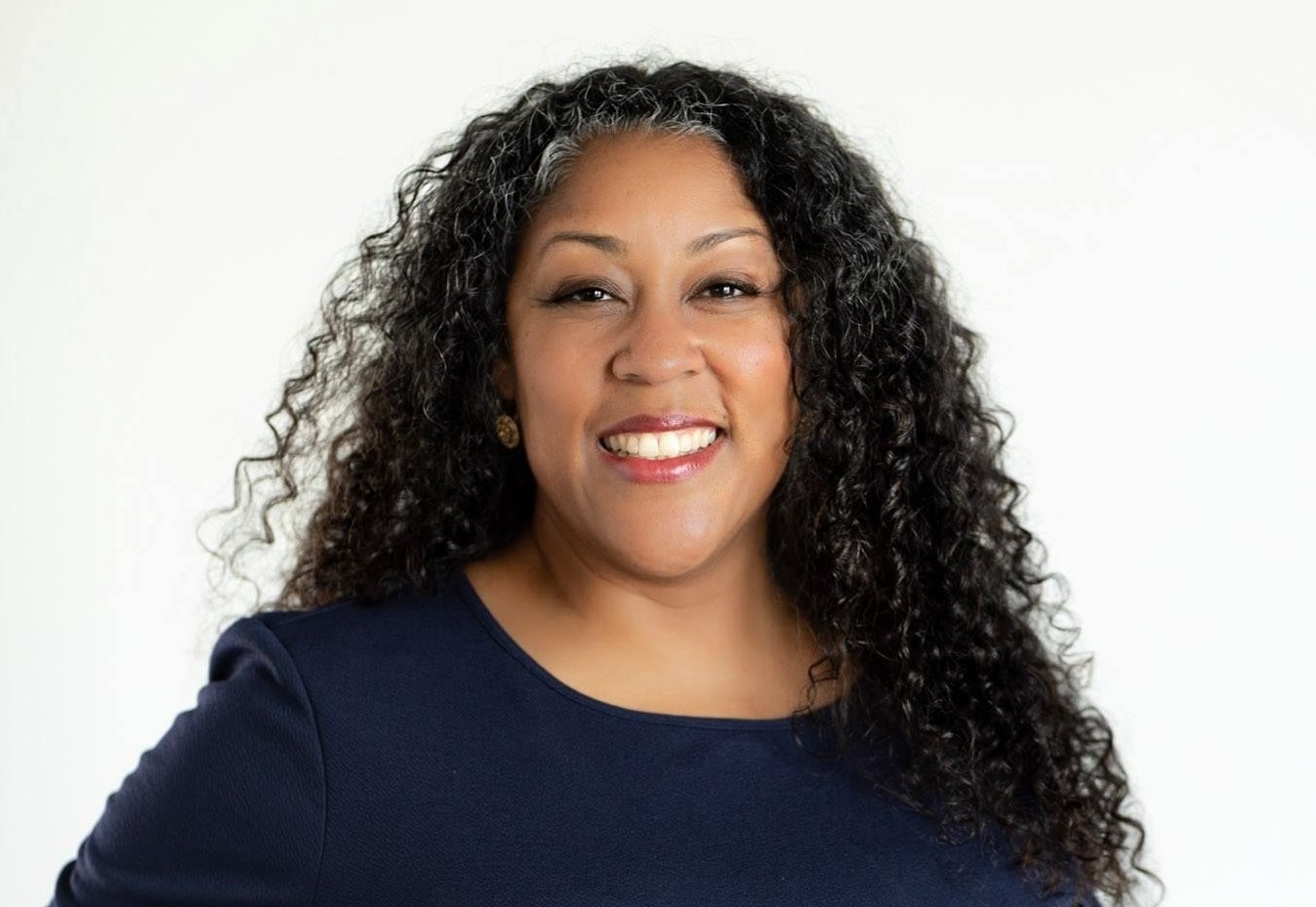
NORTH CAROLINA — A new contender has emerged in the race for the 7th Congressional District U.S. House seat.
READ MORE: Shake-up in the Senate: Tillis retirement ignites 2026 race
ALSO: Luke Waddell announces re-election bid for city council
Democrat Kimberly Hardy made her announcement on June 30 at a New Hanover County Democratic Party town hall. She will face off against incumbent Republican U.S. Representative David Rouzer.
“I feel really, really good about the opportunity to take this seat and make it something that will be beneficial to the people in this district,” Hardy told PCD. “If I go to Congress and make federal changes that improve educational outcomes for children, if I can go to Congress and help bring job opportunities to this district, then I can go to Congress and make a real change.”
While the filing period for municipal elections is open through July 18, the primary election filing won’t open until the end of the year — from noon on Monday, Dec. 1, 2025, to noon on Friday, Dec. 19, 2025.
All 14 U.S. House seats and a wide-open U.S. Senate race (with incumbent Thom Tillis opting out) are on the ballot in 2026. These contests will impact the balance of power in Congress, and could determine if either party achieves a supermajority — the two-thirds vote needed for significant actions like overriding a presidential veto or proposing constitutional amendments.
Rouzer has served six terms as representative for District 7 since being elected to the role in 2015. Since then, he has consistently defended his seat against various Democratic challengers in every general election through 2024, maintaining his position in Washington D.C.
“I think when people are struggling, when people are hurting, they are moving beyond partisanship to say there’s some basic, decent, human things that are important to me, or my own personal livelihood, or the livelihoods of people I care about are on the line,” Hardy said. “When you disaggregate the issues from the partisanship, people will listen.”
Raised by a police officer and a federal agent, Hardy holds a Ph.D. in social work and serves as an associate professor at Fayetteville State University; she also previously worked as a school social worker. Her political experience includes campaigning for the North Carolina House of Representatives for District 43, which is in Fayetteville, in both 2020 and 2022.
She lost against Republican Diane Wheatley by 3.6 percentage points in 2020, after unseating six-term Democratic incumbent Elmer Floyd in the primary election. In the 2022 Democratic primary for the same district, she was defeated by Floyd by 23.95 percentage points.
Beyond legislative bids, Hardy has held significant leadership roles within the North Carolina Democratic Party, including serving as the second vice chair.
In an interview with Port City Daily, Hardy discussed her motivations for running, her focus on community needs, and how she believes her background uniquely positions her to represent the diverse interests of the district.
Answers have been edited only for clarity; the candidates’ opinions and statements are not a reflection of Port City Daily.
PCD: Why are you running for Congress — specifically, why are you challenging David Rouzer for this seat?
Kimberly Hardy: Well, I live in this district, and so he’s the one in the seat, so he’s the one that’s the challenge that I’m taking on. But the bigger issue is, it’s less about him in particular, and more about the fact that he’s just not doing his job. I think that if you had anyone in office who was not showing up for the constituents, not wanting to hear their issues and their concerns, not answering the tough questions, anyone should be challenged in a space like that. He has not done anything for this district in over a decade, and we deserve better than that. And so I’m running because our region is often overlooked.
I’ve spent a lot of time going around the southeast in NC and listened to folks in all of these counties, and I took notes. And in all of these spaces, you just keep hearing about things that folks need and they’re not being addressed, and yet, meanwhile, we’re using our hard-earned tax dollars to pay this guy’s salary when there are counties in this district where people have no job and no opportunity for a job. He is actively working to dismantle health care access for tens of thousands of people in his own district, to say nothing for the national consequence of the legislation. This is a serious job and yet he’s not showing up for that.
I live, work, and play here. I raised my son here. This is home. I don’t look at these folks as constituents. They are my neighbors. They’re my colleagues. They’re my son’s parents, you know, and I care about them. If I can go to Congress and make federal changes that improve educational outcomes for children, if I can go to Congress and help bring job opportunities to this district, and I can go to Congress and make a real change, that’s a change that everyone’s going to feel. We deserve somebody in there who is going to show up for us and to care about us and to do what’s right and hold accountable those folks who are not doing that.
PCD: North Carolina’s 7th Congressional District has consistently elected Republican representatives. What is your strategy to win over voters who have traditionally supported your opponent and how do you plan to overcome this significant partisan lean?
KH: This seat was drawn to elect a Republican, but that doesn’t necessarily mean that the will of the people in that district is represented. At a certain point, these issues are the things that should drive who we are voting for and not lines that were intentionally drawn to discredit or discount the voices of people.
I do believe that there are people who have not turned out for a while because they have felt like ‘There’s just no one really speaking for me.’ There are people who maybe voted for Rouzer before and are really disillusioned because of what they are realizing he has not done to help.
For me, the sort of tagline for our campaign is literally: Listening, leading, uniting. I have listened and I will continue to do that. We are doing launch events in all eight counties and we’re going to continue to show up. After I win this, I am committed to coming back and doing, at minimum, one per county per year town hall. I am committed to making sure that my constituents can actually access me and ask me questions.
PCD: You’ve stated that you believe Representative Rouzer is ‘disconnected from the people of southeastern North Carolina’ and ‘not representing their interests.’ Can you provide specific examples of where his representation falls short in addressing the needs of this district, and how your approach and policy priorities would directly address those gaps?
KH: I was a school social worker. This budget freeze that’s come from the Department of Education is going to harm those resources. In New Hanover County, for example, they have already said that they’re going to have to cut 14 nurses and a handful of the social workers. Those people are lifelines, social workers attend to mental health, but also violence at home, substance abuse, hunger, and nurses are a first line of medical defense for folks who are in need.
When you look at David Rouzer, he is actually supportive of Donald Trump’s desire to completely defund the U.S. Department of Education. This is also going to harm K-12, Head Start, early reading programs, all of these different educational programs and resources, and the teachers responsible for their delivery. My son just graduated from high school, we are going to need student loans to pay for that. That is in peril when we think about closing the Department of Education. When you’re shutting down the Department of Education for no discernible reason other than alignment with partisan ideology, that is something that needs to be checked and something that needs to be changed. That’s a very significant reason why I believe I need to run against him.
PCD: What would be your first three priorities if elected and are there any bills you would seek to immediately introduce?
KH: For one, the hope is that I am not the only Democrat in the country challenging to win some of these seats so that we can regain control of Congress, so that the introduction of legislation actually has some hope to see the light of day. In the event that we are able to do that, the first thing I want to do is roll back these Medicaid cuts. It also has a real impact for states like North Carolina that have those trigger laws, and so if the federal government stops funding them at 90%, even if it goes down to 89% that all of these people who got access to Medicaid because of the expansion now lose it. That is about 600,000 people just in North Carolina. My desire would be to go in there and undo that damage in particular, as well as access to SNAP benefits and things like that. I want people to be able to eat. I want them to be able to get medicine, to be able to have a good quality of life.
I would also raise the minimum wage. I want people to have a salary, a wage, where they can have everything they need and at least most of what they want, where one doctor’s visit is not going to cause them financial turmoil. We don’t have these gaps in things like income and health care because we don’t have the resources. It is an intentional lack of will. So those are harm-reduction pieces.
But let’s also work on thriving. I would like to see us increase opportunities for entrepreneurs to start new businesses. There are some counties that have really large pockets of poverty. Bladen County, Columbus County, has very little in the way of industry. I want to do things that are going to increase programs and access and resource acquisition for folks who want to start new businesses so that the place where they live is a place where they can thrive.
PCD: Given your background as a social worker and educator, how do you envision translating that experience into effective federal policymaking, particularly on issues that may not typically be seen as ‘social work’ issues?
KH: First of all, all social workers abide by the National Association of Social Workers’ Code of Ethics. My favorite part of that code of ethics is 6.03 and 6.04 — our mandate, our ethical mandate, to engage in the policy and political activity. It’s got to be in alignment with our six core values or principles of our code of ethics, and so we are mandated to this work. In that way, I do not see that as somehow disconnected from social work. I know that it is an ethical responsibility that we have as social workers to be involved in some meaningful way in the policy space.
We have six core values that are the bedrock upon which we rest our social justice advocacy, like service and social justice, dignity and worth of the person, importance of human relationships, integrity and competence. So that’s not disconnected from policy at all. For me, these are things I lead with in everything that I do.
I want to roll back the harms of Medicaid cuts and SNAP cuts because I believe in the dignity and worth of the person. If I can’t eat and feed my family, if I am unsheltered because I can’t afford a home, if my job doesn’t pay me enough to survive, that impacts people’s dignity and their sense of self-worth. He [Rouzer] wants to cut, you know, get rid of the Department of Education for no discernible reason. That’s a lack of integrity. You don’t sign on to something simply because it’s what your party told you to do. You sign on to something when you believe in it.
Everything I will do as the next Congresswoman representing this district are things that are rooted in these relationships with people. That’s also how I’m hoping to bring people over who might not have otherwise been interested in voting for a Democrat, by not taking anyone for granted and listening to their story.
PCD: The 7th Congressional District is experiencing significant residential growth. What strategy do you have to ensure that development happening in this district is sustainable and not overwhelming existing infrastructure?
KH: Some of this is federal, some of this is state, some of this is county. Working in partnership, we can do a lot to be supportive of this. We do want to make sure that we send federal dollars down to help shore up that sort of infrastructure. I’m a nerdy professor, and I believe in ‘let’s talk to the experts who do this work.’ If you plan for that, and you budget for that, then you can roll these things out in ways that are meeting the needs as they arise.
A need that arose, for example, even just in Wilmington in particular, is the Cape Fear Memorial Bridge, and Rouzer voted against [The Infrastructure Investment and Jobs Act] that could have helped that project. If we know that the bridge needs to be repaired or replaced, then put the resources in place at the federal level to see that through, don’t have folks tolled on their way to and from work.
We should also talk to experts in storm resiliency and emergency management, and then provide the resources necessary for that, rather than cutting FEMA. When you have a congressman who is from this area, who lives in warnings and who understands how those types of weather emergencies will affect the very people he lives near and yet still votes to support things like cutting FEMA or voting against the bridge project. How do you look these people in the face? Well, the answer is, you don’t, because he’s not been here looking anyone in the face for a long time.
PCD: Given the significant agricultural presence in the district, what federal policies would you support to assist North Carolina’s farmers and farmers in your district?
KH: First of all, no farms, no food. That’s very, very real. These tariffs, for example, are really, really bad for exports. These farmers who are losing farmland need federal support. Rouzer hasn’t stood up to Trump and his ilk for these tariffs, and they are harming folks. We need to make sure that we roll that back. I don’t know if [he] really understands what tariffs are, but the impact of them is killing our farmers and their business.
We can create programs for new and existing farmers. We can push for opening up new overseas markets because this congressional position is not just about CD7, it is about national engagement. There are ways that we can help our farmers innovate and keep their land and not have these crushing issues around like tariffs. You can give federal resources, for example, for farmers to upgrade their equipment. Our state helps feed the world. We need to do more that’s really going to help the farmers keep the land that they have, grow the food that we need, and sell that food in places where it makes their farms more competitive.
If development is going to work to threaten that, then we have to find ways to coexist. I would want to go and talk to them in all of these counties and say: ‘What is it exactly that you need, and how can the federal government be helpful in getting those resources and support to you?’
PCD: Access to high-speed internet is still a challenge for a lot of people in the district, including agricultural areas. From a federal level, what would you support to help those people get the internet access they need?
KH: When Covid hit and the children had to come home from school, I really thought this global crisis was going to demonstrate to folks the need for high-speed rural broadband as well as affordable broadband. We’ve always referred to this as the homework gap. I thought for sure when this crisis abates, we will recognize that this was necessary for everyone and was provided to everyone. That did not occur. There are infrastructure bills that were introduced that would do things to fund rural internet, and Rouzer voted against it.
I am going to undo that harm. I am going to vote to fund that because we cannot have folks not having access to the internet. There’s a lot of digital work that goes into farming, they need access to this. When you have access to the internet, you have access to the global world, the global community. We need to make sure that we put federal dollars behind that. Rouzer actively worked against it by voting against that bill.
PCD: There’s been a lot of talk about building off-shore wind farms and renewable energy here in North Carolina. What is your stance on building up renewable energy in the state?
KH: I definitely believe that renewable energy is a necessity. We’ve just got this one planet that we can live on right now, and we have to take care of that. I want my son to breathe clean air, I want him to have clean oceans. The entire [planet] definitely matters. Renewable energy is huge.
Solar farms, that is a source of renewable energy, that is a source of a way that we can help folks with farmland, still have meaningfulness to their farmland. When you have renewable energy sources, then that money stays here, it also goes back to more jobs. I know there are folks who are on both sides of the wind farming issue and I believe and expect that when I’m out in the district, I’ll be listening to them about what exactly your concerns are. You don’t make the decisions based solely on what you think or what you’re told to think. You listen to those folks, you talk to the experts, and then you make informed decisions. I am not an expert in wind farming, so let’s go talk to someone who is. I’m not an expert in solar farming, so let’s talk to someone who is, and then let me use what I’ve learned there to inform federal policy that I introduce. I’d rather have wind farming than offshore drilling, I’ll tell you that. I am a huge advocate of green energy and I will advocate for things like that.
PCD: Immigration is a major national issue and North Carolina has recently seen legislative efforts regarding cooperation between state law enforcement and federal immigration agencies. What is your approach to comprehensive immigration reform at the federal level, and how would you balance border security with pathways to legal immigration?
KH: This is huge. I am the child of law enforcement. I take very seriously the role of law enforcement. We lose something very important when the trust of law enforcement at any level is imperiled. I do not believe that the immigration crisis is so severe that our local law enforcement officers should be mandated to participate as federal law enforcement officers around immigration. This immigration issue has really impacted a lot of folks in the agricultural space. Let’s find a way for these folks to have a legal pathway to citizenship.
They work here, they live here, they’re raising their families here. There has to be some humanity in this role. There are folks who are willing to risk it all to come here, they just want to make a better life for themselves and their families. There needs to be a path that makes it more possible for folks. If you talk to a lot of sheriffs, they will tell you that they do not like being forced to report people to ICE because it becomes an issue of the public trust. We don’t need the folks that wear the badge to be the bad guy. I am not opposed to these folks working. Let’s just find a way to do it, so that they are contributing to society and they’re trying to make their families’ lives better.
PCD: PFAS pollution and contamination of the region’s waterways represent a significant concern for residents in this district, particularly regarding drinking water safety. While efforts are underway to address this, what specific federal initiatives or policy approaches would you support to address this issue?
KH: I do not live terribly far from the Chemours plant here in Cumberland County. This is really affecting folks. There are still folks who are having to drink bottled water. This has been going on for years. We need some sort of federal remediation to help with this, because it is ubiquitous. Rouzer actually introduced legislation that would loosen clean water protections. What on earth is one’s motivation for loosening protections on clean water? I just don’t know why those are not top-of-mind priorities all the time. It’s not just here, because the congressional seat is for the whole of the country.
I would want to absolutely introduce legislation that would help tighten up those protections, hold accountable those folks who are knowingly harming families, and not doing more to support them in making sure that their water is clean. Whole-home filtration systems might be necessary. Let’s do something through federal legislation and the allocation of financial resources to make this a stronger priority for folks, because we need water, we need clean water. This is a no-brainer.
Have tips or suggestions for Charlie Fossen? Email charlie@localdailymedia.com
Want to read more from PCD? Subscribe now and then sign up for our morning newsletter, Wilmington Wire, and get the headlines delivered to your inbox every morning.
