


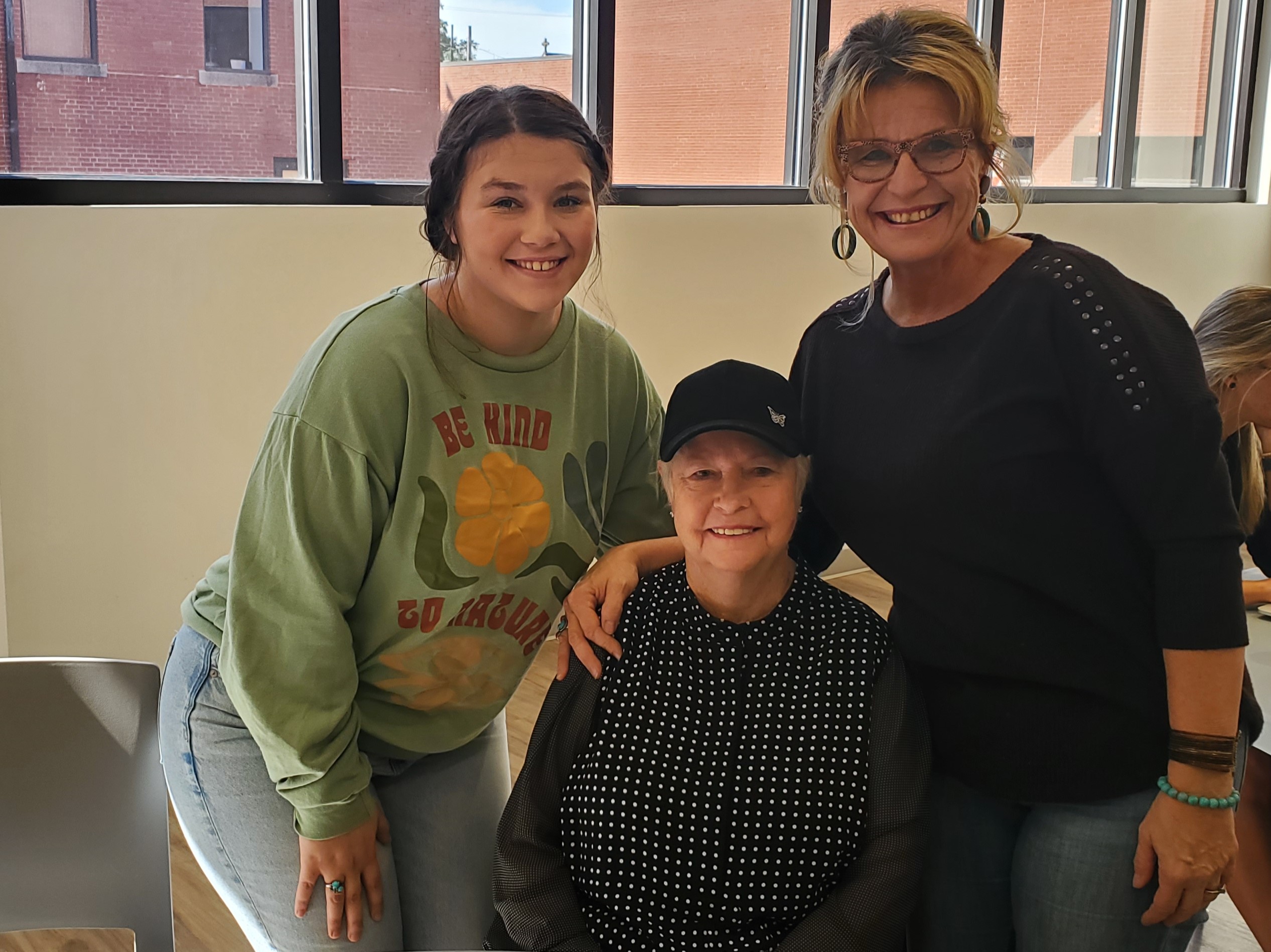
NEW HANOVER COUNTY — Peer Recovery Resources has a mission to educate people struggling with mental health issues or substance abuse through peer support and classes focused on coping mechanisms. Though it primarily works with adults, in 2024 the local nonprofit is advocating for children’s mental health support as well.
READ MORE: More than $25M to be spent in NHC on infrastructure, mental health strategy
Vice president Diane Brock helped found the nonprofit about five years ago alongside president and director Johnnie Puckett. They identified a gap in support services for those living with mental health and substance use challenges, specifically in older adults, those experiencing homelessness, low-income individuals and veterans. To date, hundreds of people have become certified peer support specialists, and the nonprofit holds as-needed education outreach classes empowering individuals on their road to recovery.
One of those classes is Wellness Recovery Action Plan (WRAP), guiding individuals to set their own wellness plans, identifying triggers and focusing on solutions.
This year Diane’s granddaughter, Ella Brock, is launching a children’s version of WRAP. The move stemmed from a traumatic event that took place in 2017. Diane’s daughter, Kimber Brock, lost her stepdaughter, who was killed due to gang violence.
Kimber’s daughter, Ella, was 14 when it happened. Now 19, Ella is using her personal experience with trauma, along with handling both parents as recovering addicts, to ensure local youth have an avenue for dealing with struggles.
“I remember from my own experiences, being that sixth grader, and I didn’t know where to put my emotions,” Ella said. “Now I’m coming from a spot where I’ve been there; I know what you’re going through and everything’s going to be OK.”
Ella hopes to help prevent mental health struggles in children before they escalate, using her own experiences to provide insight.
“The difference with kids, we don’t want lived experience,” she said. “We want to stop it before it starts.”
WRAP was developed in 1997 by a group of individuals in Vermont who had been residents of psychiatric hospitals throughout various times of their lives. Gathering their feedback over an eight-day retreat, a recovery education curriculum was established, as well as a Center for Wellness and Recovery. Eventually, the teachings were accepted globally and in 2010, WRAP was designated as an evidence-based practice by the U.S.-based Substance Abuse and Mental Health Services Administration.
WRAP courses help individuals to understand stress, recognize and identify symptoms, relaxation techniques, healthy recovery lifestyles and additional strategies for dealing with mental health and substance abuse recovery.
“It gives them tools to help them when faced with certain situations, identify triggers and stressors and what to do if you feel triggered or stressed in crisis — how do you handle that?” Diane explained.
The program shines a light on the root cause of many substance use issues: mental illness, according to the Brocks.
“Maybe it will help someone think: ‘Maybe I need to go to the doctor and what’s going on in my head?’ instead of self-medicating,” said Kimber, also a recovering addict.
Kimber went through Peer Recovery Resources two years ago and then became a peer support specialist, teaching classes to others. Diane, who also teaches peer support specialist training classes, added it takes about 10 years for an accurate mental health diagnosis.
Peer support training provides guidance for someone in recovery to be able to assist another person going through the same experience. After the weeklong course, a person is certified in North Carolina to become a peer support specialist, offering them a new career opportunity.
She and Puckett teach the training and say the need is rising.
“It gives people hope when they didn’t have hope,” Diane said.
In September, classes were already booked through the remainder of 2023 and they were training The Healing Place staff for certification. In the last five years, roughly 300 adults have earned their peer support specialist certifications through Peer Recovery Resources.
Ella, joining the organization right out of high school, marks the third generation involved in improving the mental health of Cape Fear residents.
Many people who come through Peer Recovery Resources facing addiction also have children working through trauma — all of whom could enroll in the new WRAP program. It’s available to anyone and free to attend.
WRAP includes a list of tools for handling stress, identifying early warning signs of stressors, actions for staying mentally well and a crisis plan to navigate support when needed.
“It’s hard for children to regulate those big emotions,” Ella said.
The new children’s classes are offered over four days and aimed at two sets of youth: ages 6 to 11 and ages 11 to 18. The courses include coping mechanisms to prevent the path to addiction.
“Ella wants to stand up for a cause,” her mother said. “To see my daughter go this path, I was so afraid she might follow down a different one.”
The ultimate goal is to ensure all school-aged children, specifically the most vulnerable, have access to WRAP.
“I can tell you there is a need for it, a substantial need,” Ella said. “Just getting out of high school a year ago, I witnessed firsthand, seeing kids struggle day after day with mental illness, not knowing, and ended up in [in-school suspension] or suspended because people aren’t there to assist.”
The program is targeted at underprivileged children and those facing behavioral challenges. Kimber has been in talks with the Boys and Girls Club, the Resiliency Task Force, and Communities in Schools.
“We really want to take this to the kids that need it the most,” Kimber said.
While based out of the Harrelson Center in downtown Wilmington, the program is mobile as well. Ella is willing to go wherever needed to offer the class but is targeting New Hanover, Pender and Brunswick counties.
“I’m trying to reach every single child we can, to sustain wellness,” she said.
It’s encouraged for kids and adults to do a refresher WRAP course two years after completing the first to update their wellness plans based on current life experiences.
Peer Recovery Resources is funded mostly by grants and donations. It applied for a $45,000 New Hanover Community Endowment grant this year but was not selected. The funding would have helped support both peer support training classes and cover nominal start-up costs for the kids WRAP program, which will launch in February or March.
However, Diane told Port City Daily this week, funding sources have been secured — $50,000 from the Cape Fear Memorial Fund and $50,000 from the ABC Board. Classroom space is available in the Harrelson Center and the workbook costs are minimal.
The team is meeting with Kids Making It Jan. 12 as the first potential class to go through the new program.
Tips or comments? Email amy@localdailymedia.com.
Want to read more from PCD? Subscribe now and then sign up for our morning newsletter, Wilmington Wire, and get the headlines delivered to your inbox every morning.
