


WRIGHTSVILLE BEACH—The sale of shark fins may soon become illegal for coastal fisherman across the country. Legislation has been introduced to the House and Senate which would make it illegal to possess, buy, sell, or transport shark fins or any product containing shark fins.
Local fishermen make a portion of their income based off of the sale of shark fins and shark meat. Some perceive this aspect of their business to be at risk because of the potential regulation.
Shark fins, not shark finning
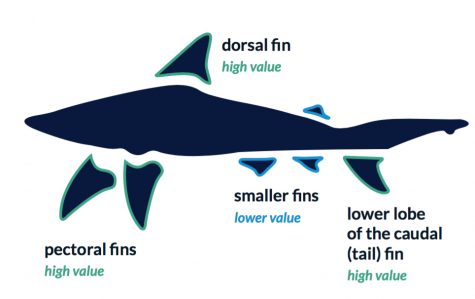
Shark finning is the process of cutting the fin off of a live shark and discarding the remainder of the fish back into the ocean.
The practice was made illegal in the United States in 2000, with a loophole that was closed by 2009.
All shark species, with the exception of the smooth dogfish, are federally protected from finning under current legislation.
The sale of shark fins is legal in North Carolina. Fishermen are permitted to harvest and sell the fins of sharks once landed, not while the shark is still alive and at sea. This distinction is important to fishermen who oppose the inhumane act of shark finning.
“People are obviously horrified by the thought, and they should be,” said Jerry Schill, director of government relations for the North Carolina Fisheries Association.
The bill seeks to protect sharks from finning, but local fishermen see it as unnecessary as the act of finning is already illegal.
“The shark industry has been hurting for a long time,” Schill said. “The bill itself would devastate those markets.”
Eastern North Carolina fishermen oppose the bills on the basis that they would impede upon the fishermen’s legal and sustainable business practice of utilizing the fins of sharks already harvested.
North Carolina congressmen David Rouzer, Tedd Budd, David Price and Congresswoman Alma Adams all cosponsor the Shark Fin Sales Elimination Act of 2017.
The bills, S.793 and H.R.1456 are opposed by Congressman Walter Jones, North Carolina’s Third District representative. Jones recently penned a letter to Secretary of Commerce Wilbur Ross citing Jones’ disapproval of the bills. He believes the “well-intentioned” bills will put eastern North Carolina fisherman out of their jobs.
Eastern NC fishermen oppose the bills
For Jake Griffin, of Griffin Fisheries, the passage of these bills would put a dent in his livelihood. Griffin harvests all of his shark off the coast of Wrightsville Beach.

“Shark fishing is such a large portion of my income that I’m going to build a fish house down here,” Griffin said.
He estimates 70 percent of his business is made off of the sale of shark, and the fin of sharks are generally 10 percent of the profit from a single harvest.
A federal shark dealer, Griffin sells his legally harvested shark fins to other states and overseas, as shark fin consumption is not common in North Carolina.
The most common use of shark fins is in shark fin soup, a cultural delicacy in Asian markets. Shark fin soup is seen as a status symbol in business arrangments and in marriages, Griffin says.
Shark populations
Domestic shark fishery is managed by National Oceanic and Atmospheric Administration (NOAA), which observed shark populations as on the rise and in healthy levels on the east coast in its 2015 shark survey.
“At this point in time, we should be encouraging shark fishery because it’s good for the ecosystem and our markets,” said Joe Romano, an operations manager for Seaview Crab Company based out of Wilmington.
Local fishermen see conservation groups like Oceana as major influencers over legislation that regulates coastal fishing.
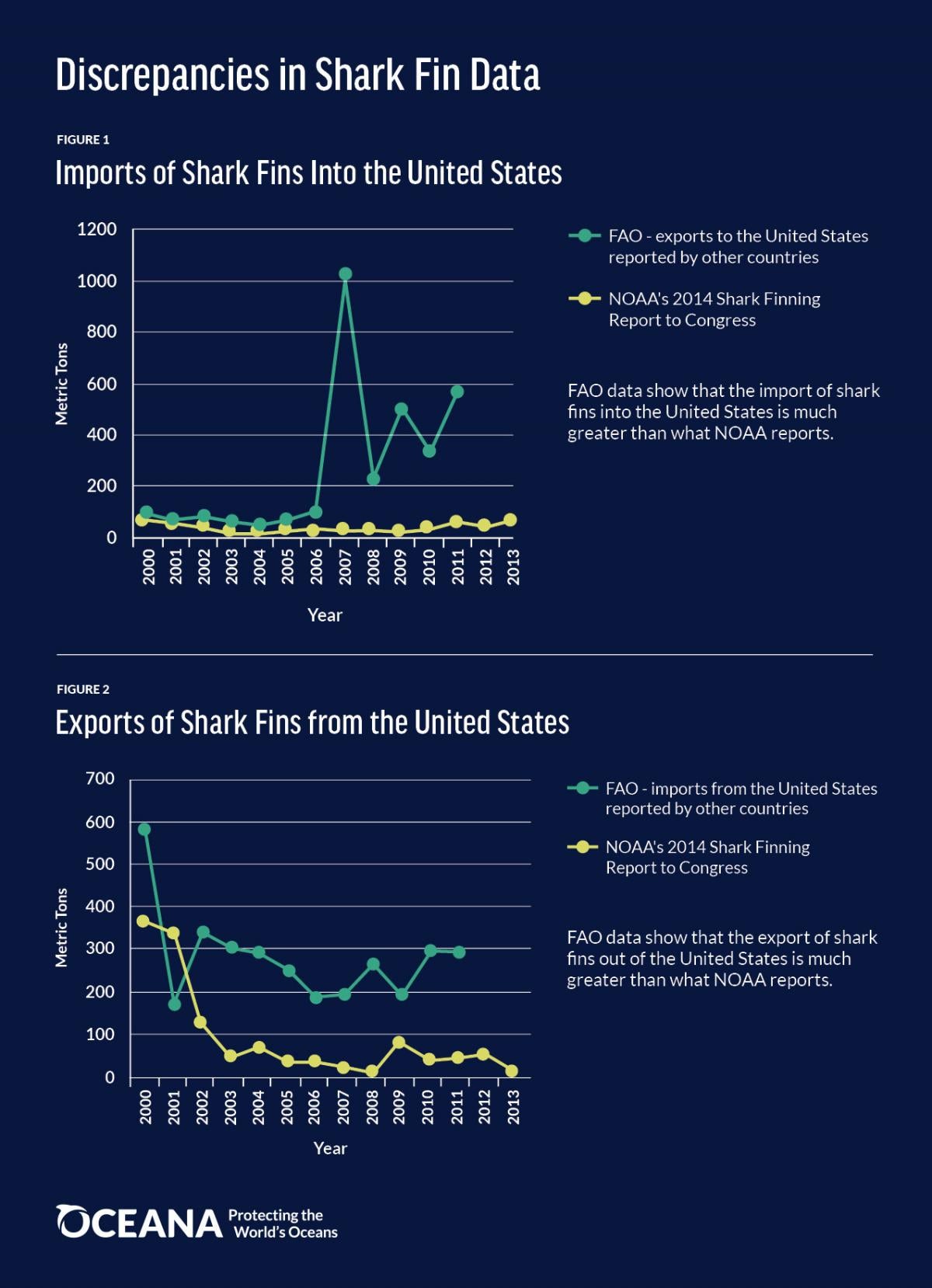
Oceana is a non-profit ocean conservation and advocacy organization that opposes the sale and consumption of shark fins. It disagrees with the numbers NOAA reports, citing discrepancies in shark fin data reported to Congress.
“The fins from as many as 73 million sharks end up in the global shark fin trade every year. By allowing the trade of shark fins within our borders, the U.S. continues to contribute to this global problem,” Lora Snyder wrote in an email, a campaign director for Oceana.
Still permitting imported shark fins from countries without finning bans in place, Oceana sees the United States as complicit in the global shark fin trade.
The passage of the Shark Fin Sales Elimination Act would “reinforce the status of the United States as a leader in shark conservation and remove our participation in the global fin market that kills millions of sharks every year,” Snyder wrote.
The group hired the firm The McGrath Group to lobby for the bills this year.
“To protect sharks, we need to end the demand for shark fins. It’s time for Congress to listen,” Snyder wrote.
Shark meat
Shark meat is relatively cheaper than other fish.
The North Carolina Division of Marine Fisheries reports data on commercial fishing harvests and their market value. The value of total shark harvests in North Carolina, an estimated $32 million, makes up nearly 3 percent of the total value of finfish commercially harvested in 2015.
With 23,294,080 pounds of shark reported in 2015, the fish makes up 22 percent of the total commercial finfish harvest weight in North Carolina.
“It’s not the most desirable of all the species but it definitely plays a part in consumer’s tables,” Romano said.
A boneless meat, Romano said it has been a steady seller for Seaview over the past three to four years. Seaview sells a couple hundred pounds of shark a week.

Romano sees the legislation as an arbitrary battle of attrition.
“If you take fins out of the equation arbitrarily because of political reasons, you’re basically saying, you cant get the value out of this,” Romano said.
He believes it would be a waste of a wild, natural resource to not utilize every aspect of a legally harvested fish.
“The whole shark is used,” he said.
Johanna Ferebee can be reached at johanna@localvoicemedia.com or @j__ferebee on Twitter