


WILMINGTON — The economic impact of government attempts to curb the spread of Covid-19 has been devastating. And, while the state has taken a number of steps to expand and expedite unemployment benefits, there have been many unforeseen difficulties.
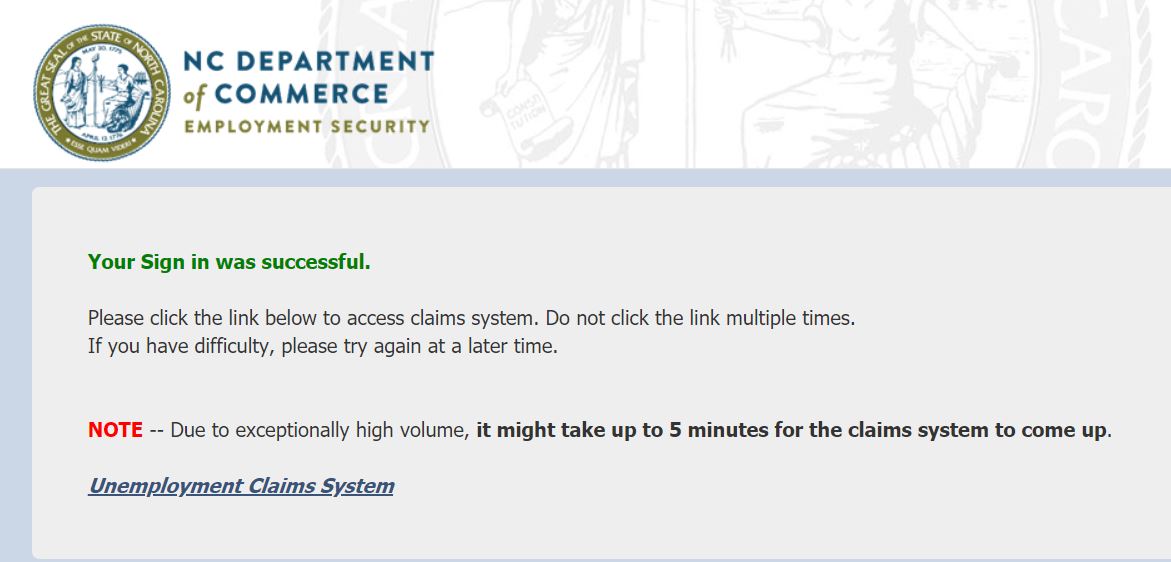
From the moment Governor Roy Cooper announced that the state would be shutting down dining rooms and bars, thousands of employees were laid off. Most filed for unemployment immediately, completely overwhelming the website and phone system of the Division of Employment Security (DES), run by the state’s Department of Commerce. People were put on hold interminably and then dropped from the phone system; the website crashed almost constantly.
For those that got through, there was plenty of confusion.
Cooper’s executive order prompted DES to add a new option for filing, allowing people to cite Covid-19 as the reason for their unemployment. It was initially unclear whether or not these employees would have to fill out the weekly certifications usually required by DES. These certifications ask people if they are available and actively searching for work. With entire industries shuttered and people ordered to stay home, that clearly wasn’t the case for most people — but the state evenutally provided guidance, which was to lie and answer ‘yes’ anyway, ignoring dire warnings about dishonesty on the website. The system worked, but many found it strange, to say the least.
These logistical problems were addressed in the weeks after Cooper’s March 17 announcement, bringing in hundreds of DES employees to help handle phone lines and process claims, and contracting with Cisco to beef up the DES website’s capacity.
Almost a month after Cooper’s restrictions on bars and restaurants, over a half-million people have filed for unemployment. Over the last week and a half, most have experienced significantly reduced call times and the website now crashes only occasionally. But many have asked: why wasn’t the staffing and server capacity at DES ramped up before the restrictions effectively laid-off hundreds of thousands of workers?
Then there were issues that were harder to fix, problems that were complicated by the overwhelmed phone and website systems, but that kept people from getting unemployment at a policy level that has been slower to adapt. (And, because the much-anticipated $600 in weekly federal unemployment assistance is coming through state systems, if you’re not getting state unemployment you can’t receive federal benefits.)
These people included owner-operators, who were both shuttered as small-business owners and laid-off as employees. It also included independent contractors — everything from musicians to construction workers — and other self-employed workers. It also included those who had exhausted (or who will soon exhaust) state benefits.
To keep these people from falling through the cracks in state unemployment systems, the federal government is providing Pandemic Unemployment Assistance (PUA).
Unfortunately, because this federal funding is also distributed through state unemployment systems, those who aren’t eligible for regular unemployment benefits will have to wait while the state figures out a system to manage the payments. In North Carolina, DES won’t start accepting PUA claims until April 25, and likely won’t start paying them out until May — another month, another rent check or mortgage payment, another round of bills.
Employees and business owners from around the Wilmington-area have shared their experiences with Port City Daily. Many asked that these experiences be kept private, but some were willing to share the ways the state’s attempts to handle 500,000 unemployed people have left them out.
Filed too soon, now stuck waiting

Cooper’s announcement in mid-March opened the floodgates of laid-off employees filing for unemployment benefits, but in some industries, layoffs came earlier. For those employees, there was no ‘Covid-19’ category yet.
The music industry, for example, saw countless tours canceled before North Carolina officially shut down performance venues. For CJ Coronado, a production assistant at The Ritz in Raleigh, that meant getting laid off on March 12. Coronado filed for unemployment benefits on March 16 — the day before Cooper’s order — but, in the absence of a Covid-19 category, he chose ‘layoff/reduction of hours.’
Since then, Coronado has filed at least four weekly certifications (persevering through countless website crashes), but his application is still listed online as “pending resolution.”
It appears Coronado will be eligible to refile under the Covid-19 category — but not until his current application is officially rejected. He’s already been out of work for a month and if he’ll receive any benefits in April at all.
Employees aren’t the only ones struggling with the state’s overburdened and underprepared system. Some business owners have struggled to get their employees certified as eligible for benefits — on top of trying to keep their own businesses alive by navigating the new labyrinths of SBA loans and grants.
Employer perspective: weeks of delays in getting employees approved for benefits

For Michele Zapple, owner of Carolina Gymnastics Academy, it was an entirely unexpected problem.
“I had to lay off my entire staff and encouraged them all to file for unemployment. Since in my 20 years of being in business I have never had to deal with an unemployment claim, my business does not have an online account,” Zapple said. “I went through the motions of creating one (which took at least a full day, with crashes) and then see that (in normal times) they will get back to me in 4-6 weeks with a PIN! Meanwhile, I can’t verify my employees’ claims with [the state], so no one can collect yet.”
Zapple said her other choice was trying to fight through the phone queues to try and get a DES employee to expedite the PIN, a frustration given that she already had “a full-time job filling out SBA EIDL and PPP loan applications.”
‘Mentally exhausting’

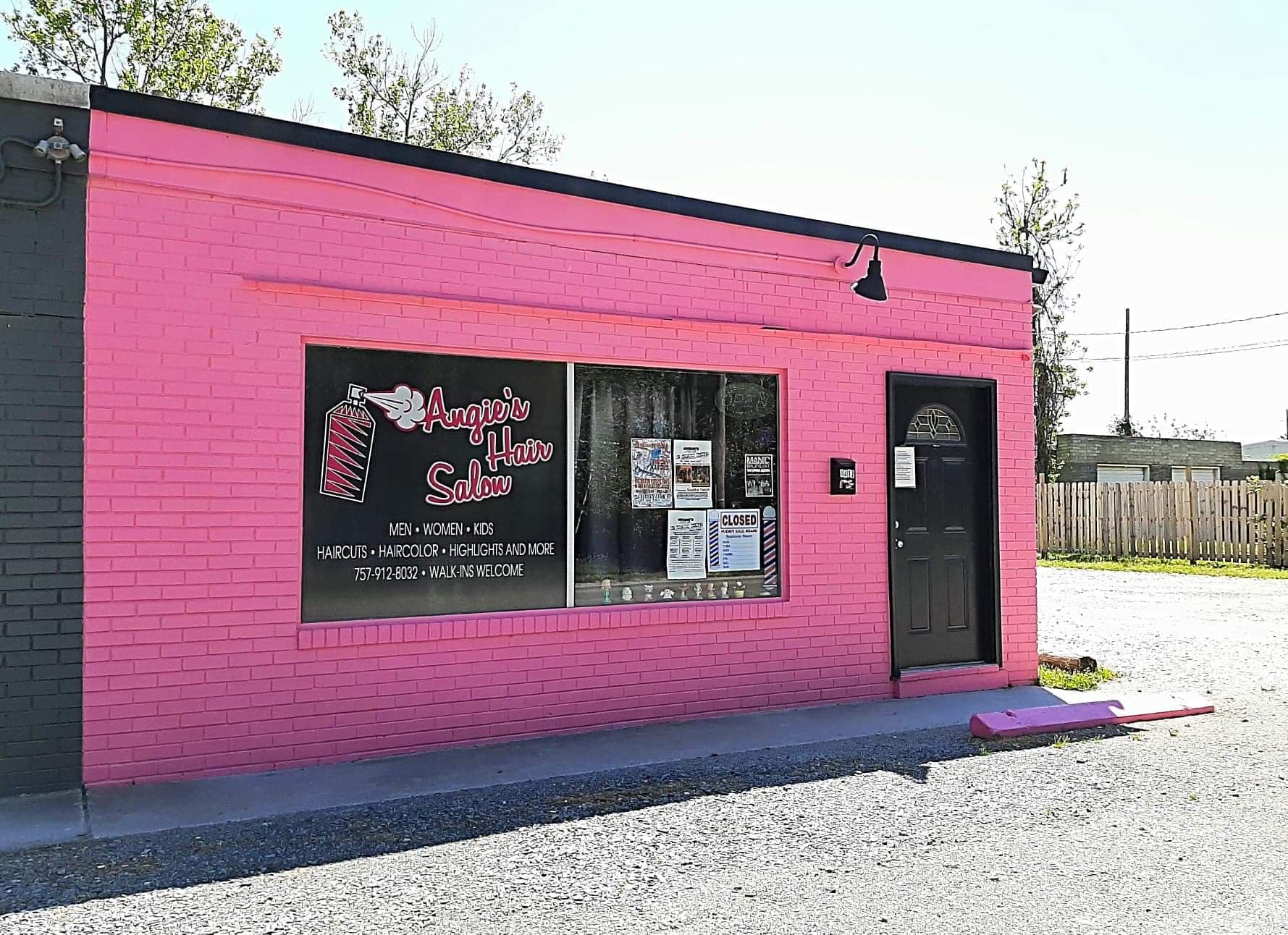
For Angela Yeagher, owner of Angie’s Records & Hair, problems as an employer and an employee landed right on top of each other.
Yeagher opened her business five years ago — “a lifelong dream come true” — and has recently been joined by her husband, who completed cometology school so he could work alongside her.
“Life was going great and then COVID-19. Being a hairstylist is risky business, being so close to people, so all salons in NC were shut down starting March 25, 2020,” Yeagher said.
Initially, Yeagher tried to apply for benefits, attempting to navigate the DES website, which was never designed for self-employed workers.
“I attempted to apply for unemployment for the first time in my life on March 26. It took me several days to complete the initial claim because the website froze and crashed numerous times. Also, the NC DES website does not have an updated section for COVID-19 claims and the questions are not relevant for self-employed people so they are asking you questions that make no sense to your situation — and even worse there is no way of getting help filling it out,” Yeagher said.
“I tried to call for four days in a row and was not able to get through. After I finally completed the claim process at 5 a.m. one morning I got an email saying I was ‘ineligible’ but with no other info. Now I check back every morning and it just says the same thing, that it is ‘pending resolution.’ I don’t know if I will be able to get it or not even though the federal government said we would.”
Yeagher said she was originally excited about PUA funding, but waiting for the state to figure out a way to disperse it has been disheartening.
“It is beyond frustrating. Both my and my husband’s income come solely from doing hair and from my business and we have no other income. I luckily had enough saved to pay the salons rent and our bills at home for April but once we get into May and/or June I don’t know what we are going to do. The little bit we have saved will only last a short time. I have also applied for a loan/grant through the SBA but haven’t heard back about that yet either,” Yeagher said.
In the end, Yeagher said it’s the uncertainty that has taken the highest toll.
All the uncertainty is mentally exhausting. I am hoping we will at the very least receive our stimulus checks soon. The thought of having to close my business and everything we have worked so hard for is heartbreaking to me and not knowing how we are going to pay our bills. I hope we all get through this,” she said.”
Send comments and tips to Benjamin Schachtman at ben@localvoicemedia.com, @pcdben on Twitter, and (910) 538-2001
