


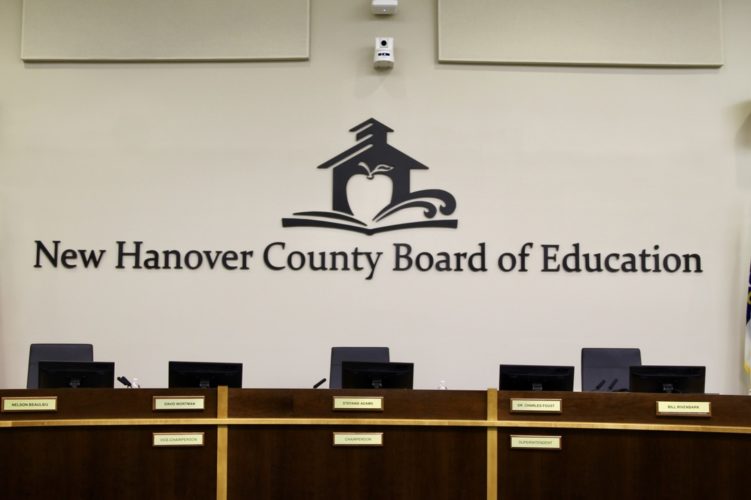
SOUTHEASTERN N.C. — Brunswick and New Hanover County Schools will cumulatively receive more than half-a-billion dollars in school-bond funding in the coming years, after voters approved of the referenda on the 2026 ballot. The school boards and commissioners will begin to weigh project priorities in recent months.
The bonds will address rapid growth, modernization of facilities, security and technology in New Hanover and Brunswick counties. 67.85% of New Hanover County voters approved the $320.5-million bond, while support narrowed a bit for Brunswick County’s $349.6-million bond, with 54.95% of voters agreeing to it.
Brunswick County Board of Elections data shows the median age for registered voters is 62 — with the largest voting population between 65 and 74 years old. Thus, this age group may not have school-aged children, compared to New Hanover registered voters, which have a median voting age of 51, with the largest voting population for ages 25 to 35.
READ MORE: Tackling growth, education in Brunswick County: Changes coming to commissioner, school boards
Bonds will be paid back using revenue from property taxes, and thus, often result in a tax increase for homeowners. In Brunswick County, the school bond will cost taxpayers $54.66 a year per $100,000 of assessed property value. For a house worth $400,000, it comes out to $219 annually.
However, in New Hanover County, The New Hanover Community Endowment committed to help taxpayers by granting $116 million to the county for the bond’s debt service. This will reduce the necessary tax rate increase by approximately 71%. For example, with The Endowment’s contribution, the property tax rate will go up by half-a-cent instead of 1.75 cents. It will cost taxpayers $20.55 per year for a $411,000-price home — or $5 per year for every $100,000.
The bond referenda allow the schools to borrow money at a lower rate than other financing options. Both counties are using an assumed interest rate of 5.344% — the final rate will be approved by the Local Government Commission.
“Actual savings will depend on interest rates when the bonds are issued,” Ben Strauss, a representative for Brunswick County Schools, told Port City Daily.
Brunswick Superintendent Dale Cole said during a September bond presentation that building a new elementary school in Jackey’s Creek would have cost an additional $2.4 million if funded with a limited obligation bond as opposed to the general obligation bond.
If the bond had not been approved by voters, facility needs would have been addressed using capital project funding, likely in smaller amounts, allotted by county commissioners.
For the 2026-27 fiscal year, Brunswick County Schools was allotted $11.2 million in capital project funding for projects such as roofing and turf replacement. The funds do not address projects identified in the bond.
For the 2026-2027 fiscal year, New Hanover County schools received $2.8 million for capital funding as part of the county budget, which is less than the approximately $675 million in deferred maintenance plus future capital needs over the next several years.
“Those projects [identified in the bond] would have been determined based on available resources and the individual needs of our facilities,” New Hanover County Schools spokesperson Anita Baggie said. “However, the bond provides a significantly greater investment in addressing the district’s identified facility needs than would have been possible through existing funding alone.”
Before either district receives the money, each county’s board of commissioners will have to authorize phased bond funding, as well as the related property tax increases. The Local Government Commission must also approve all general obligation bond sales.
New Hanover and Brunswick counties will need to go to the LGC before spring 2027 and January 2028 — their respective projected timelines for when first payments will be issued.
New Hanover County Schools
New Hanover County Schools expects to see the first of three installments of bond funding starting in spring 2027 for $150 million; then installments are expected in 2028-2029 for $100 million and in 2031-2032 for $70.5 million.
Baggie said all bond proceeds must be distributed to the district within a period of seven years, per state law. New Hanover County Schools will have 10 years to expend funds.
“Although voters have approved the referendum, implementation is a long-term process that requires significant planning and coordination before projects move into construction,” Baggie said.
Each installment would be paid back over a period of 20 years — meaning the last will be paid by the 2051-2052 school year.
New Hanover County’s bond will cover four categories of projects: building, technology, safety and security, and system upgrades. The funds will be broken down:
- $20 million going toward upgrades, such as modernizing HVAC systems
- $10 million for technology improvements, such as
- $10 million for districtwide safety and security improvement — including security vestibules at 20 of the district’s 43 schools
- $8.2 million for project management and contingency costs
One of the district’s first priorities, according to Baggie, will be hiring dedicated staff and specialized project personnel. These individuals will assist in coordinating projects, managing timelines and budgets, overseeing procurement and construction and ensuring open communication throughout the process.
The largest expenditures of the bond are:
- Replacing Trask Middle School: $94.8 million (Trask is slated to become part of Laney High School)
- First phase of New Hanover High School’s renovation and expansion plan: $59.79 million
- Replace Pine Valley Elementary School: $56.33 million
- New elementary school in Riverlights (replacing Mary C. Williams Elementary): $53.86 million
Currently, there is not a set timeline for when projects will occur, but they will be implemented in a phased approach.
Baggie said the school board, with its newly elected Democratic majority, will help determine the priorities in the order of importance. It will be measured by urgency in a multitude of areas: facility needs, educational impact, project readiness, construction timelines, and financial considerations, she added.
New Hanover County Schools provides bond information via its district bond website.
Brunswick County Schools
Brunswick County Schools’ $349.6-million bond will cover the construction of two new schools, a land purchase and approximately five improvements, such as bleacher replacements and athletic facilities. The bond will be implemented in phases:
- 2028 ($119 million)
- 2030 ($198.9 million)
- 2032 ($31.7 million)
Strauss told Port City Daily the timeline is just an estimate and the county commissioners will determine the final financing schedule.
The district has cited rapid development in the county as neccessitating the bond.
Brunswick County is the sixth-fastest growing county in the nation and Brunswick County Schools are quickly approaching capacity. A 2025-2026 enrollment forecast had elementary schools estimated to exceed 100% district-wide aggregate capacity in 2028-2029, middle schools in 2035-2036 and high schools in 2030-2031.
To address the overcrowding issue, a new high school and elementary school are planned, as well as an $8-million for future land purchases — locations have not yet been decided — and $10 million for future site development.
“We’re really running out of space,” Superintendent Dale Cole said in a video posted on Brunswick County Schools’ site. “This is the cheapest way for us to build these schools.”
Additionally, the district has said, in an ideal world, school construction funding would come from other sources.
However, the district added North Carolina does not allow for school impact fees — an example of one would be fees to cover the costs to build new schools — even if the development is contributing to school enrollment growth.
Strauss told Port City Daily, regardless of the bond being passed, a new elementary school would have been necessary to address county growth.
“Our plan was to request funding from the county through a limited obligation bond,” Strauss said. “Other projects would have depended on available funding and future decisions by county commissioners.”
However, he said the first priority is the new elementary school: “We plan to begin work immediately.”
The new elementary school will be in Jackey’s Creek in Leland and cost $83 million. The school is expected to accommodate up to 900 students. Opening is currently projected for 2029. Strauss said the elementary school is the priority to address growth in Northern parts of the county.
The new high school coming from the bond will cost $234 million, house 1,500 students, and be located somewhere between North and South Brunswick High Schools. Construction is expected to begin around 2029 with the school opening around 2032.
Redistricting will be necessary prior to the opening of both schools. A firm will be hired to draw several draft maps of attendance lines before opening it up to public feedback and a final vote from the board of education. The board will likely begin the process in fall 2028.
Other projects in the bond include:
- Intercom replacements: $3 million
- Governors Road extension: $4 million
- Indoor bleachers: $1 million
- Shallotte Middle School Multipurpose turf field: $1 million
- South Brunswick High School softball fieldhouse: $1 million
Community members can stay updated on progress by following the district bond website, which will be documenting progress from the initial planning stages through completion of each project.
Have tips or comments for Sophia DePhillips? Email [email protected]
At Port City Daily, we aim to keep locals informed on top-of-mind news facing the tri-county region. To support our work and help us reach more people in 2026, please, consider helping one of two ways: Subscribe here or make a one-time contribution here.
