


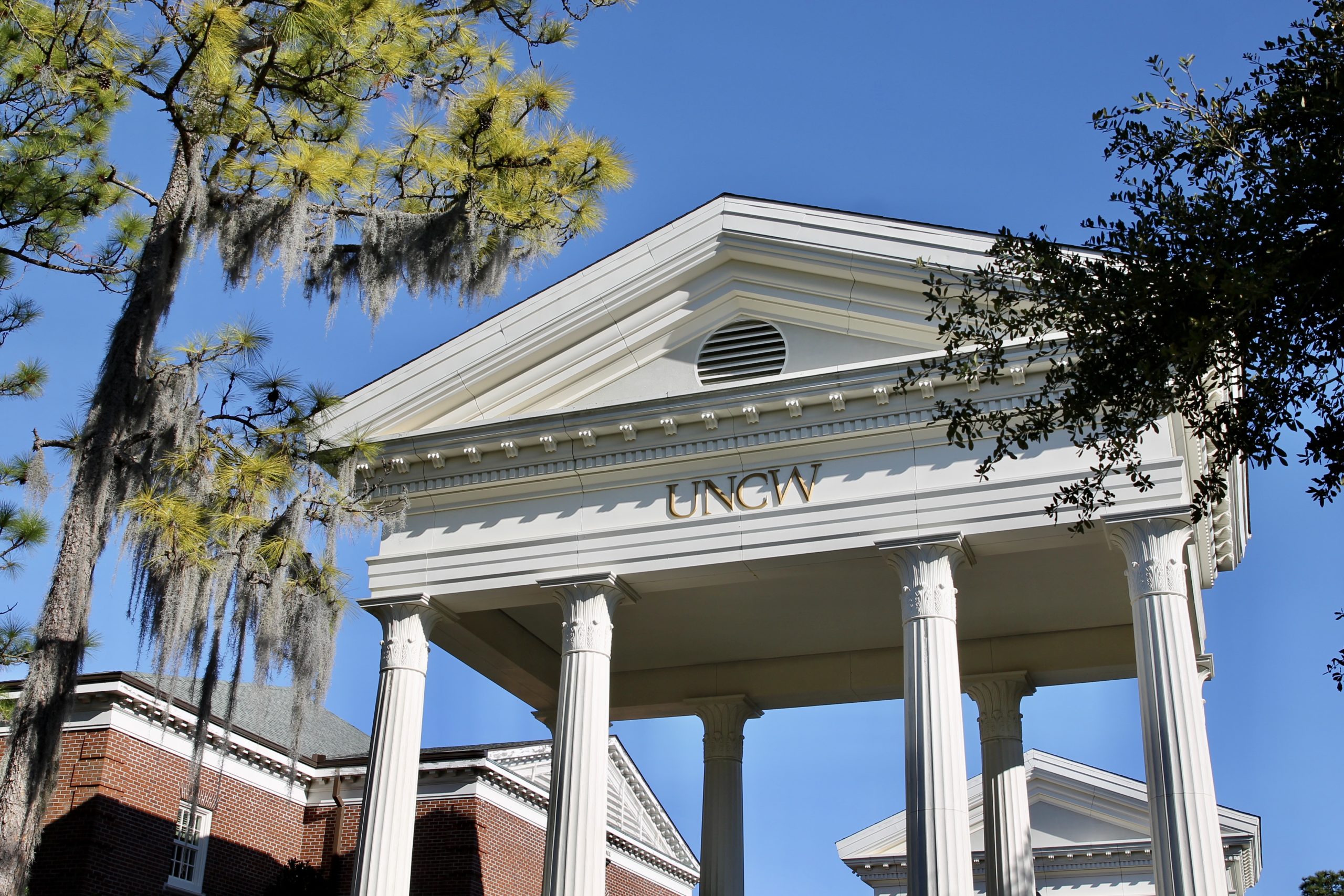
WILMINGTON, N.C. — UNCW is considering tuition increases for the 2027-2028 school year, even as university leaders acknowledge too many increases may make the university’s rates uncompetitive and new federal loan laws diminish how much families can borrow. If agreed upon, the tuition hikes will be the sixth for non-residents and second for resident students in the last six years.
During the university’s quarterly board of trustees meeting, UNCW Vice Chancellor for Business Affairs Miles Lackey said non-resident tuition increases have been used to cover university needs — instruction, academic and student support services, financial aid, and the facilities and technology — but warned the increases may not be sustainable long-term.
“That’s not a well that you can go back to forever because at some point your tuition rates become uncompetitive,” Lackey said at last Thursday’s meeting.
READ MORE: UNCW plans additional parking as enrollment increases
ALSO: Reported sexual assaults at UNCW continue upward trend
However, Lackey did say the increases in out-of-state tuition enabled the university to stay in front of some of the financial demands associated with a growing institution — such as hiring new faculty for new academic programs.
In 2026 fiscal year, UNCW netted $84.5 million in resident tuition and $50.3 million in non-resident tuition. In fall 2025 2,683 in-state freshmen enrolled, compared to 426 out-of-state freshmen.
While the possibility of tuition changes was discussed, no numbers were broached. Earlier this year, 11 out of 16 UNC System schools raised in-state student tuition for fall 2026 after a nine-year freeze. The UNC Board of Governors decided to allow the tuition increases due to rising operating costs and inflation, but also determined the increases would only apply to new students. They capped them at 3% — averaging $125 per student.
Out-of-state student tuition does not have a cap on how much it can increase as there is not the same focus on affordability as there is for in-state tuition; however, UNCW will have to prove to the board of governors it will not impact enrollment and the increase must be market-driven (for instance, looking at inflation and rates comparable to other UNC institutions).
If the university board of trustees decide to vote for an increase for either in-state or out-of-state tuition, the board of governors would have to sign off on it at its February 2027 meeting.
Lackey told trustees continuing to raise tuition for out-of-staters at this rate could potentially make UNCW rates less competitive to sister institutions.
Currently, UNCW has the fourth highest non-resident tuition rate out of the UNC System Schools. Non-resident tuition has typically risen by between 3% and 6% over the past five years. For fall 2026 UNCW is charging non-residents $23,275 — a $678 increase from the previous year.
“Those rates remain, as we discussed last December, very competitive relative to our institutional peers,” Lackey said.
UNC Chapel Hill has the most expensive non-resident tuition in the system, with non-resident tuition set at $47,472 for the 2026-2027 academic year and has increased it the last five years. Elizabeth City State University, Fayetteville State University, UNC Pembroke and Western Carolina University are tied with the lowest non-resident tuition — coming in at $7,000 a year. The four universities have increased out-of-state tuition once in the past several years under the N.C. Promise Tuition Plan — a state funded program which reduces tuition rates at select UNC system schools.
In fall 2026, UNCW’s non-resident tuition had been raised for the fifth year in a row, though the rate of increase was lower than previous years. It escalated by 3% in 2022 and 5.5% in 2023. Following in 2024 and 2025, non-resident tuition went up by 6%, roughly $1,200 to $1,300 each year.
UNCW spokesperson Sydney Bouchelle told Port City Daily over the past six years there has been a cumulative increase of approximately 25.8% for non-resident tuition.
“For comparison, consumer prices increased approximately 29.5% between September 2020 and September 2026, as measured by the Consumer Price Index,” Bouchelle said. “Non-resident undergraduate tuition increases have therefore remained below inflation over this period.”
When asked if it is a concern that non-resident tuition is nearing an “uncompetitive” rate and what other funding sources and options are being explored, if so, Bouchelle said UNCW’s current tuition still provides students and families with strong value.
“We evaluate tuition alongside peer pricing, enrollment trends, financial aid and the resources needed to provide students with strong instruction, effective support and preparation for success after graduation,” Bouchelle said.
Alyson Niemiec, a senior and out-of-state UNCW student, told Port City Daily consistently increased rates are challenging, especially as her family is paying for three children in college simultaneously. Two attend out-of-state schools.
“When I first started my freshman year, we were in a much different financial situation so it all seemed super feasible at first that like all three of us could be going to the schools we were going to and with the prices changing over the years, it has been kind of like a battle to see if my brother and I would be able to stay in our schools,” Niemiec said.
Not knowing what her cost of attendance will be from year to year creates financial obstacles.
Unlike in-state students, out-of-state increases apply to new and continuing students. Resident undergraduates get fixed tuition rates for four years in a row; however out-of-state students in the last five years have been paying more for their education annually.
Niemiec also utilizes the Parent PLUS loan to pay for her education. However, even that has limitations now.
Parents could previously take out four years of tuition for their undergraduate, but it has changed after the One Big Beautiful Bill Act took effect in July. Federal Parent PLUS loan borrowing limits and repayment options now have a cap of $20,000 a year with only $65,000 total per student allowed.
Niemiec thought the new limitations could disenfranchise future students and their access to higher education.
“A lot of students don’t have, I feel like, as much accessibility to options the way that I did,” she said, noting if she had to she could have switched schools or gone to community college regardless of Parent PLUS limitations. “It was so awesome that I’m able to be out of state and go where I wanted to go to school, but a lot of people don’t have that.”
Additionally, the One Big Beautiful Bill Act eliminated the Graduate PLUS Loan, which previously allowed grad students to borrow up to their full cost of university attendance — minus other financial aid.
During Thursday’s Board of Trustees meeting, Lackey said the university is looking for students who may be impacted by the changes, though they don’t expect that number to be large. Bouchelle told PCD upon asking for the number that the university is reviewing borrowing patterns and the range of financing options available to families.
“Families also use private loans, which can offer interest rates competitive with Parent PLUS for qualified borrowers,” she said. “A reduction in available Parent PLUS borrowing therefore does not, by itself, mean a student will be unable to enroll or continue.”
Have tips or comments for Sophia DePhillips? Email [email protected]
At Port City Daily, we aim to keep locals informed on top-of-mind news facing the tri-county region. To support our work and help us reach more people in 2026, please, consider helping one of two ways: Subscribe here or make a one-time contribution here.
