


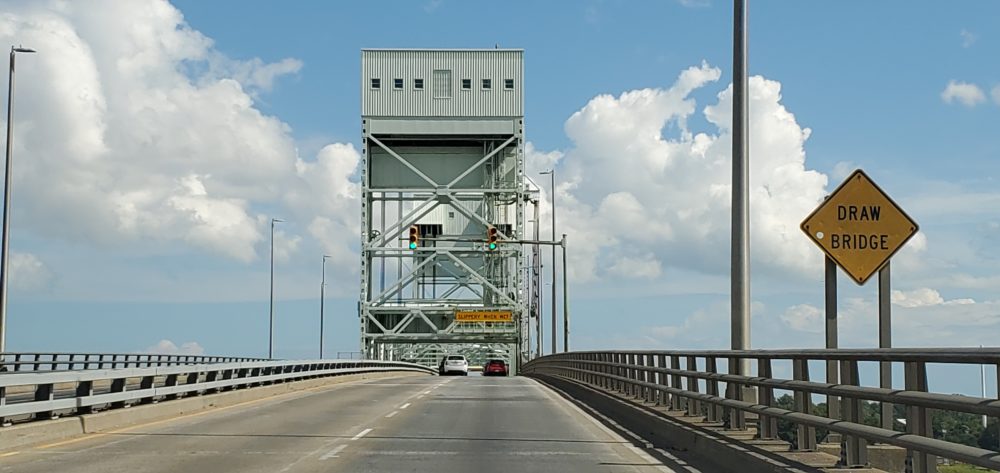
WILMINGTON — The Alliance for Cape Fear Trees, Cape Fear River Watch, North Carolina Coastal Federation, Cape Fear Sierra Club, Eagles Island Nature Park, Save Sledge Forest, and the League of Women Voters of the Lower Cape Fear are asking the federal government to review of the Wilmington Harbor Project.
An updated review could affect how federal agencies view the height needs of the Cape Fear Memorial Bridge replacement project. The two options currently on the table is a 65-foot bridge with a movable span, like the current Cape Fear Memorial Bridge, or a 135-foot fixed bridge. Though both cost roughly $1.1 billion, a third option — the 100-foot fixed bridge — would cost less. However, it was eliminated as a possibility after the U.S. Army Corps of Engineers and U.S. Coast Guard determined the height of the replacement structure should be at least 135 feet.
The federal agencies made the determination based on a 1996 feasibility study preceding the Wilmington Navigation Project, which is the maintenance of the current depth of the river. The study noted a theoretical vessel with a length of 712 feet, a width of 106 feet, and up to 75,000 gross tons would need a bridge with a height range between 120 feet and 147 feet. Thus, USACE concluded a bridge less than 135 feet would essentially be limiting the channel’s potential.
However, many advocates for the 100-foot bridge point to a decrease in bridge openings for large ships as the waterfront shifts away from industrial uses. It decreased from 188 in 2019 to 63 in 2025, with the majority of those 2025 lifts being for recreational vessels.
The county’s letter notes the USACE’s determination was not made on the waterway’s “actual navigational needs” and calls for a new assessment based on “current and future economic activity.”
The environmental have launched an Action Network letter campaign requesting it reexamine the needs of the harbor in 2026, versus 1996.
The letter states: “For us, this is also about the future of the sensitive wetlands, forests, and riverfront north of the Memorial Bridge. Maintaining an expectation of deep-draft commercial navigation upstream could preserve pressure for future dredging, shoreline alteration, and industrial development in environmentally sensitive areas. Research led by UNCW scientists has also found evidence that dredging accelerates saltwater intrusion, contributing to changes in freshwater tidal wetlands, tree death, and the formation of ‘ghost forests.’”
123 letters have been sent so far.
The environmental groups join the City of Wilmington, New Hanover County and Town of Leland in requesting further federal review of the replacement project.
At Port City Daily, we aim to keep locals informed on top-of-mind news facing the tri-county region. To support our work and help us reach more people in 2026, please, consider helping one of two ways: Subscribe here or make a one-time contribution here.
We appreciate your ongoing support.
