


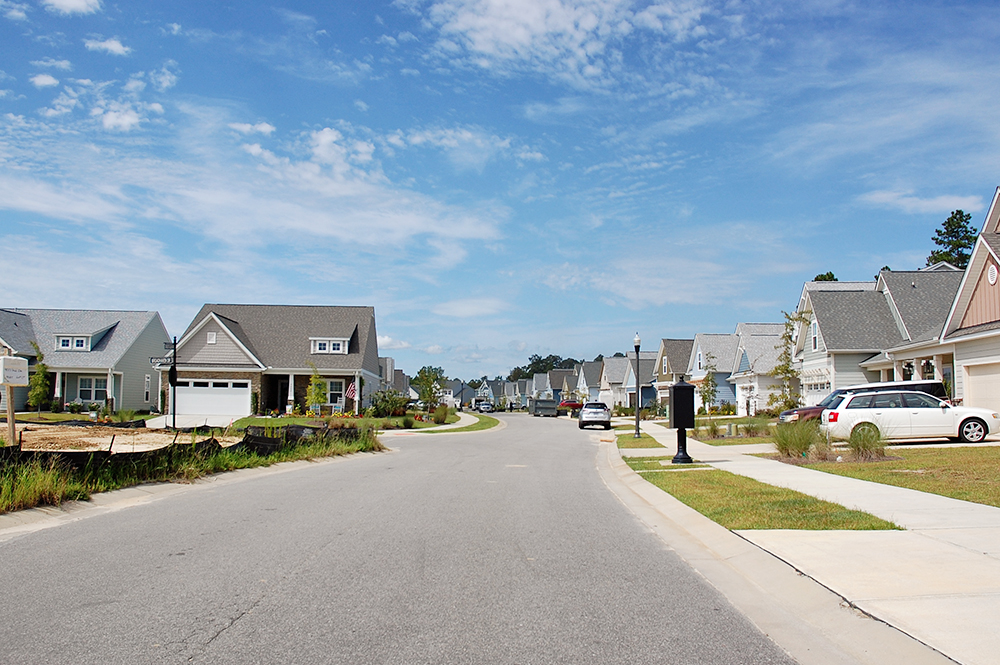
SOUTHEASTERN N.C. — Growth has been on a steady uptick in Brunswick County in the last decade, as locals have seen firsthand by the amount of new developments popping up region-wide. Now, one nationwide media company that ranks and analyzes consumer behavior has solidified the coastal area’s popularity in a new report.
Last month, U.S. News and World Report published its “2025 Relocation Map: America’s Most Desirable Cities, States and Counties to Move to.” It looked at online searches and ratio trends of people moving in and out of states to inform its data.
Brunswick County came in as the top choice for the highest desirable location, with the South featured across the board as a top destination to relocate. North Carolina counties ranked 11 out of the top 50; four were in the top 10, with New Hanover County tracking at #24.
Florida had eight counties on the list and Texas came in with seven.
READ MORE: 7% tax-rate decrease proposed in Leland’s $50M budget
The state of North Carolina, overall, was fourth as the most sought-after to move to, with South Carolina ticking up to #1.
The report explains the region’s mild climate, affordability and retirement friendliness makes North Carolina’s coastal areas appealing. Also, there are more outdoor activities available year-round that generate better well-being.
The first- and third-place cities on the list are located less than 100 miles away — just across the border in Conway and Myrtle Beach, South Carolina, respectively. However, locally, some of the region’s most desired cities also were highlighted in the U.S. News and World Report.
New Hanover County’s Wilmington landed at #24 and Brunswick County’s largest city, Leland, was #12. After a 17% tax increase two years ago, the town of Leland announced Friday it is looking to decrease its property tax rate by 7% this year, adding to its affordability appeal. If approved, it would go from 27 to 25 cents per $100 of value — so a property owner with the average home price of $375,000 would pay $937 annually instead of $1,012.
The high cost of living in the report’s bottom-tier states — including Connecticut, Maryland, New York, New Jersey and Massachusetts — are among the drivers of population shifts to the South. Housing affordability is particularly burdensome in areas like Washington D.C. with double the home price’s national average — currently, anywhere between $400,000 to $415,000, according to the National Association of Realtors.
The U.S. News and World Report also points to states like California having high income tax rates, at 13.3%, making cost of living more difficult. The state income tax in North Carolina dropped to 3.99% in January 2026.
The report’s findings likely won’t come as a surprise to many who live in the region, as Wilmington and surrounding areas have trended on similar migration lists for years. Brunswick County remains the fastest growing in North Carolina, according to the state Office of State Budget and Management, and between April 2020 and July 2024 experienced a population growth of 24%.
Yet, there is a housing gap, the Brunswick County Realtor’s Association reported in its 2024 overview. It details a need of 15,414 units overall — consisting of 3,545 rentals and 11,869 for sale. This translates to housing gap ratios of 23.2% and 17.2%, with Brunswick County ranking the 11th highest ratios statewide.
Compared to 2024’s development numbers in Brunswick County, there was an increase of more than 3,000 units built in 2025. The Brunswick County Planning Board approved more than two dozen projects last year and denied less than a handful — one of which included a 200-plus unit development, but the board was sued over it and ended up signing off after minor revisions were made to the plans.
According to county maps, the approvals in 2025 totaled 31 residential developments, which equal 13,552 units. Compared to 2024, only 18 residential developments were approved, totaling more than 10,000 units.
Of the more than 13,500 units, 2,208 were for multi-family, townhomes, or duplexes; the rest were single-family homes.
Brunswick County spokesperson Meagan Kascsak told Port City Daily roughly 4,189 new building permits were issued in 2025 in both the unincorporated county and all 19 municipalities. The county collects fees for permits, which resulted in more than than $7.4 million through Dec. 16, 2025 (this doesn’t include permit fees that went to municipalities, which the county doesn’t track).
Data provided by Kascsak also indicates commercial development included 225 properties in the county and municipalities. Of the 21 commercial developments with site plans approved or zoning permits issued last year, according to the county’s development tracker map, five were for storage businesses.
To help manage rapid population growth — as well as address community concerns regarding infrastructure, environmental protection, and land-use efficiency — Brunswick County is currently in the process of modernizing its unified development ordinance. However, these efforts have been stymied due to Senate Bill 382, which limits local governments’ authority over zoning and land use.
One of the proposed changes to the UDO includes allowing staff to reject site plans instead of presenting to the planning board for large projects, over 75,000 square feet in size, which is roughly 1.7 acres. All 31 developments approved in 2025 — many of which have yet to break ground — were over 1.7 acres.
In addition, changes to the UDO would require projects with more than 100 units to go through the Planned Development process, for plans that deviate from traditional zoning and thus require review. Also neighborhood meetings, under the county’s proposed changes, would be required for site plans, especially any undergoing a Planned Development process, making the procedure the same as conditional rezoning.
The last time the Brunswick County UDO was brought in front of the board was Oct. 20 and has since been delayed.
At Port City Daily, we aim to keep locals informed on top-of-mind news facing the tri-county region. To support our work and help us reach more people in 2026, please, consider helping one of two ways: Subscribe here or make a one-time contribution here.
We appreciate your ongoing support.
