


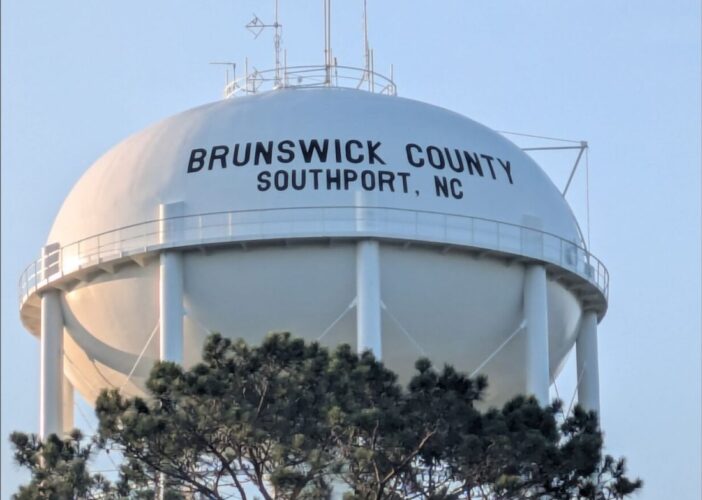
SOUTHPORT — At its Feb. 12 meeting, Southport’s Board of Aldermen unanimously approved two resolutions related to the Cape Fear River, joining other municipalities in the battle to preserve the natural resource.
The first resolution was in opposition to the interbasin transfer request from the Town of Fuquay-Varina, while the second opposed current proposed policy changes by the North Carolina Environmental Management Commission about PFAS and 1,4-dioxane. The chemicals do not include numerical limits or standards for the discharge, allowing polluters to essentially police themselves.
READ MORE: Saffo, CFPUA prompt public to say ‘no’ to Fuquay-Varina’s request for Cape Fear River water
ALSO: State PFAS and 1,4-dioxane rules advance, public comment period to open
Fuquay-Varina’s request, upon approval, would take 6.7 million gallons of water from the Cape Fear River everyday permanently to provide enough supply for the town’s needs. However, the transfer needs to be approved by the Environmental Management Commission before it can move forward. The North Carolina town is rapidly growing, and seeks to take the water to match its population and development.
“We’re trying to protect our environment and this resolution is one of the ways we are trying to do it,” Mayor Joe Pat Hatem said.
Other local governments have also publicly opposed the transfer, including: City of Wilmington, the New Hanover County Board of Commissioners, Pender County Board of Commissioners, Brunswick County Board of Commissioners, Holden Beach, Sunset Beach, Carolina Shores, Oak Island and Wrightsville Beach.
Also up for review through the NCEMC are policy changes, approved in January by the agency’s board, related to the monitoring and management of PFAS and 1,4-dioxane chemicals. A 60-day public comment and hearing period opened Feb. 1, mandatory before a policy change is codified into law.
The change requires facilities to test wastewater for the chemicals and submit a plan of action to mitigate the presence of the chemicals to the North Carolina Department of Environmental Quality. However, there are no discharge limits and no civil penalties for continuing to dump untreated wastewater.
PFAS have been called a “forever chemical” and linked to higher risk of cancer and liver damage. 1,4 dioxane is a colorless, synthetic industrial solvent and manufacturing byproduct considered a likely human carcinogen.
“The board opposes any approach that allows industrial dischargers to self-monitor without independent verification or that delays implementation of meaningful, enforceable limits for PFAS and 1,4-dioxane discharges,” Hatem said, “thereby shifting the burden of treatment and risk onto local governments, water utilities and the public.”
At Port City Daily, we aim to keep locals informed on top-of-mind news facing the tri-county region. To support our work and help us reach more people in 2026, please, consider helping one of two ways: Subscribe here or make a one-time contribution here.
We appreciate your ongoing support.
