


OAK ISLAND — Oysters may be the saving grace for Oak Island’s marsh shorelines as a new partnership between the town and the University of North Carolina Wilmington begins with the goal of testing nature-based solutions for coastal resilience.
READ MORE: Oak Island strengthens restrictions on digging holes on beach
On July 8, the Oak Island Town Council unanimously approved a memorandum of understanding with UNCW, establishing the framework for a three-year investigative project using living shorelines.
Living shorelines use biogenic structures — formations created by natural plants and wildlife on existing framework — along eroding shorelines to mitigate erosion. For instance, Carteret County’s living shoreline has raised the elevation of the marsh by 4 millimeters a year compared to a sea level increase of 3 millimeters every year since 2003.
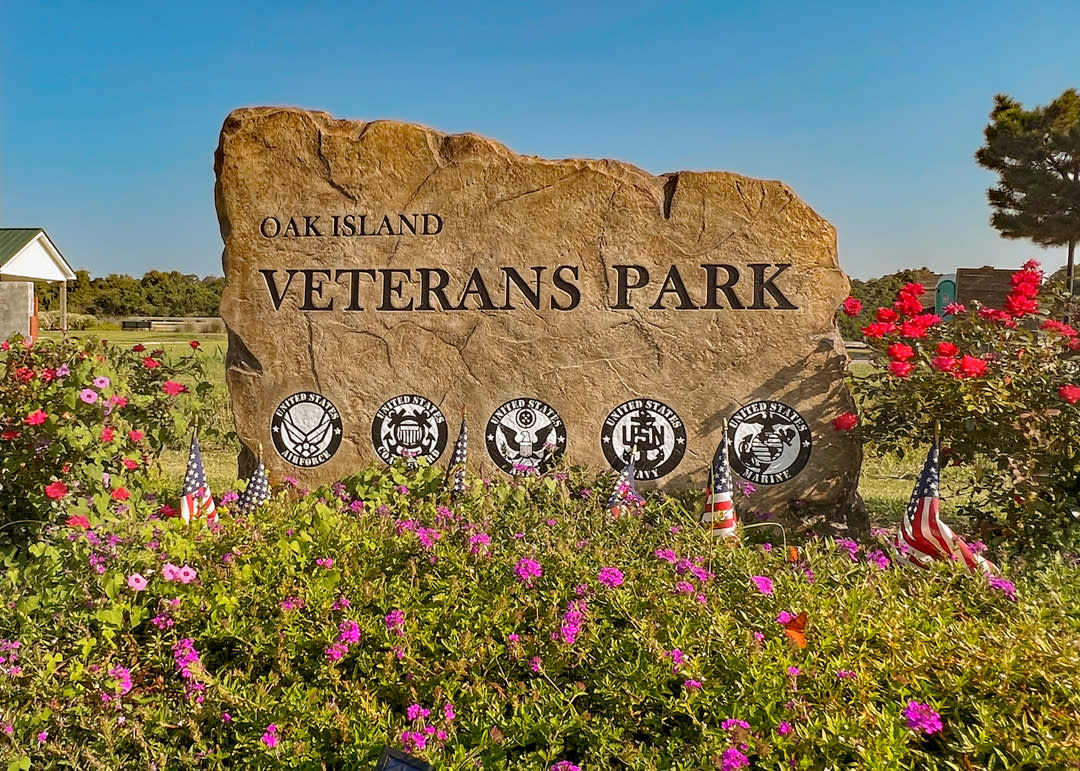
Oak Island is focusing on two locations — May Moore Park and Veteran’s Park. Mayor Elizabeth White said in previous years, a living shoreline using oyster bags was implemented on the Veteran’s Park shoreline. The shoreline is vulnerable to wakes created by marine traffic and is unprotected by marsh grass, thus making it ineffective at stabilizing the shoreline.
“The wave energy is too great, and they break apart, so we need a different solution there,” White said.
In contrast, White said May Moore Park sits within a more protected cove. This positioning will allow UNCW’s team to study additional site conditions and give them a broader understanding of the area.
According to project participant and UNCW professor Troy Alphin, the study will evaluate a range of shoreline methods to determine which are most effective in protecting and restoring the town’s marshlands. The solutions they’ll be evaluating include oyster shell bags, open reef frameworks, sills and sediment traps from companies like Sandbar Oyster Company and Native Shorelines.
Living shorelines, unlike bulkheads or other hardened structures, rely on natural materials and processes to reduce erosion while also enhancing the surrounding habitat. A bulkhead won’t enhance the habitat around it or trap sediment needed to rehabilitate eroded soil.
“So we’re trying to get a wider range of what we would call ecosystem services for our area,” Alphin said.
He explained natural solutions attract oysters — which provide a barrier to the shoreline — but also help marsh plants thrive behind the structures. This is because the structure slows wave energy, particularly from boat wakes.
The three-year project is funded by the city, which allocated $30,000 in its 2025-2026 fiscal year budget. White said the council would fund it further in the coming years as well.
The $30,000 covers material and labor costs, and support for students working on it, such as covering transportation. By doing this with UNCW, the city can apply for grants to fund future nourishment projects.
“We’re able to do so much more when we work cooperatively with other agencies and especially our university partners,” White said. “We in essence consider it a financial force and expertise force multiplier that gives us access to funding and professional perspectives in the scientific community that we don’t currently have under roof within our town.”
The project’s first year will focus on reviewing the city’s sites of concern and evaluating potential shoreline solutions.
Year two will involve collecting data to monitor how the different solutions are performing in the waterways. During the final year, UNCW will provide analysis of the results they found and what they recommend the city move forward with for future implementation.
According to Alphin, the project serves as hands-on research for college students across several disciplines — marine biology to chemistry, engineering to environmental science.
“Our undergraduates can come out there and assist with sampling, assist with planning and assist with maybe processing some of the data that we get, and that’s invaluable for them,” Alphin said.
While UNCW staff and students are leading the initiative, it also will welcome additional help from “citizen scientists.” Oak Island residents will have an opportunity to get involved by volunteering and attending UNCW educational workshops, along with data collection, site monitoring and installation.
“Hopefully, our community will respond and people will jump in, roll up their sleeves and grab some oyster shells,” council member Mark Martin said during last Thursday’s council meeting.
Alphin said engaging the community gives his team the opportunity to educate residents and gain insights: “They probably have local knowledge that would be very, very valuable, so we want to engage with them and tap into that local knowledge.”
This is not the first time the university has worked with municipalities in the state on coastal sustainability projects. UNCW has conducted similar shoreline projects in Pender and Onslow counties. UNCW also has a 20-year partnership with nearby St. James. During the university’s latest reef building event there, Alphin said they garnered nearly 200 volunteers.
According to White, as UNCW finalizes a comprehensive plan for Oak Island’s living shoreline project in coming months, they will work hand-in-hand with the town’s environmental advisory committee. The committee already does cleanup and maintenance work along the Intracoastal Waterway.
“The greatest benefit from [the project] is it’s going to be able to allow us to invest further in our shoreline protections with a degree of confidence and a level of effectiveness that we wouldn’t otherwise be able to do,” White said.
Have tips or suggestions for Sophia Walsh? Email sophia@localdailymedia.com
Want to read more from PCD? Subscribe now and then sign up for our morning newsletter, Wilmington Wire, and get the headlines delivered to your inbox every morning.
