


WILMINGTON — Cape Fear’s public transportation system is getting a boost in improvements in the coming year, as staff begins to take a hard look at numbers in its fiscal year 2024 budget to be presented in June.
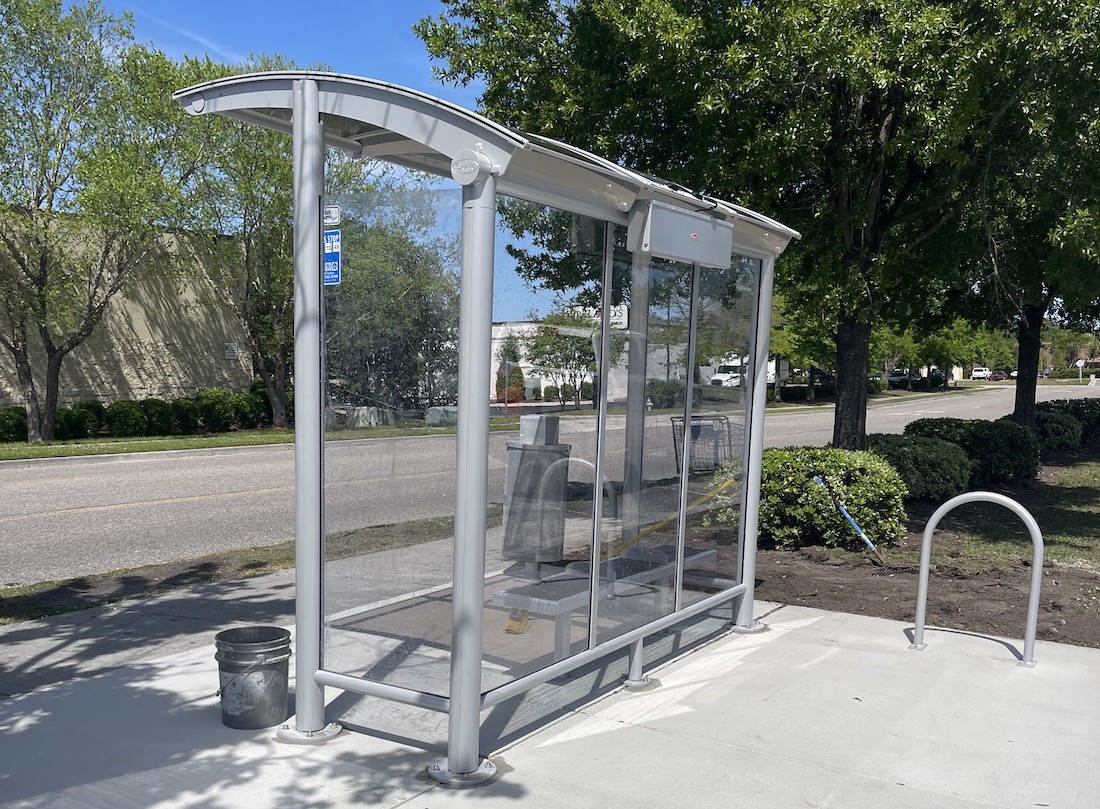
Twenty new shelters and 19 benches, as well as an additional 19 stops for riders will be implemented. The 58 upgrades and improvements were funded with federal dollars issued by Wilmington Urban Area Metropolitan Planning Organization. Port City Daily asked for a total on the latest rounds of enhancements but didn’t hear back by press; this will be updated upon response.
READ MORE: Wave Transit executive director leaving post for assistant town manager position
Wave executive director Marie Parker — who is stepping down to become Carrboro’s assistant town manager in June — said at Thursday’s meeting the transportation authority conducted an equity analysis network-wide to find gaps on high-density routes. Staff assessed data to help gauge new pickup locations, specifically focusing on areas to serve low-income or no-car households.
“We actually had areas that had anywhere from half-a-mile to one-and-a-half miles on existing routes that had zero stops,” Parker said at the meeting.
Wave focused on adding stops to areas already outfitted with sidewalks and within walking distance to amenities, so riders and bus operators could access routes easily.
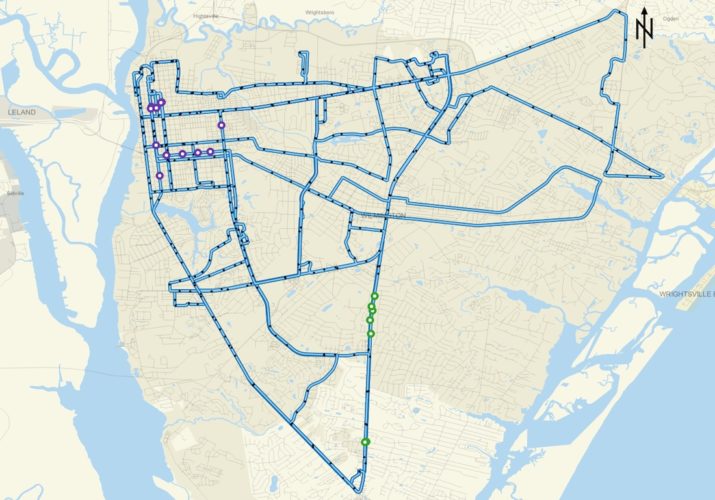
College Road, route 107, now has seven new stops, both northbound and southbound. The locations are peppered between existing ones to help riders in nearby residential and shopping areas.
Multiple routes — 108, 201, 205, and 210 — also will serve areas within the downtown vicinity. Five new stops are within walking distance to city hall, Thalian Hall and the county courthouse. Seven more stops are positioned near Castle, Marsteller, Wooster and 16th streets.
Wave’s fixed routes have seen a 4.6% increase in the last year and had an on-time performance rate of 86.15%, according to Jon Dodson, Wave’s deputy director.
Yet, the added stops come at a time when the Wave board posed questions about its preliminary fiscal year 2024 budget, presented at Thursday’s meeting. The final numbers will be voted on in June.
“If I read this correctly, the actual revenue for the next 365 days and the actual expenses for the next 365 days are off by $1.8 million,” board member Paul Lawler said at the meeting.
Staff is still finessing and filling in numbers before city manager Tony Caudle, who sits on the Wave board, recommends the amount to council. The budget is coming in lower than fiscal year 2023, finance director Lance Flint admitted.
“I think you’re cutting it close,” Caudle said of the early draft, “having been in the position of Wave coming back to us [the city] on a number of occasions, asking for money to be able to make it to the end of the year.”
Lawler suggested taking a closer look at recently added routes to determine if they are sustainable. Eight months ago Wave increased its routes and frequencies, with additions to Market Street, Carolina Beach Road, Long Leaf Park and between College and Gordon Roads.
“One thing that might be helpful is to ask how many passengers per hour we’re getting with those additional routes,” he said, “so we have an idea of whether the new routes are better or not.”
While Wave serves more than 400 stops, many are not covered by shelters. Some don’t have sidewalks either and leave riders “just standing in grass,” Lawler said.
To determine which would receive upgrades — including ADA accessibility, solar lighting, trash receptacles, and bike racks — Parker said they analyzed ridership boarding data, frequency of service, and location.
“We have been talking about focusing on improving passenger amenities and not only adding software that is needed but also improving our stops,” Parker told the board.
Two new shelters already were installed to replace outdated ones at Roses on Carolina Beach Road and Walmart on Sigmon Road. The two locations serve the highest ridership in the greater Wilmington area.
“Next time something like this comes up, I hope we would consider perhaps putting some concrete pads out,” Lawler suggested instead of shelters, “because for $142,000, we could afford many more concrete pads to get people out of the weeds and the mud.”
The 20 additional shelters and 19 benches will be completed in the next six to 12 months.
Catch up on other Wave Transit news here.
Have tips or comments? Email [email protected]
Want to read more from PCD? Subscribe now and then sign up for our morning newsletter, Wilmington Wire, and get the headlines delivered to your inbox every morning.
