


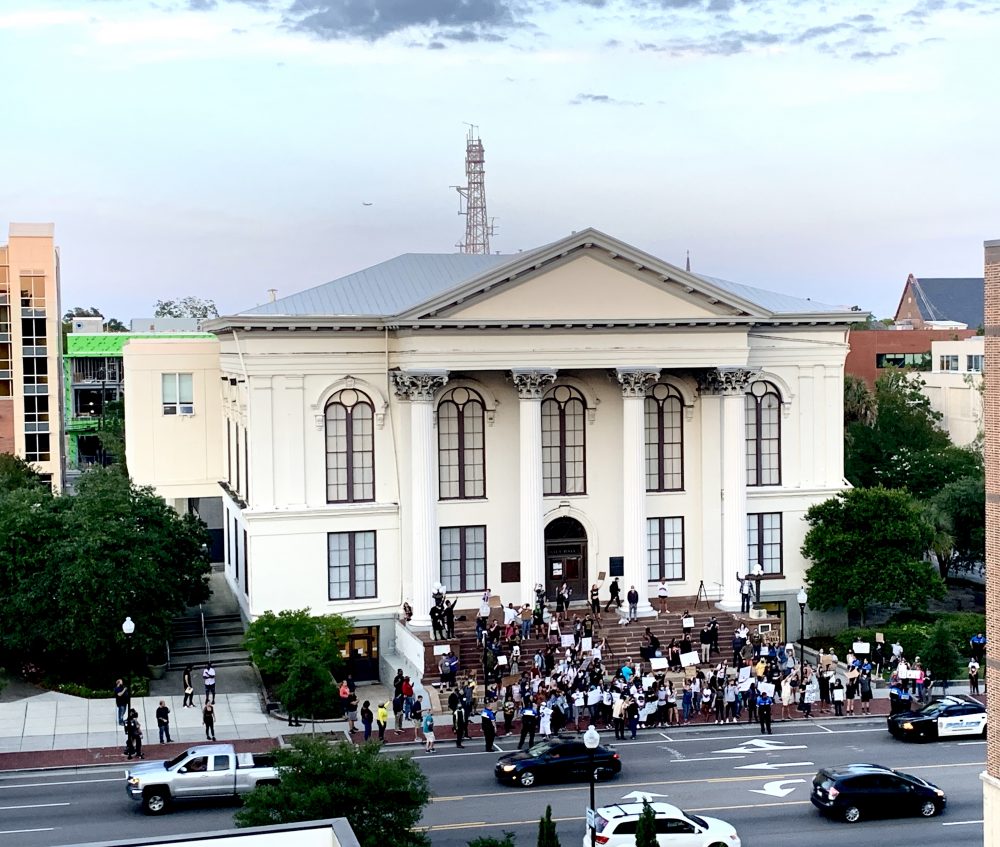
WILMINGTON — From cities like Atlanta, GA to Syracuse, NY, mayors, and other elected leaders have taken stances on the protests and in some cases, even joined in. In Wilmington however, protestors have not quite seen that level of engagement with their elected leaders.
The protestors in Wilmington are calling for a discussion surrounding police reform and the implementation of new ideas to hold police accountable to the people they are sworn to serve and protect. While some of the demands for the Wilmington Police Department were already being implemented — like de-escalation training — the gap between protestors and city leaders is noticeable.
The Wilmington Police Department does have some autonomy when it comes to police policy, but elected leaders also have the ability to create change within the department. City Council members have discussed the current state of affairs in Wilmington and across the country, but so far, no actual action has been taken to implement any changes.
Wilmington Mayor Bill Saffo did weigh in on some questions surrounding the protests last week in an interview with WECT, however, he mostly discussed things like the coronavirus and protest permits.
Port City Daily reached out to the Wilmington City Council on Monday, with the hopes of getting some answers and insight into leadership’s thoughts on the protests, police reform, and moving forward.
So far, Council Member’s Neil Anderson and Kevin Spears have offered insight on the topic.
The following statements are from Anderson and Spears in response to questions asked, for the most part, they have only been edited for formatting issues or relevancy.
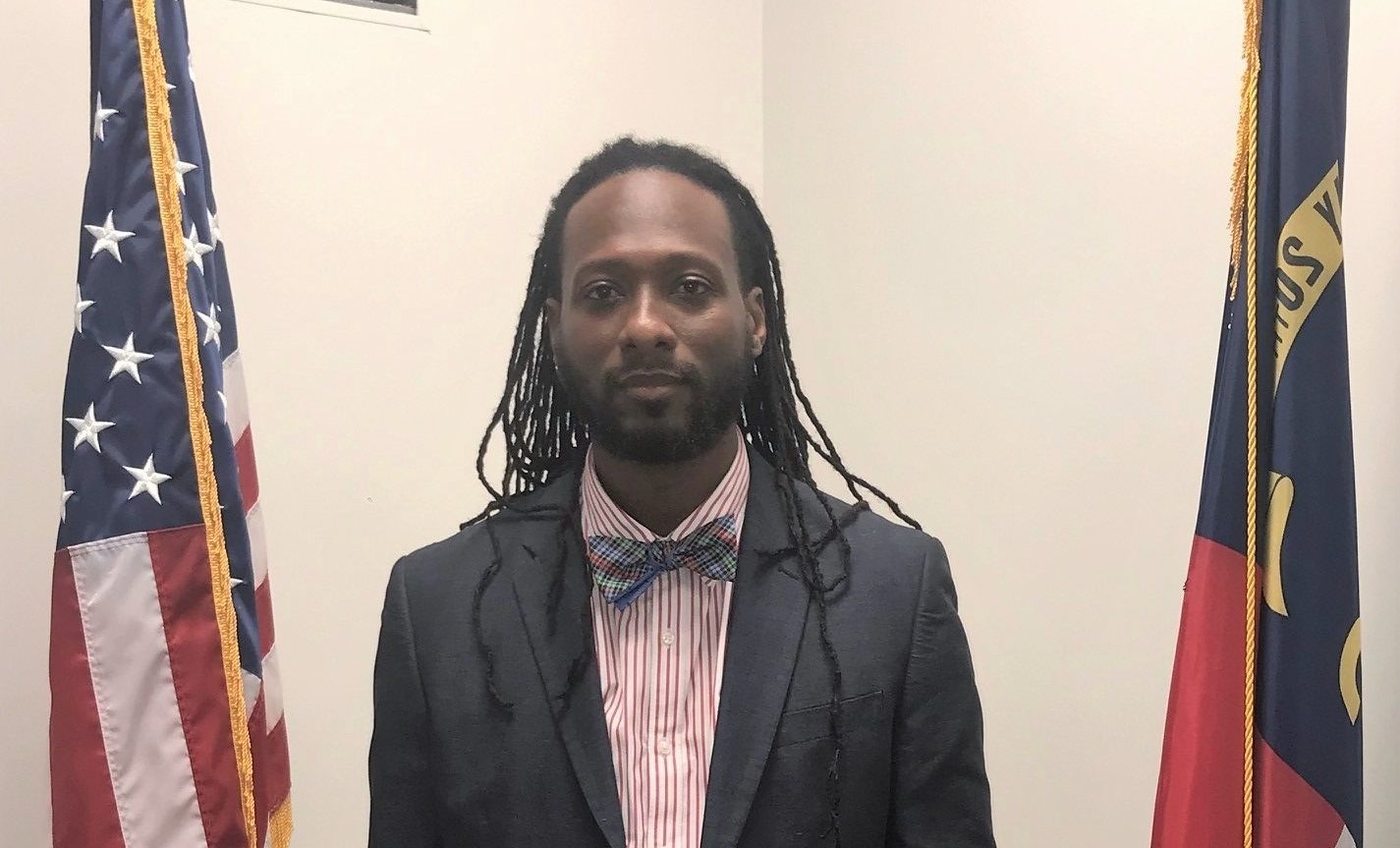
Kevin Spears
Question: Have you attended any of the protests in person and what is your opinion on them?
Spears: I have been to the protests. I went to the rally part of the event organized by Chief Williams, went back to work to finish my day, and then went to the protests later that evening on City Hall’s steps. I spoke to the crowd and was even on Channel 6 news that night. I support the momentum that the protestors have and encourage them to create a plan on what’s next.
Question: Would you consider implementing a citizen review board for the Wilmington Police Department?
Spears: On the day after George Floyd was killed I made a post on my personal Facebook page about my feelings and how we need to suggest a law that would ban chokeholds on suspects and that would require law enforcement to treat suspects with respect, by not throwing them on the ground. I am still wrapping my mind around what all can be put together as it relates to the bill.
Question: Other departments across the nation have instructed their police not to use tear gas on citizens or have even forbidden such actions, would you be willing to do something similar in Wilmington? If not, why?
Spears: I would think that we wouldn’t readily use tear gas on our citizens but I guess it would depend on the specifics of the situation.
Question: This does not seem to be an issue that is going away anytime soon and it feels like you, as elected leaders, have the chance to make some changes to maybe instill more trust in the police in Wilmington — what actions are you taking in response to these protests?
Spears: Again, I’ll state that I support the protests and the reasoning behind it. There is a level of transparency that needs to be reached through policy and tangible short term goals that lead to even better long term goals that effect change.
Question: The city spends the largest percentage of its annual budget on the Wilmington Police Department, do you think that funding could be used for different resources to help supplement the police department without necessarily directly funding the police? For example, more social workers to respond to people in crisis, addiction resources, homelessness resources.
Spears: The budget is something I’m still learning but I know it’s not as simple as people would like to believe. It seems like a lot but you’re talking about everyone’s salaries, the purchasing of vehicles, all supplies, and anything else that comes with running a business/organization. I’m sure there are some things that we could focus on better as it relates to our spending on the police department.
Social workers in our area are the responsibility of the county. This is all new to me but I will say that there is a lot of thought that goes into it. More than one would think. Nationally statistics indicate that crime has dropped and earlier this year our police department presented to us similar statistics.
I’ll honestly say that what I see and hear daily doesn’t feel like crime is down, especially when you can see crime on every media platform available every single day. I think other measures can be added to how we achieve a low rate of crime. Rehabilitation is key. Programs where people really do receive help. There are some issues we can’t arrest our way out of.
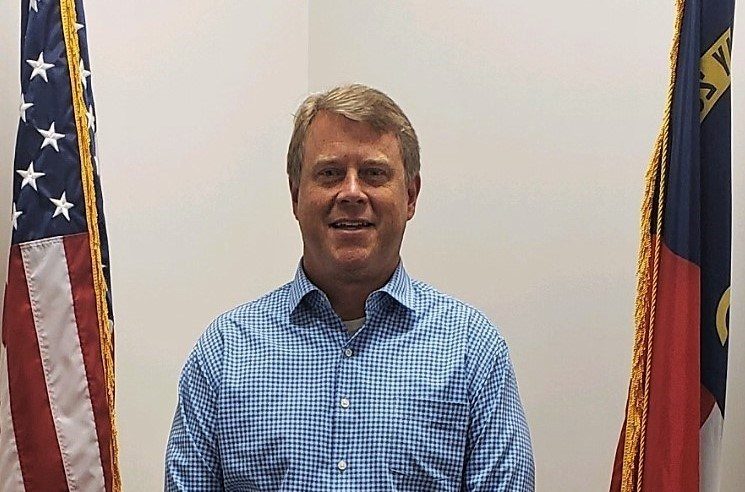
Neil Anderson
Question: Have you attended any of the protests in person and what is your opinion on them?
Anderson: I have not attended any of the protests. I would have liked to attend both the march organized by the NAACP and BLM Saturday a week ago and the march with our police chief. I was not aware of the time/place etc., not notified about the march the first Saturday. I received notice of the chief’s march about an hour before it occurred (not sure why that was not communicated to council sooner – think it was somewhat spontaneous – planned the same day).
City Council as you know is not a full-time job. I work and have a family to raise/tend to. Typically my work takes me out of town (such as the day of the chief’s march). I am always interested in planned protests like the two I detail above.
I will not be attending the nightly gatherings at City Hall.
As city leaders, we also have to be cognizant that we are living through a pandemic. We all need to try and balance these two matters. The lack of physical distancing on a nightly basis is very concerning for me. Each attendee has contact with a network of others away from these events that include the elderly and those at risk. Our hospital is stretched as much as it has been right now. I sadly anticipate our peak has not come as these gatherings will surely affect our numbers. I am not suggesting the cause is not worthy, only that if it’s going to be daily, then it needs to be done more responsibly in terms of living in a pandemic.
Question: Would you consider implementing a citizen review board for the Wilmington Police Department?
Anderson: This idea keeps coming up and has been fully addressed by City Council in the last few years. We established a citizen board similar to what you are referring to in the last year or two, however it is open to hear and advocate for issues/incidents/situations that occur across all local government interaction with our citizens and not just policing.
I do not favor a panel/board that focuses solely on WPD. In our state (state law), such boards do not have any real power. I believe City Council is and has been the proper contact for any grievances, citizens should go right to the source of those most able to explore and implement changes. That is what we are elected to do, so why appoint other citizens to act in this capacity, seems to me we would be avoiding doing our job, an irresponsible way to shift the responsibility to hear and address tough issues.
Ask those that came to the council in hopes of naming a street for Gen Jos. McNeill, what kind of ear and actions they received? Council should be the body that holds any city employee responsible if city management does not. I would suggest and hope that those wanting to effect real policy changes file run for office, get elected, and serve. Our newest council member, Kevin Spears, is a perfect example of a commitment to affect this change. Moreover, the track record of WPD is pretty darn good in terms of race relations. Look at all the outreach programs (basketball, Christmas), commitment to community policing, the public housing task force, and the leadership of the department.
Question: Other departments across the nation have instructed their police not to use tear gas on citizens or have even forbidden such actions, would you be willing to do something similar in Wilmington? If not, why?
Anderson: I would not be in favor of such a ban. I believe they should be used as rarely as possible, but they are legitimate tools that can and should be used to prevent or stop a peaceful protest that turns into mayhem, a full-on riot, with looting, destruction of property, setting fires, shooting/killing people, and the assault of law enforcement.
Question: The city spends the largest percentage of its annual budget on the Wilmington Police Department, do you think that funding could be used for different resources to help supplement the police department without necessarily directly funding the police? For example, more social workers to respond to people in crisis, addiction resources, homelessness resources.
Anderson: This line of thinking is misguided. Most of this cost is in salary and benefits. Check our crime statistics, trends, for the last decade or so. Wilmington Police Department has done a great job. I hope you do not forget, you certainly report on it with a headline slant that the city is not doing enough, we have guns/shots fired, drug, and gang problems in our city as well. Our citizens expect us to address these issues head-on as well and we have…and will continue to do so. Our city is growing fast, more and more people [are] moving here. We are committed to slowly expanding community policing across the city. This requires officers, officers paid enough to live and work in the city to support their families — enough to show respect for the risks they take every day when they put on the uniform.
These are solid future job opportunities for some of our local African-American youth. By state constitution, the state and county handle public health and social work, so many people seem to be unaware of the role of each government jurisdiction. That said, the city partners financially with a myriad of charitable organizations in our city that target education, lack of food, homelessness, abuse, re-entry from incarceration, etc.
We work every day — our budget debates are evidence of this — to address the underlying problems in our city. Look at the leadership of our city management, police force, and City Council. African-Americans are well represented. Do we still have a lot of work to do, you bet we do, but race relations in Wilmington (I am aware of the sad history) are better than they are in many cities. You cannot lump every city into the same pile/category.
This does not seem to be an issue that is going away anytime soon and it feels like you, as elected leaders, have the chance to make some changes to maybe instill more trust in the police in Wilmington — what actions are you taking in response to these protests?
Anderson: If you watched our last council meeting in full, you would have heard comments from the council on this topic. Yes, there are systematic, structural issues that affect minorities daily in our country. But, I would suggest all the recent/current efforts establish a more focused desired outcome instead of general unhappiness, shotgun approach. I have just seen that when it comes to effecting real change in laws/governance, having a set of achievable goals, next steps, and getting them out in front nationally is the way to go.
For example, the policeman who murdered George Floyd had 17-18 complaints on his record, so why was he still employed as a cop? I do not know how the Minneapolis Police Department is governed, but I can tell you that most police departments have a union set up to protect their rights, right to organize, one that I support, however, their power appears to have grown too strong and broad. When a dept gets a complaint about an officer, it gets investigated, if it’s found to be legit and serious, the chief will come down with punishment, then the officer can file for arbitration by a board of his peers (I am generalizing this process for sake of length/time). Too often this board that has been bargained for by the union pushes back on the punishment sought by the chief.
I am confident that we would have far fewer of these awful incidents and we would have less undesirable cops on the job if chiefs had more power to punish and fire officers like a CEO in business does. I do not have a solution to propose here. I am not an authority on it, but something is amiss. This conflict will pit folks that are pro-union versus those for police reform, not an easy negotiation, but a deep conversation/debate that needs to be had. This should be a goal for all protesters.
