


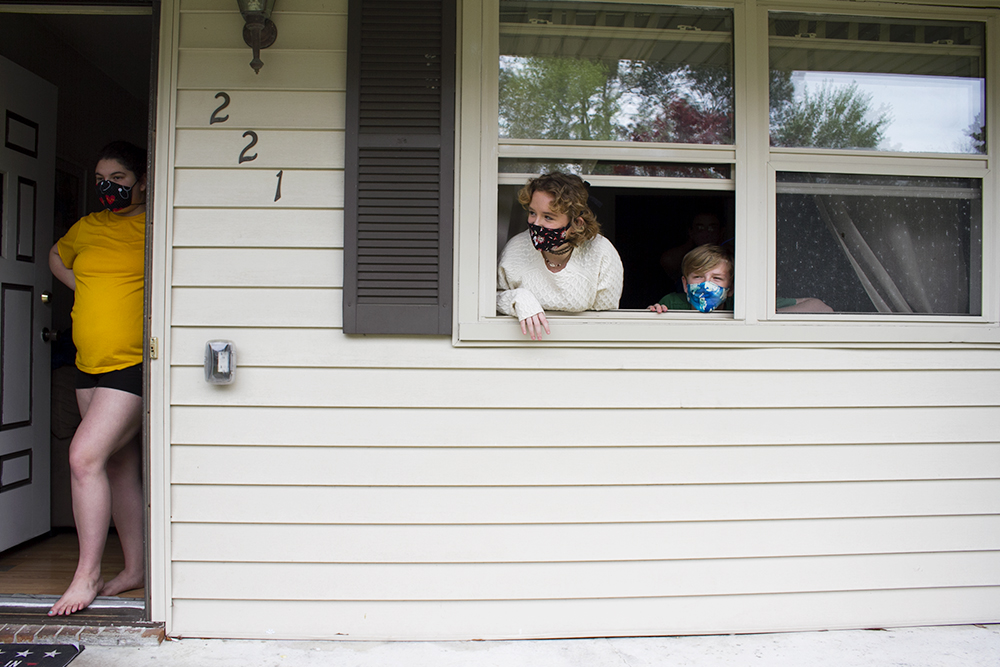
SOUTHEASTERN, N.C. — Working parents with school-age children don’t have time to break down. They have mouths to feed, kids to teach, and money to earn — so they can keep feeding their kids.
After the coronavirus closed schools and most professions shifted to remote work, parents have been thrust into the seemingly unmanageable triple-tasking role of teacher, professional, and caregiver at once, all while attempting to maintain their own sanity.
Related: In Pictures: Stay-at-home order takes effect in Wilmington, Carolina Beach [Free read]
Normally, there’s grandmas and grandpas, for those fortunate enough to rely on extended family caregiving. But with the elderly especially at risk, and many daycare centers now closed, many parents are on their own.
It’s not easy on kids, either. Generations have passed since children grew up in a global crisis that interrupted routines to this degree. Forthcoming psychological studies will shed light on its effects, which at least anecdotally, has left kids frustrated, confused, and afraid. Many young children need more attention now, not less. But there isn’t enough sleep in a night or hours in a day to fill everyone’s needs while the nation collectively coasts on survival mode.
For the few weeks of shut-down, while educators worked out how to shift to online school, the brunt of at-home teaching fell on parents. The older the kids, the more self-reliant they tend to be. But younger children often require guided, hands-on learning.
“The little guy requires a ton of attention. Right now I’m on a conference call and he’s trying to do Letterland. It’s just not humanly possible for a six-year-old to self, kind of, to put himself along in a school day,” Courtney Younghans said of her youngest son, Tyler. “When you’re six years old, it just feels like a lot of homework. At school, they play games, they have circle time, they do this, they do that. Now it’s just, by himself, homework all day. That’s a lot on a six-year-old.”
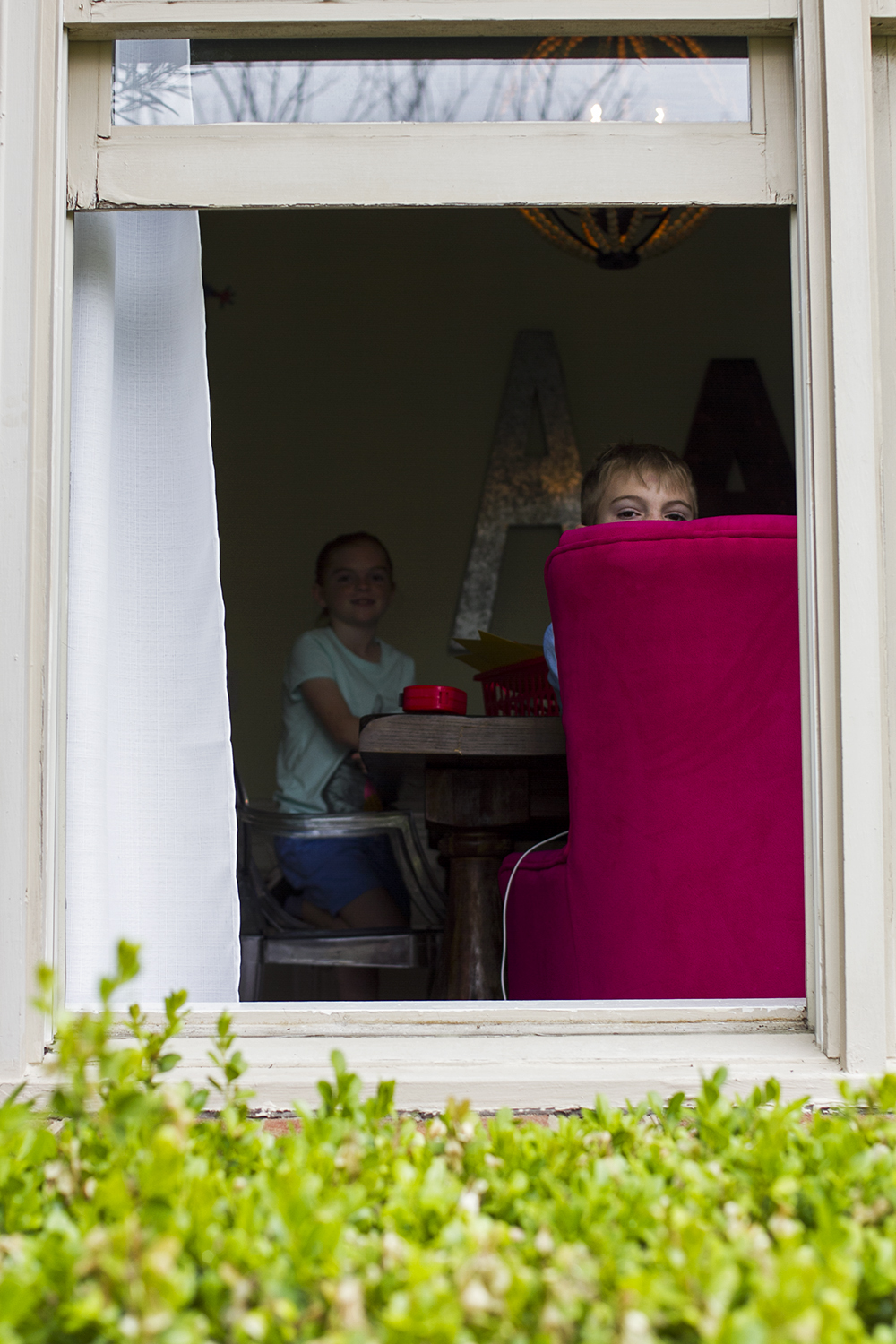
A financial and real estate agent, Younghans worked from home before the crisis. She’s the only one at her finance company that has children. In virtual meetings with colleagues, she can get side-tracked by teaching Tyler, for instance, why 10+ 2 is the same thing as 6+6. “I got asked the other day, is there a better time? No. there’s really not. Maybe there will be a better time in three weeks. It is what it is,” she said.
Her 13 and 14-year-old boys can mostly manage their own work. Still, Younghans said it’s a daily task to come up with activities that aren’t Fortnite to keep them busy (they call it “socialization,” she said). One day, for PE, she had the boys lay mulch around the yard. She’s made the older boys learn how to balance a checkbook, organize the pantry, or memorize their social security numbers. “Just anything I can do to keep them, not just sitting,”
When your own kids misbehave, there’s no in-school suspension or principal to send them to. And when they’re hungry, you have to stop what you’re doing to feed them.
“I’m the lunch lady, I’m the janitor, I’m everything. I feel like I’m the principal, the vice-principal, you name it, I’m it,” she said.
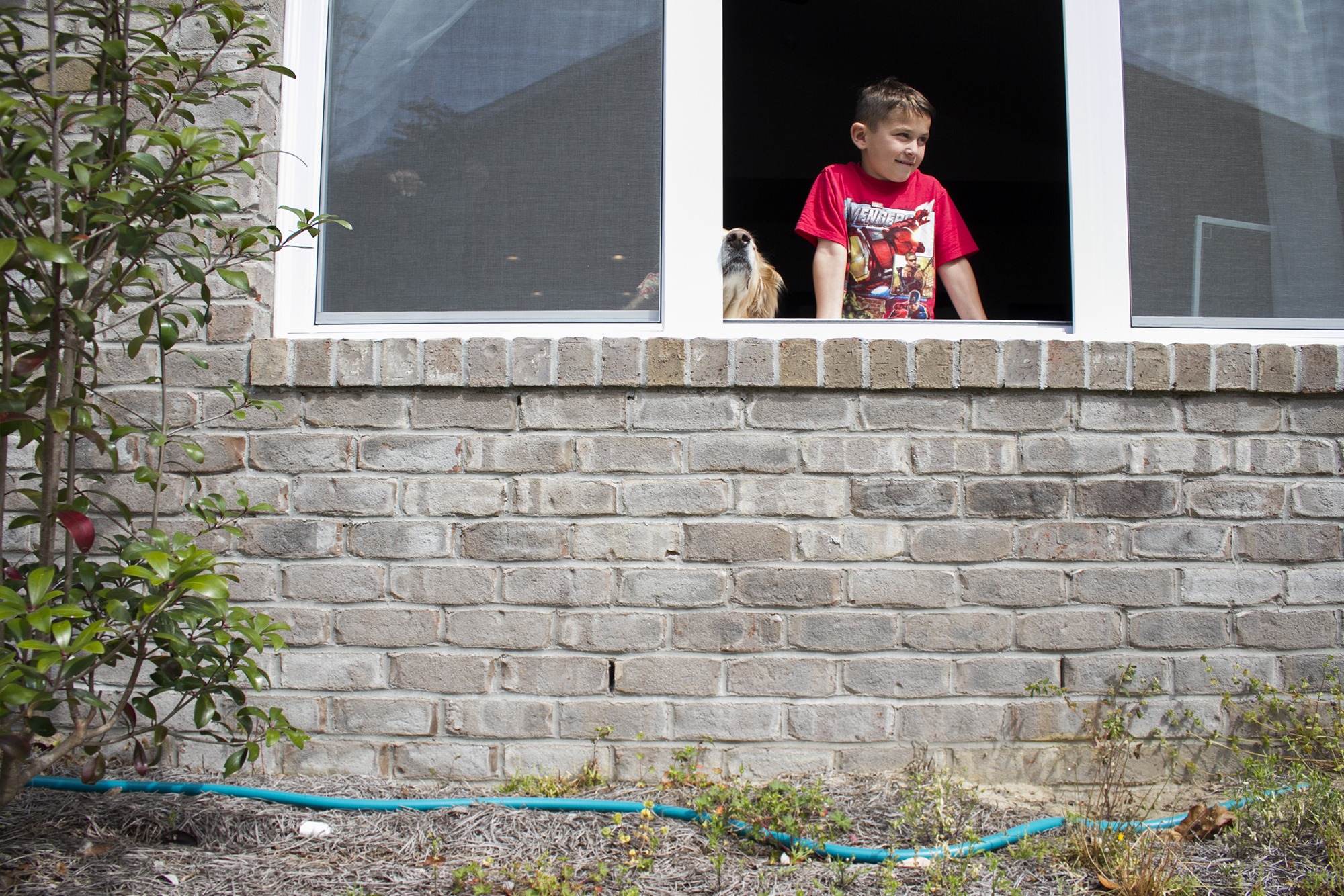
Some families have found success in transforming under-used dining rooms into new learning centers. The idea is the “new room” helps kids distinguish mindsets at a time when a.m., p.m., Monday, and Friday all blend together.
Taynia Aarnink brought two large “A” wall decorations out of storage and hung them in the new “Aarnink Academy,” formerly the dining room.
“It sets the mind that this is school. This is what we do in this room,” Aarnink said.
As a full-time finance director, Aarnink recognizes she’s fortunate to still have a job while the state and nation log record unemployment claims daily. “I have worked at home before. Working from home is not a transition. Working from home with children that need to be homeschooled is a struggle,” she said.
She has set expectations for her seven and 10-year-old: “I’m ‘working mom’ right now.” Take-home packets and teacher support has been great, she said, but still hasn’t filled the gaps for when the kids need additional help. “Trying to find a rhythm has been really hard,” she said.
She wishes she could do more to help her kids and struggles between choosing to maintain financial or mental stability.
“It’s trying to say, ok, well how much longer will we be able to work? We need to take advantage of it while we can and stay sane,” she said.
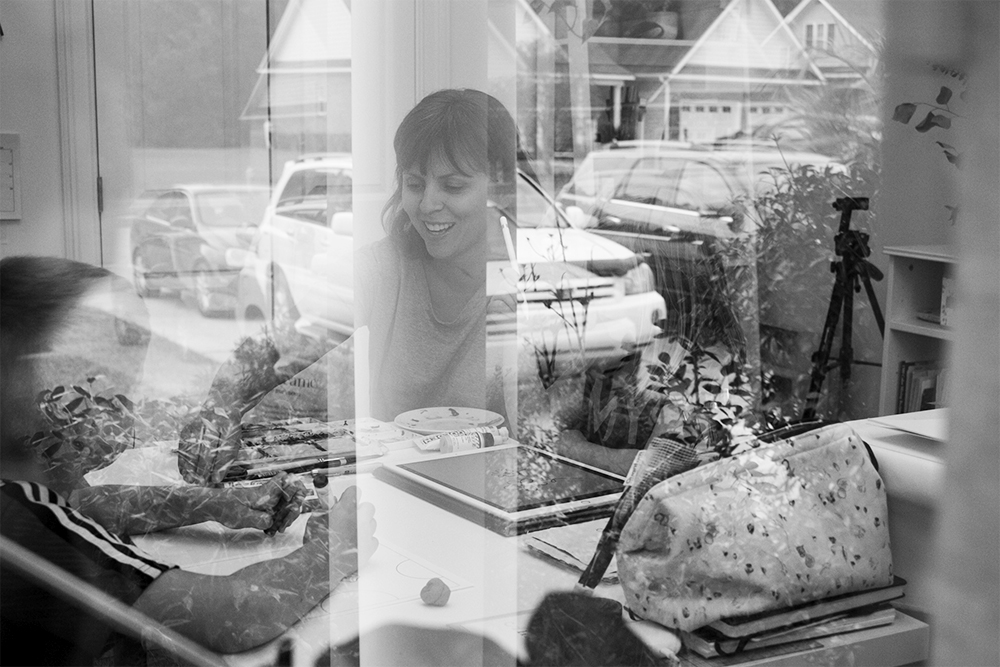
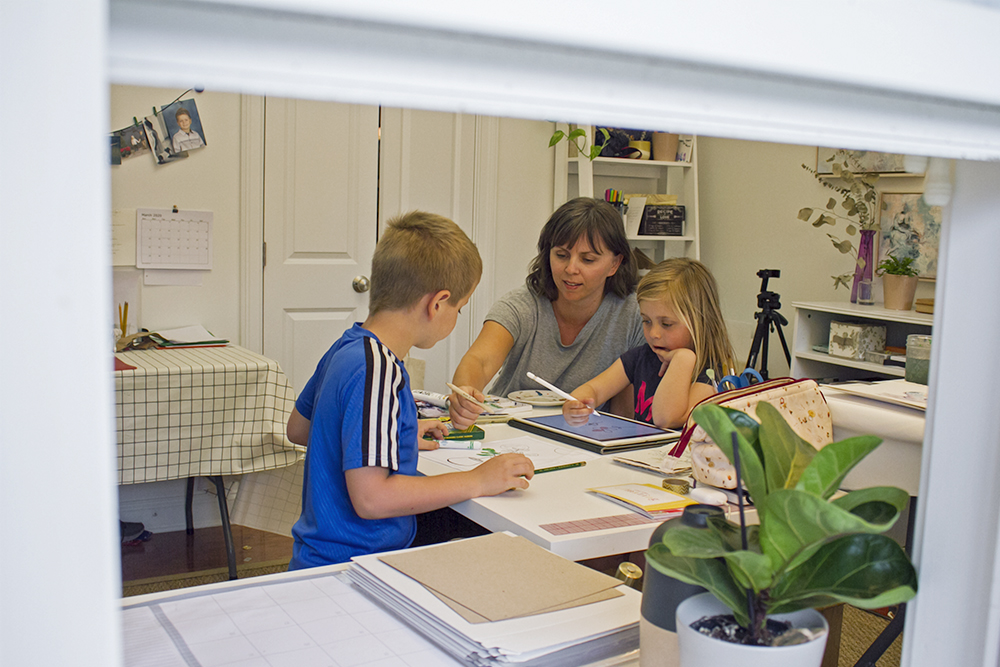
Full-time artist Ella Friberg set up her kids’ new “learning, art, everything station” in her studio-dining room, with a new folding table. Her daughter, Eliza, is in pre-K and her son, Beckham, requires more hands-on guidance as a first-grader. “When I set them up, they can be more focused and self-directed,” she said. “Those are the quick moments I can sneak in, updating something on my website, things like that.”
The transition means now Friberg no longer has her own space to create and market her art. “I think the thing I’m missing is the peace,” she said. She’s not able to churn out the same type of work she was producing before the pandemic but shifted her strategy recently to make a series of coloring page “freebies.”
“I just have to focus on one week of time. My heart starts pounding when I start thinking this could last till May or June,” she said. Her husband, Dr. Ben Friberg, is only able to head into their practice, Thrive Family Dental, for emergency patients due to coronavirus restrictions.
“People are still buying art,” she said. “But I’m not out there buying things for fun right now. We have no income coming in right now other than what we’ve saved up and every loan we can put our hands on.” Staying flexible, lowering expectations, and taking frequent walks outside has helped her relieve stress.
Setting schedules seems to prove useful for both kids and parents. Jenn Messer raised her four kids military-style, she said. “They’ve always been very structured and very scheduled,” she said. In this new homeschooling environment, that structure works for two of Messer’s kids, while the other two seem to want to rebel against it, she said.
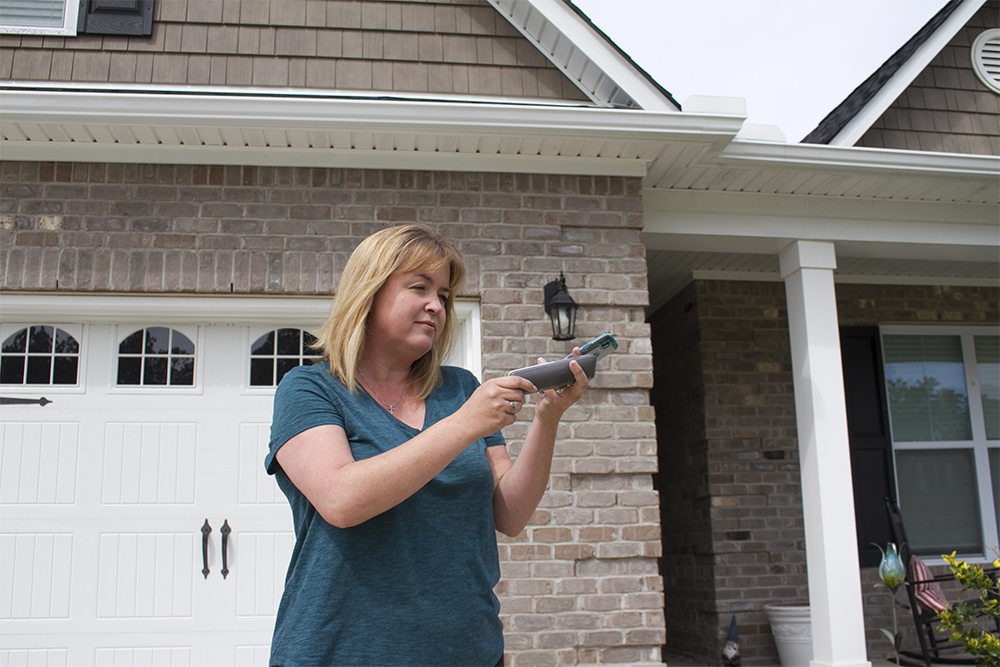
“The kids do shifts — school work, chores, electronics,” she said. As soon as the quarantine restrictions began, both Messer and her mother, who owns Mountain Mama Quilts & Crafts, started producing 50 handmade masks a day from the living room to help offset global supply shortages.
“I’ve always been a problem solver. So if I’ve got a solution — that’s how I don’t have mental breakdowns from teaching my children. That’s how I keep my sanity in all the crazy,” she said.
Between schoolwork and chores, Messer has her kids working in an assembly line on the masks, of which the family has produced more than 300 so far. “One child will help trace the pattern, one child will help cut the pattern,” she said. “We’ve got two sewing machines running as fast as they can.”
Made with welcoming patterns, the masks are washable, with ties instead of elastic straps so wearers can avoid any unnecessary contact with their faces. “Having been a CNA, been the lady in the garb, it’s trying to make the patient feel as comfortable as possible and also trying to protect myself,” she said.
With New Hanover County Schools shifting to an online learning system Wednesday, Messer was anxious to see whether it would help her kids be more self-sufficient.
Though she said the teachers have been helpful, she still has to comb through assignments and workbooks to make sure her kids are on pace. “I’m back to creating lesson plans off of what they were given,” she said.
After donating the masks to mostly rural health care providers, Messer said she’s been sleeping just a few hours a night. “That’s just because right now we’re in emergency mode,” she said. “Caffeine is my friend.”
A 13-year homeschooling parent, Daphene Morris, has four pieces of basic advice for parents navigating this new role. First, don’t stress if your kids don’t grasp a concept right away or on time. Second, take advantage of free online curricula and activities. Next, carve out time for yourself. And lastly, though it might seem impossible, enjoy this time. “Eighteen years goes by in a heartbeat,” she said.

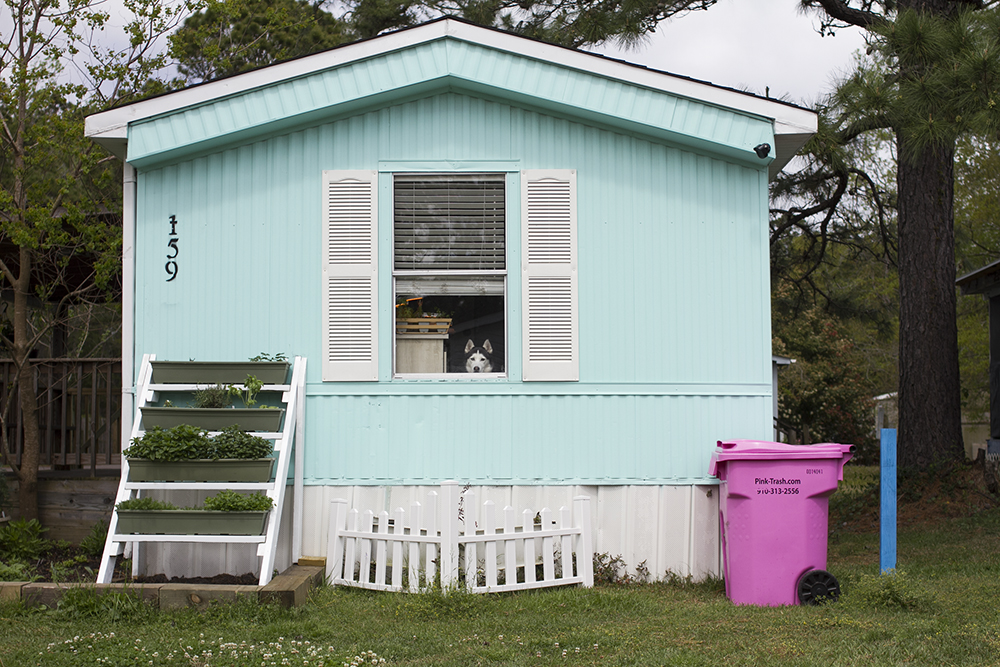
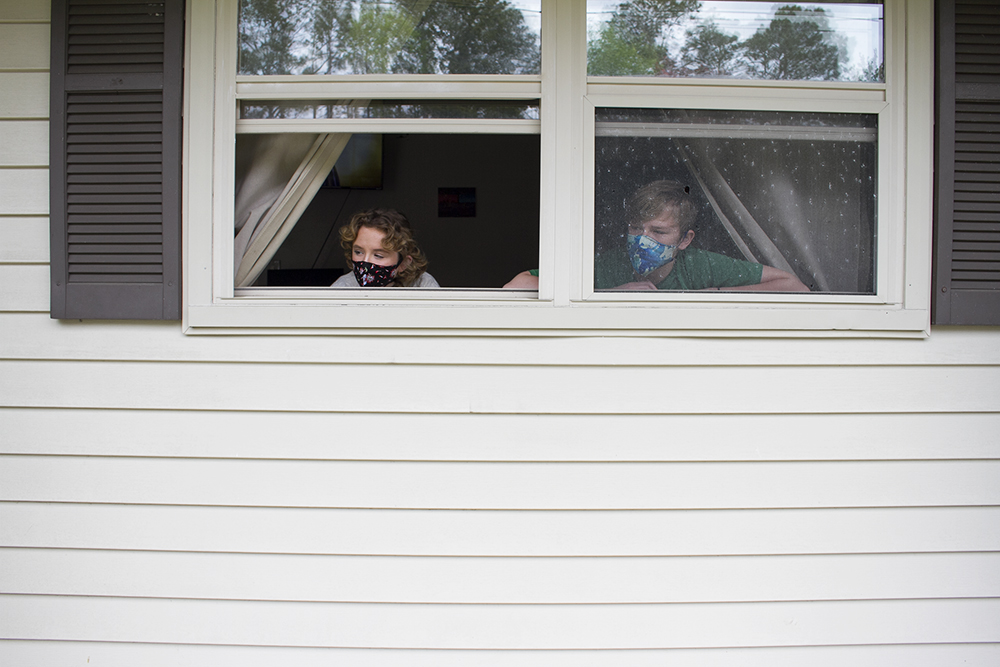
Like the San Fransico Chronicle’s “United in Isolation” window portrait project, Port City Daily asked Cape Fear region families to peer through the window (if you’d like to participate in the series, reach out to us at [email protected]).
Send tips and comments to Johanna Ferebee Still at [email protected]
