


WILMINGTON — It’s perhaps the strangest side effect of the Covid-19 outbreak: a run, not on the banks, but on toilet paper shelves.
State officials and corporate offices have said grocery stores have plenty of stock, with resupply shipments moving steadily, but the shelves on the region’s store tell a different story. While supplies have popped up here and there, countless memes and other social media jokes attest to the overall shortage (bidet companies have even begun sponsoring ads of Facebook). And while toilet paper probably doesn’t sit as high as food and water in Maslow’s hierarchy — it’s bound to be a frustration for many.
Ample supplies, empty shelves
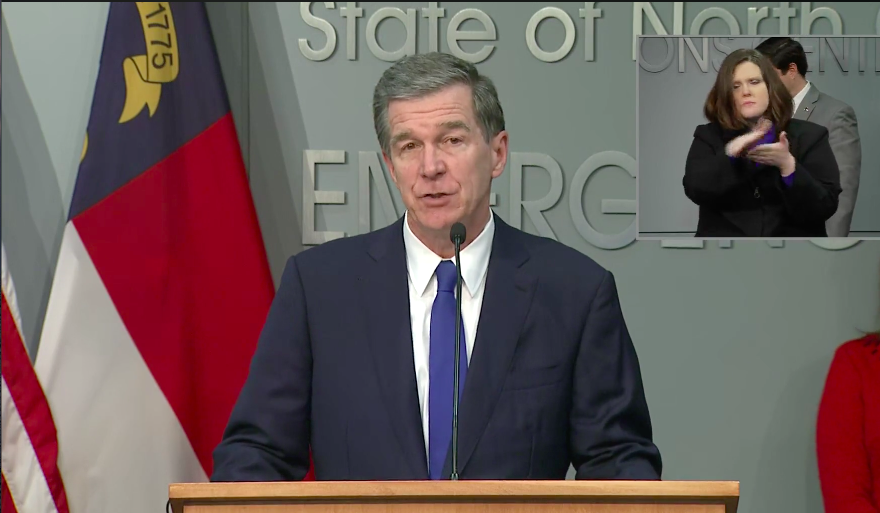
Last week, Governor Roy Cooper told the public that he had spoken with many of the major grocers, who had informed him there were no supply shortages. Nothing about the outbreak or the state’s response has inhibited the flow of commercial deliveries, state officials added.
Spokespeople for Lowes Food and The Fresh Market both confirmed this, saying that while some shelves might temporarily be empty, there was plenty of supply and it was moving swiftly. Lowes did confirm that toilet paper sales had been much higher than normal, noting that the company’s 74 nationwide stores had sold enough toilet paper over a seven-day period to stretch from the Carolinas to California and back (it’s unclear if this is a standard industry measurement).
Despite these promises, shelves of paper products (toilet paper, napkins, and paper towels) at Aldi, Lowes, Harris Teeter, Food Lion, and other grocery stores remain empty — or have been resupplied and emptied again. Pharmacies like CVS and RiteAid, along with the various dollar stores (Family Dollar, Dollar General, etc.), also have empty shelves.
Shelves have also been emptied of antibacterial hand soaps and dish liquid, although there’s no evidence that these products have any effect on viruses, including the SARS-CoV-2 strain that causes Covid-19. Regular soap is effective because it naturally disrupts the lipid (i.e. fat) barrier around the virus (more on how, here). Hand sanitizers with an alcohol content of 60% or higher are also effective.
Hoarding or shortages?
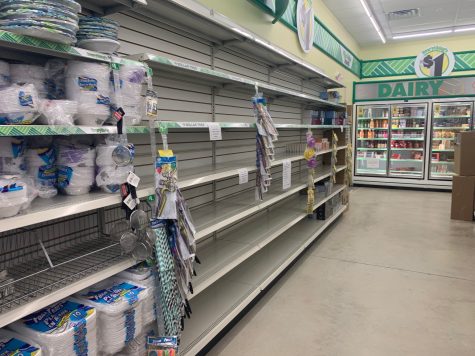
Family Dollar. 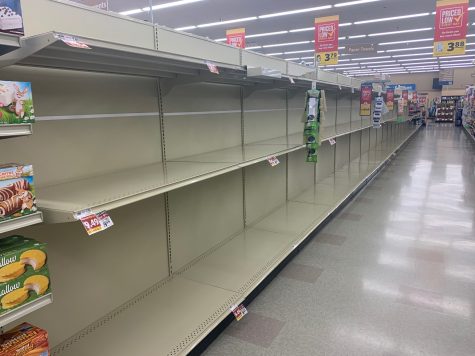
Food Lion. 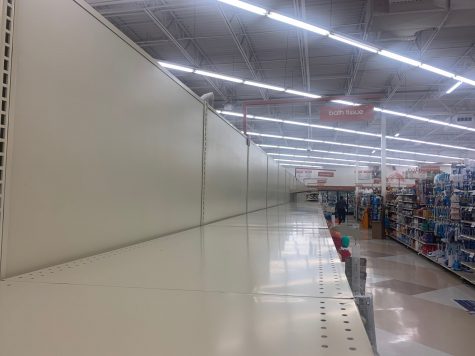
Lowes Food. 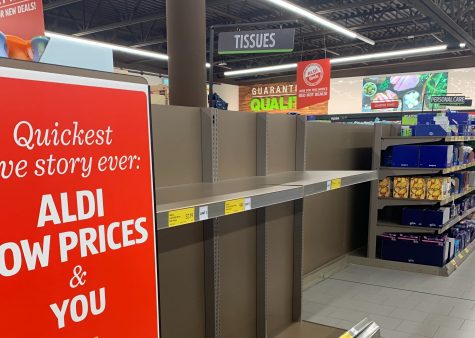
Aldi. 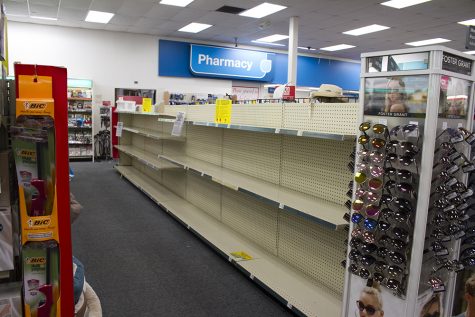
CVS. 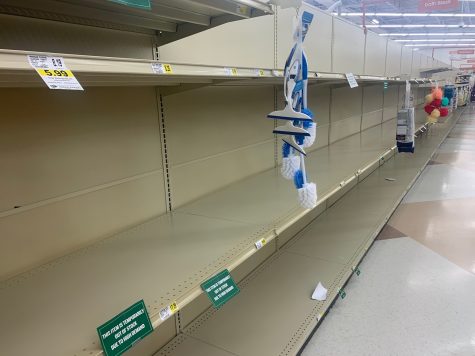
Another Lowes Food.
So, what’s going on here?
One possibility is that the empty shelves are the result of hoarding behavior. In the early phases of the outbreak — especially after the state announced that public schools would be closing — it was not uncommon to see shopping carts loaded with toilet paper, bottled water, alcohol, and milk (the latter remains a bit puzzling, since there’s only so much milk you can drink before it goes bad).
Officials from President Donald Trump to Cooper to New Hanover County Chairwoman Julia Olson-Boseman and Wilmington Mayor Bill Saffo have all asked residents to avoid this behavior, to ‘shop normally,’ and to be considerate of their neighbors.
In addition, many stores have instituted limits on high-demand items, including toilet paper, often to two items per trip. However, nothing prevents customers from making multiple trips — which not only defeats efforts to prevent hoarding, but also the general spirit of the governor’s ‘stay at home’ order.
This hoarding behavior seems largely driven by uncertainty: there have been no clear answers about how long restrictions, shut-downs, and stay-at-home orders will last. And, while federal and state officials have repeatedly noted that grocery stores will stay open, some customers are obviously wary. But are residents still hoarding?
There’s also been anecdotal evidence that some stores aren’t getting as much resupply as they might like. While corporate offices say supply levels are fine (and store managers declined to comment), clerks at several grocery stores including Lowes, Harris Teeter, and CVS said when their stores had received more paper products, it was in small amounts. Corporate offices for those stores have not responded to questions about how much stock is going out in the resupply chain.
Send comments and tips to Benjamin Schachtman at [email protected], @pcdben on Twitter, and (910) 538-2001
