


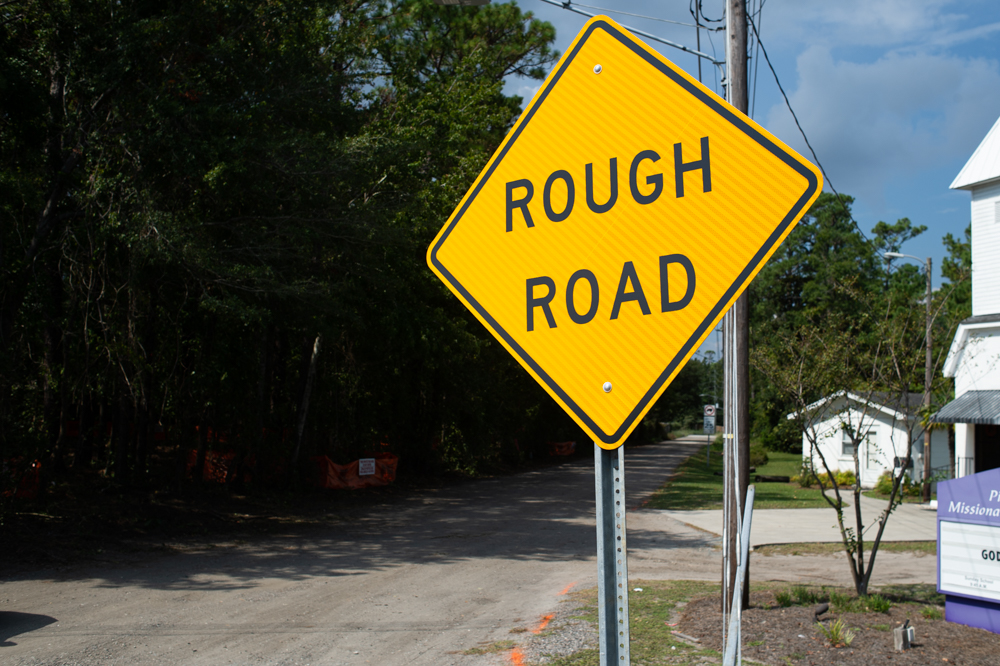
WILMINGTON — The city of Wilmington will receive $2.98 million from the NCDOT’s Powell Bill fund, used primarily for the resurfacing of streets within city limits.
The state has allocated a total of $147.5 million to 508 cities and towns across the state, $73.8 million of which was distributed Friday morning, according to an announcement from the NCDOT. Wilmington was set to receive $1.49 million of these funds, with another $1.49 million remaining in the second allocation scheduled for December 31.
The funds are also used to pay for construction, improvements, and repairs and maintenance of streets or any public thoroughfares such as bridges, drainage systems, curbs, and gutters. Additionally, the funds can go towards planning, construction, and maintenance of bikeways, greenways, and sidewalks.
RELATED: New Hanover County residences up for FEMA buyout using taxpayer money, public comment opens
“Funding provided through the Powell Bill helps cities and towns pay for needed repairs, maintenance and construction of their transportation network,” Transportation Secretary Jim Trogdon said.
The amount of the fund each municipality receives is based on a formula set by the N.C. General Assembly — 75% of it based on population and 25% based on total mileage of locally maintained roads. According to the NCDOT, Wilmington’s estimated annual population is 121,910 with 392 city-maintained miles.
A spokesperson did not respond in time of publication when asked how the city plans to use the funds. But through a four-year capital improvement project, it has projected a total cost of $25 million to address major thoroughfare needs, street maintenance and rehabilitation, sidewalk construction and repair, according to the current fiscal year’s budget. More than $2.2 million of that amount is allocated for the current fiscal year.
This includes $1.1 million for street rehabilitation, $488,000 for repairs to the surface coating of the Independence Boulevard screen wall, $200,000 for pedestrian and bike paths and sidewalks, and $22,780 for bridge repairs.
Municipal officials are legally responsible for the proper management of these funds and can be held personally liable for any unauthorized expenditures, according to the NCDOT.
Twenty-three cities are receiving at least $1 million, led by Charlotte at $20.5 million, which has a population of 852,992 and more than 2,500 miles of city-maintained roads. Raleigh was allocated $10.7 million, followed by Greensboro at $7.3 million, Winston-Salem at $6.3 million, Durham at $6.3 million, and Fayetteville at $5.2 million.
Other towns in the Wilmington area also received funds, which generally act as reimbursements for projects already included in municipal budgets. Leland was allocated a total of $534,281, followed by Carolina Beach ($183,667), Burgaw ($109, 281), Surf City ($80,266), Kure Beach ($64,970), Holly Ridge ($59,688), and Topsail Beach ($16,347).
The Powell Bill came into existence after a 15-year effort by the North Carolina League of Municipalities to force the state fund the building and maintenance of major city streets, which resulted in the passage of Senate Bill 120 in January 1951. The bill was signed by 38 state senators, including its main sponsor and namesake, Junius Powell of Whiteville. Governor William Scott then recommended an additional one-cent gasoline tax to fund the proposed measure, and the bill was introduced into the state’s general statutes in March 1951.
According to the American Petroleum Institute, the combined local, state, and federal gasoline tax rate in North Carolina in 2019 is 54.85 cents per gallon, the 14th highest rate in the nation. Of those taxes, 1.75 cents per gallon goes toward the Powell Bill fund.
