


A total solar eclipse is a rare and visually stunning celestial event and it’s not surprising that, in the years before modern scientific study, humanity assigned great importance to eclipses.
We know much more about the sun and the moon now, but the age of enlightenment hasn’t manage to dispel all the myths associated with eclipses. For the 2017 solar eclipse, NASA has released a list of “Eclipse Misconceptions.”
Here are some highlights:
-
The eclipse is not harmful to pregnant women or their fetuses.
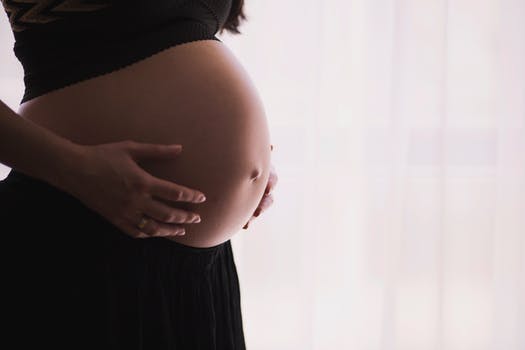
According to NASA, this misconception stems from what the agency calls the “false idea that harmful radiations are emitted during a total solar eclipse.”
The only radiation of note reaching the earth during an eclipse are neutrinos and, according to NASA, “(e)very second, your body is pelted by trillions of these neutrinos no matter if the sun is above or below the horizon. The only consequence is that every few minutes a few atoms in your body are transmuted into a different isotope by absorbing a neutrino. This is an entirely harmless effect and would not harm you, or if you are pregnant, the developing fetus.
Watch NASA live stream Eclipse 2017 from telescopes, high-altitude balloons and national parks
2. The eclipse will not spoil or poison food.

Another myth that, according to NASA, is frequently related to the idea that there is a mysterious radiation caused by the eclipse.
“The basic idea is that total solar eclipses are terrifying and their ghostly green coronae look frightening, so it is natural to want to make up fearful stories about them and look for coincidences among events around you,” the agency website read.
The agency’s website added this is misconception is sometimes the result of what it calls “confirmation bias,” the social phenomenon in which “we tend to remember all the occasions when two things happened together, but forget all of the other times when they did not.”
NASA gave the following example: “If someone is accidentally food-poisoned with potato salad during an eclipse, some might argue that the event was related to the eclipse itself even though hundreds of other people at the same location were not at all affected.”
3. The eclipse is not the harbinger of the end of the world.
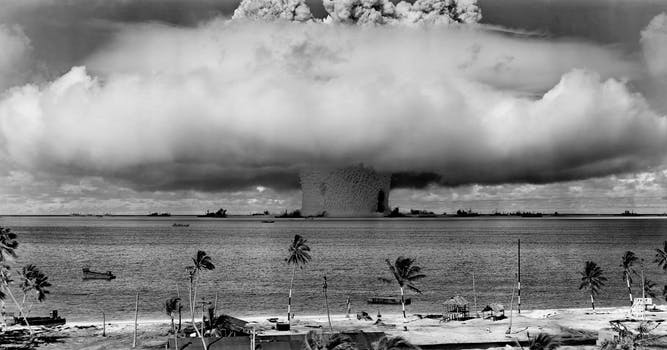
NASA also addresses more dire versions of confirmation bias. Instead of fearing that an eclipse might spoil a picnic, some people fear an eclipse might end the world, according to the agency.
According NASA, this fear has its roots in those historical moments when a eclipse occured at the same time as but unrelated to a historical calamity.
“For example in 763 B.C., early Assyrian records mention an eclipse in the same passage as an insurrection in the city of Ashur, now known as Qal’at Sherqat in Iraq, suggesting that the ancient people linked the two in their minds. Or when King Henry I of England, the son of William the Conqueror, died in A.D. 1133, the event coincided with a total solar eclipse,” the agency website read.
NASA added that it is easy to dispel confirmation bias, writing “With a little work you can also find numerous cases when something good happened!”
You can read NASA’s complete list of “Eclipse Misconceptions” here.More eclipse 2017 coverage
More eclipse 2017 coverage
- Advice from an eye doctor on viewing the eclipse safely
- No eclipse glasses? No problem, make your own pinhole projector (video)
- As eclipse nears, state agencies encourage driver safety on the roads
- Uh oh. Possible bad news for people planning to watch the 2017 eclipse in the Cape Fear
- The moon will cover the sun in August. And Wilmington will see most of it
