


WILMINGTON — Imagine being faced with a debilitating and fatal disease, one that almost nothing is known about, and strikes during childhood. It can be extremely difficult to fight back, let alone stay positive, in the face of overwhelming odds. But for the Swanson family, that’s exactly what they had to do.
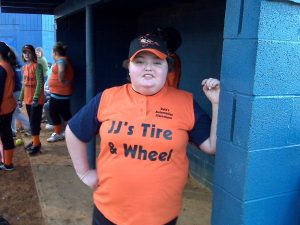
Haley Swanson was diagnosed with Dermatomyositis when she was 11 years old. Now 21, she spent much of her childhood and teen years being treated for this disease.
Dermatomyositis is an extremely rare autoimmune disorder, affecting as few as two in every one million children. Autoimmune disorders are diseases that cause the bodies immune system to attack its own cells and tissue. Although there is no cure, this family is fighting back through persistence and personal strength.
“The disease process itself is classified as autoimmune, meaning the body is attacking itself,” Katheryn Swanson, Haley’s mother said. “They’ve never identified a cause for the disease itself, they don’t know if it’s a viral link, a genetic link, or an environmental link because it’s so rare.”
The Juvenile Myositis (JM) group of diseases, including Dermatomyositisis (JDM), are characterized by weak muscles, and Dermatomyositis specifically carries with it a skin rash.
According to the Cure JM Foundation website, “The process that occurs when the immune system attacks healthy tissue is called inflammation. In JDM sufferers, the inflammation primarily occurs in the blood vessels that lie under the skin and in the muscles. With JPM, the attack is focused more directly against the muscle cells.”
It goes on to state that “This inflammation causes the weak muscles and, in the case of JDM, skin rashes. If blood vessels or muscle cells in other parts of the body are inflamed, other systems of the body can be affected, such as the digestive tract, heart and lungs.”
When Haley’s case first set in, the rash was so faint that Katheryn didn’t even notice that something was wrong. But when her own mother came to visit, she picked up on the rash, and was able to get her diagnosed relatively quickly. Typically it takes between 18 months and two years to receive a clear diagnosis, Haley’s took just six months.
If left untreated, the disease becomes extremely debilitating, often causing the victim to be unable to get out of bed.
“So, what dermatomyositis does is affect the skin and the muscle tissue, her legs can get weak, she cannot be in the sun. If she’s in the sun she has to wear SPF 50 or above, because the UV rays exacerbate her disease,” Swanson said. “Imagine being 11 years old when diagnosed, she’s now 21, and she really legitimately cannot be in the sun.”
Fighting on
Luckily, according to Katheryn, her daughter is nothing if not persistent.
“(With) Her current treatment she gets an infusion of IV medications two days every two weeks, and she is infused for about 5 hours each day,” Swanson said. “So, for 10 hours in two days she’s pretty well attached to an IV pole and not able to do much.”
Despite these lengthy treatments, and being diagnosed at such a young age, Haley fought on. She was able to finish middle and high school in public school.
“We got what they call a ‘special care plan,’ so, where they don’t allow rolling backpacks, she would be able to use one if she needed to. Or, she could have assistance getting to her classes if she needed to,” Swanson said. “But like I said, she was so strong willed, and so adamant about not letting this get her, that she never required any of those things.”
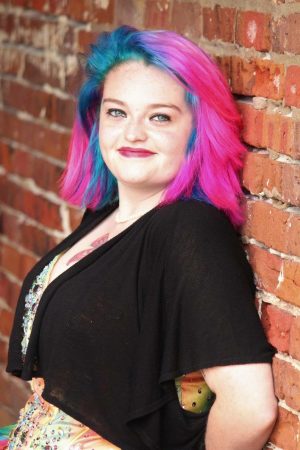
According to her mother, Haley is a very outgoing individual. Despite not being able to be outside as often as she may like, she was extremely involved in band, which helped her maintain the muscle strength needed to keep her going on her own.
“She is actually very active, and we think that’s probably why she’s done as well as far as the strength concerned,” Swanson said. “The physicians keep saying the more you use the muscle, the more it’s going to try to rebuild itself.”
Recently, Haley graduated from Brunswick Community College, where she studied to become a pharmacy technician. She was promptly hired at Walgreen’s, where Katheryn says she is “doing extremely well.”
“She really didn’t want to be anything in the medical field, with me being a nurse, and her dad being a paramedic her whole life,” Swanson said. “She really didn’t think she wanted anything in medicine, but this really seems to be her niche, she’s really good at it, and she really likes it.”
Through it all, Katheryn couldn’t be more proud of her daughter.
“She is a persistent person, but even more than that. I don’t even know what kind of word you’d say for a child like her who has been through as much as she has,” Swanson said. “Those first four years after her diagnosis, it was a constant battle. We’ve been to neurologists and cardiologists, because your heart and lungs are all muscle tissue. So those all have to be monitored while she’s acutely ill.”
“It has been tough journey,” Haley said. “I lost most of childhood. But I learned a lot about myself and I couldn’t have made it without those around me and pushing myself to continue.”
“The lyric I have tattooed on my arm says it well,” she went on. “Sick of being in my head, thinking about my fate, and worried about my health.”
Finding a Cure
The disease is so rare, it’s classified as an “orphan” disease. Meaning there is no federal, or really kind of funding to study it. Currently, there are no FDA approved drugs to treat the disease, meaning victims must be treated using alternative medications that may work. For a long time, Haley was being treated by medications used to help people with Rheumatoid Arthritis.
Families like the Swanson’s work closely with organizations like the “Cure JM Foundation,” to provide private funding for studies on the disease. According to Katheryn, they’re working very closely with the National Institute of Health in Washington D.C., and Duke University to secure some of these studies to find a root, and cure, for this disease.
For more information, or to find out how you can help, visit curejm.org.
