


It’s a scenario Joel Clem hopes his marine technology students at Cape Fear Community College will never be faced with at sea.
But should they need to abandon ship, he wants them to be ready.
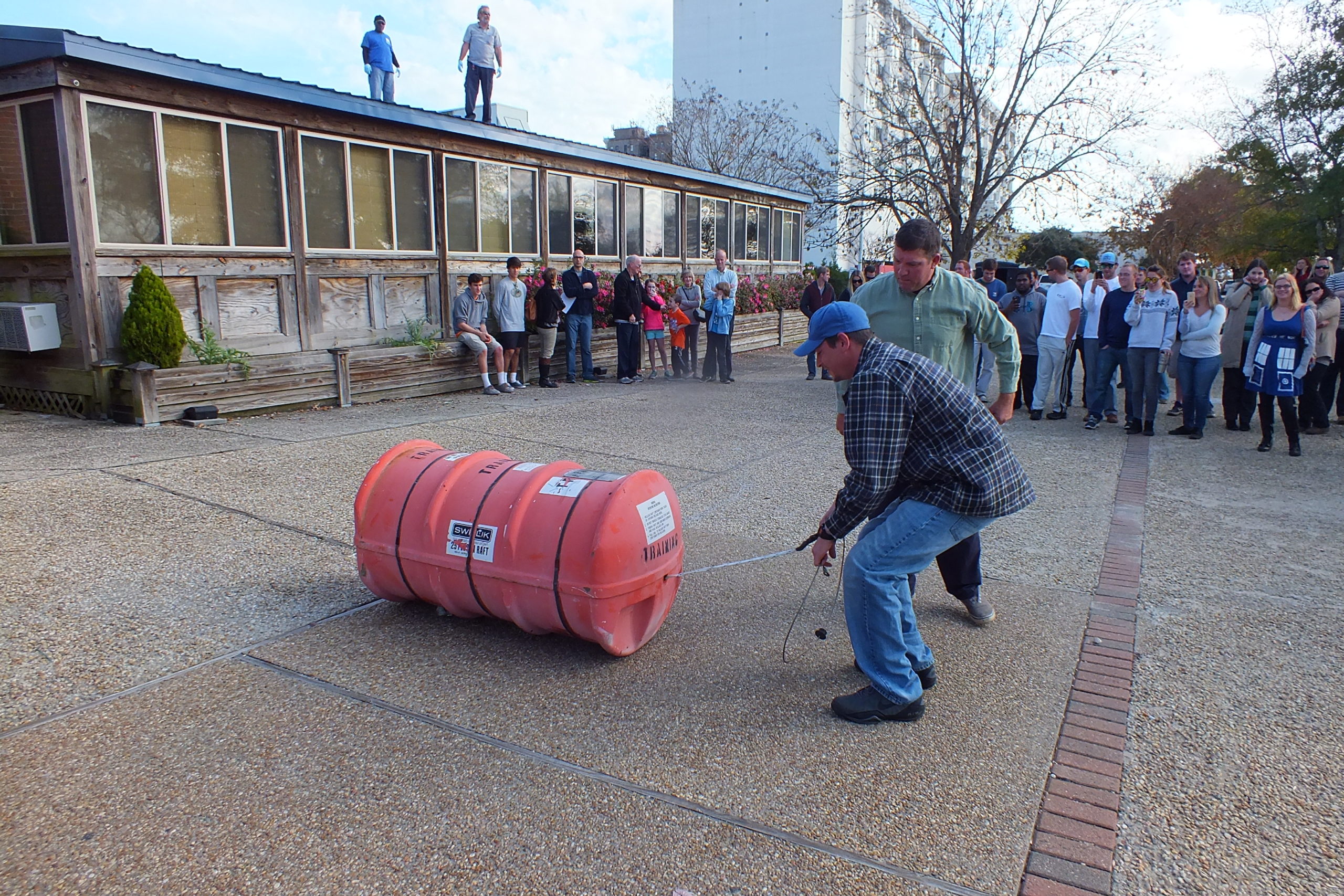
Last week, Clem’s first-year class got a chance to practice setting up a 25-person raft, the same kind of life-saving equipment aboard the college’s research vessel, Cape Hatteras.
“It’s very rare that students get to see a life raft deployed unless it’s an emergency,” Clem said. “I want to get hands on. I hope they never have to use it but if they do, at least they’ll be familiar with it.”
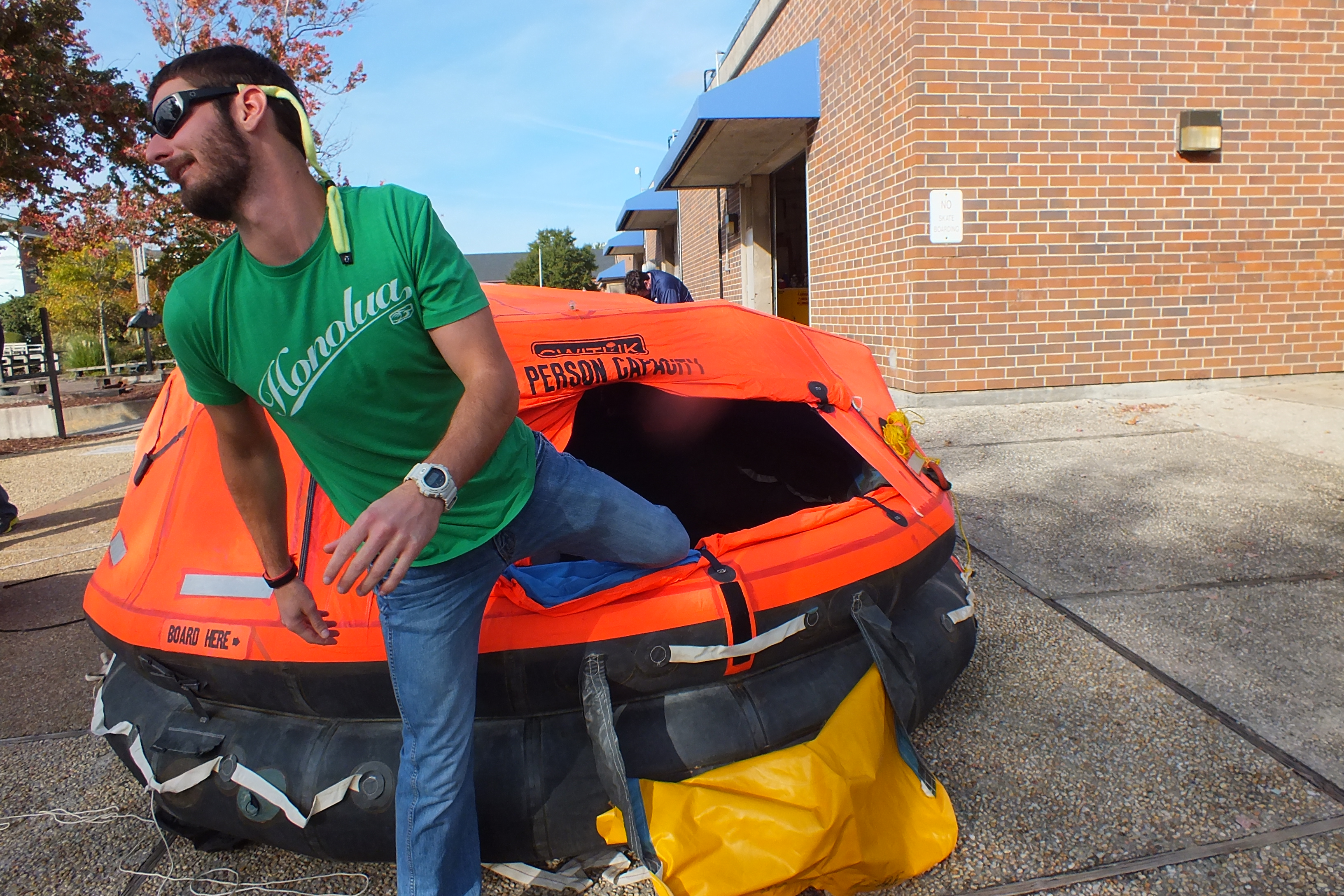
In a parking lot behind the marine technology building, students lit signaling flares before pulling the 130-foot cord to the raft, which is stored in a large metal barrel and inflates in about 30 seconds. In a true emergency, the raft would also have blankets, food, a desalinization kit and first aid supplies, among other survival tools.
“You’d hate to be in that situation, but you’d have a lot of gear with you,” Clem noted.
Clem’s small boat handling course is part of the two-year marine technology program’s curricula. Students enrolled in the program spend a total of 32 days at sea on training voyages and other trips, traveling north to Baltimore, Maryland and south to Nassau, Bahamas.
“This is invaluable,” Anthony Maher, who graduates the program in December, said of the life raft exercise. “You see those orange containers on the boat all the time but to actually see them inflate and see all the things that come with it, hopefully it would help you not to panic if you ever needed it.”
Click here to see a video of the raft deployment.
Hilary Snow is a reporter at Port City Daily. Reach her at [email protected].
