


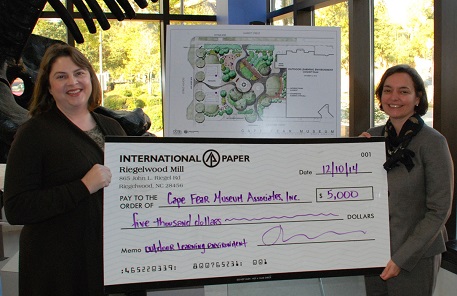
Cape Fear Museum has been awarded two grants that will go toward development of its outdoor learning environment project.
The museum recently received a $5,000 grant from International Paper’s Riegelwood Mill and the International Paper Foundation to assist with interpretive signage for the environment, which the museum plans to open next summer.
The grant adds to funds previously received from the Cape Fear Garden Club, which awarded a $12,000 grant in November that will assist with landscaping for the environment.
The museum is redesigning its parking lot and grounds to create a walk-through, interpretive entrance to the museum that will educate visitors about the area’s ecosystem and its impacts over time. The project will use signage, native plantings, maritime artifacts and hands-on activities to encourage visitors to think about how science and history intersect, in keeping with the museum’s history and science focus.
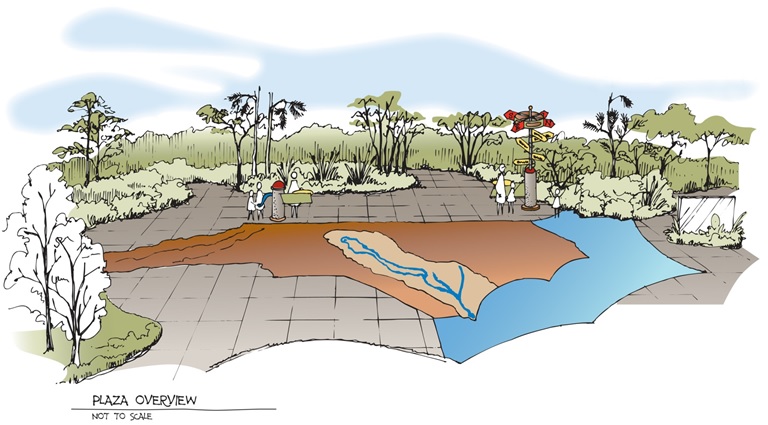
International Paper’s donation will help fund interpretive signs featuring a mix of photographs, illustrations, maps and words, the museum said in a release. Exhibits Manager Adrienne Garwood, who is quoted in the release, said the museum has plans for several creative and informative signs and hands-on opportunities.
“This generous award from International Paper will help us provide visitors with a high quality experience,” Garwood said.
The garden club’s grant will help the museum use a xeriscaping approach for the environment’s landscaping. The approach uses water-conscious techniques and landscapes that require little maintenance.
“We are very appreciative to receive the full amount of funding requested from the Cape Fear Garden Club,” Garwood said. “We take this generous award as recognition, acknowledging the (outdoor learning environment) as a project anchored in providing interesting, regional information about native and adapted plants.
“We hope this will serve to pique the interests and engage locals and tourists alike,” she said.
The grants add to $500,000 allocated for the project from a voter-approved bond referendum in 2006.
Related story: Museum seeks to transform grounds into educational ‘mini-park’
