


The Wilmington Planning Commission didn’t immediately raise a glass to a proposal accommodating the craft brewing industry Wednesday.
With one member’s concerns about breweries’ potential impacts on Wilmington’s downtown, the commission that night withheld action on a set of regulations meant to work specifically with beer-makers, who currently aren’t recognized at all in the development code.
Just how to properly regulate them was the question.
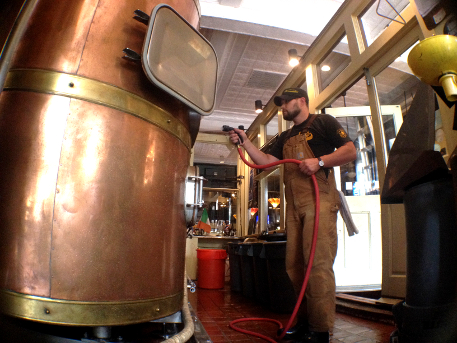
“A 25,000 square foot microbrewery could conceivably brew 20-25,000 barrels per year, which is quite a substantial amount of tractor-trailer traffic,” observed commission member Bruce McGuire.
That was in criticism of the city’s proposal to define and regulate breweries by square footage, not their output of product.
A microbrewery, which would be allowed downtown, would have to keep its footprint at 25,000 square feet or less; a regional craft brewery would have a 75,000-square-foot limit, the city’s planning staff proposes.
Phil Prete, a senior planner with the city, explained square footage is something the city can regulate; it wouldn’t have the capability to monitor how much beer breweries are making. He also noted the limited amount of downtown properties that could host such operations, anyway.
All the same, McGuire opined that microbreweries should have to go through a special-use permit process allowing the owners of neighboring properties to weigh in with any concerns they might have, case by case. That, or the city should impose some other protection for property owners.
But support for the overall proposal itself has dominated recent meetings, including a public hearing at Wednesday’s planning commission session.
Background: City discusses accommodations for craft brewing scene
Patrick Doherty, broker for Carolina Commercial, said he knew of breweries that wanted to make Wilmington their home but couldn’t find any suitable locations under current regulations.
That meant lost opportunity with a “massive array” of jobs, both blue and white collar, he said.
Phil Jewett, who moved here from New Hampshire four years ago, said he’s a former brewery owner who would love to establish a new facility in the Port City.
“Craft beer is jobs,” he told the planning commission Wednesday. “Craft beer represents a huge influx of tourism dollars, and I think it would be a big mistake not to pass this as it is.”
Under existing regulations, brewers here are slotted into mismatched categories–as manufacturing facilities, restaurants or nightclubs, each of which carry different and sometimes problematic implications, including restrictions on where they can locate. Good Vibes Brewing on N. Second Street, for one, is on paper as a nightclub because that’s the closest fit–despite being a total misidentification.
What the city proposes is to amend its development code with specific definitions for microbreweries and regional craft breweries and list different parts of the city where they may operate.
Primarily residential areas wouldn’t be on that list, but mixed-use and commercial areas would. The Central Business District (CBD), which includes the heart of downtown, would accommodate microbreweries, though only the outer fringes of the CBD would allow the bigger, regional craft breweries.
(Large-scale breweries–think Anheuser-Busch–would be treated as manufacturing operations subject to industrial requirements, which is no change from how the city would handle them currently.)
“In the past year or so, a number of brewers have expressed interest in either opening or expanding a brewery in Wilmington,” said Prete. “They’ve all run into some type of confusion or issues just trying to get clarification as to where they could operate and where they couldn’t.”
He also said the craft beer crowd can be distinguished from weekend boozers. It’s higher-class and higher-cost, and based on appreciation, he said.
Doherty backed that up Wednesday.
“In many cases, these are artisans,” he told the planning commission. “The craft brewing industry is very similar to that of the wine industry in the late ’80s and early ’90s. When you go to visit a winery, it’s not a party time, it’s not a nightclub scene. It’s an education environment to learn about the product that you’re buying…”
McGuire said he applauded the opportunities, but just wanted to make certain the city’s regulations are protective.
The commission will hold a work session to go over the proposal and could take action at its next regular meeting, Aug. 6.
It would then head to the city council for approval.
Ben Brown is a news reporter at Port City Daily. Reach him at[email protected] or (910) 772-6335. On Twitter:@benbrownmedia
