


One potential growth strategy for Wilmington: “Identify and create incentives for the conversion of old industrial buildings to new employment and housing uses.”
That one got a green dot.
Another: “Introduce big-box and chain retail [downtown] with context-sensitive development.”
That one had red dots all over it.
Green good; red bad.
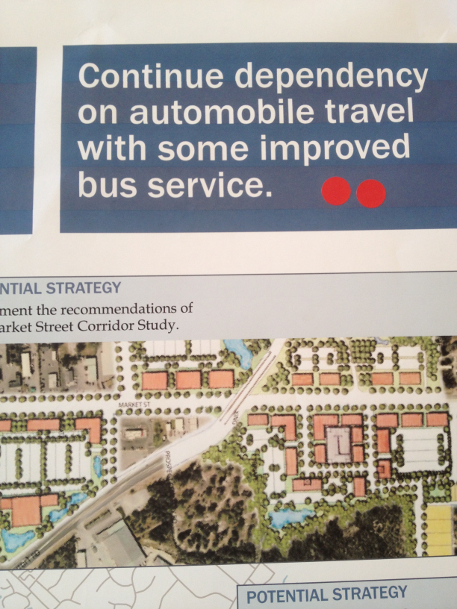
Residents at an idea-session arranged by city planners Wednesday were asked to either endorse (with green stickers) or disapprove of (with red) dozens of varying development concepts Wilmington might want to consider as population continues to increase over limited space.
As reported numerous times since the city began developing a comprehensive future growth plan last year, the U.S. Census Bureau is projecting nearly 60,000 new residents in Wilmington’s limits by 2040. The city doesn’t have anywhere near the acreage needed to accommodate them all under traditional development standards. That means something’s got to give.
Wednesday at Halyburton Park, residents filtered into the community building to the sight of several “potential strategies” tacked up on walls. It was up to them to decide what was worth pursuing.
“How should we grow? Where should the growth occur? And what should that growth look like?” city planner Brian Chambers posed.
“Encourage mixed-use development at the gateways of Dawson/Wooster at 3rd and 17th streets,” read one potential strategy.
A gentleman stuck a green dot to it.
“Develop more full-block, single-use buildings in the Northern Riverfront,” said another.
Red dot.
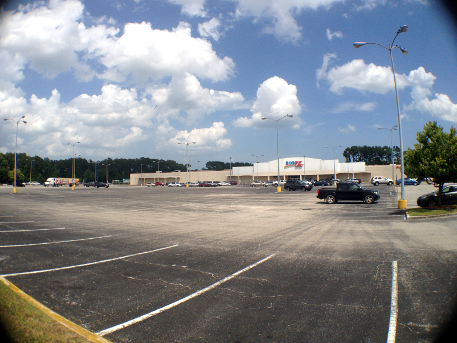
As residents quickly red-dotted the downtown big-box-store idea, Chambers said that’s a reaction deserving further investigation.
Either these residents are picturing a standard, bulky Target or Best Buy bigfooting the landscape (which is not what the strategy recommends), or they don’t want such mainstream business competing with downtown’s many mom-and-pop establishments, he speculated.
“That’s what we’re going to have to look at a little more. If it’s the latter, that’s a legitimate concern,” Chambers said, noting Wednesday’s event was just another step in gathering input for the city’s long-term comprehensive growth plan, which is resident-driven.
Past story: Wilmingtonians list the city’s best, less desirable qualities for comprehensive plan
All of the potential strategies up for scrutiny Wednesday were formed from public suggestions the city has gathered since last year, when it started developing the plan.
It will be the guiding document for local policy-makers, noted Allen Davis, the city’s urban designer. He told residents Wednesday that the city’s regulations may be updated to accommodate the kinds of development or stewardship Wilmingtonians want to see.
The full list of potential strategies will soon be made available, incrementally, on the city’s feedback site, connectwilmington.org.
“You can spend as much time as you want commenting on each of these visions for future growth,” Chambers said.
Priorities
At least 7,200 public comments are on file currently regarding the plan, according to the city. More than 700 residents filed theirs in person during a recently wrapped series of neighborhood meetings the city’s planning team began last year.
Tallied up, the city was able to determine residents’ top-20 priorities, with more crosswalks, sidewalks and bike accommodations the number-one demand. The following four:
- “Natural areas, trails, trees and open spaces”
- “Residential character and family atmosphere”
- “More parks and recreation opportunities”
- “Traffic calming within neighborhoods”
Responding to a reporter’s question Wednesday, Davis said the process has also brought out a number of people who simply don’t want Wilmington–or at least the neighborhoods they live in–to change much at all.
“It’s about half and half,” he said.
Past story: Pine Valley crowd weighs in on future of neighborhood, city as a whole
Residents at the Halyburton Park community center, via sticky notes posted to maps, denoted several areas they said should remain undeveloped. They also suggested the city do all it can to preserve a quaint, small-town quality.
But “that ship may have sailed,” said Tyler Newman, senior governmental affairs director for a Wilmington-based group called N.C. Business Alliance for a Sound Economy, who was at Wednesday’s input session. People of all ages want to live in Wilmington, thus the growth-versus-space issue, Newman noted.
“As a community, the task in front of us is how to accommodate them with housing, transportation and jobs,” he said. “Folks wanting to invest in the community seems like a great ‘problem’ to have.”
Related reading:
College students discuss city’s character, future; outreach series continues
Public input summary shows Wilmingtonians’ priorities
Wilmington, growing quickly to its limits, ponders numbers with ideas for change
Wilmingtonians list the city’s best, less desirable qualities for comprehensive plan
Wilmington’s future: inward and upward
Ben Brown is a news reporter at Port City Daily. Reach him at [email protected] or (910) 772-6335. On Twitter: @benbrownmedia
