


The New Hanover County Board of Elections wants an investigation into the apparently fraudulent robocalls of the primary elections here.
“At a minimum, somebody tried to play a huge practical joke on the voters. That’s the way I look at it,” Chairman John Ferrante said Monday. “And at its worst case, there may have been violations of law and even attempts to suppress votes.”
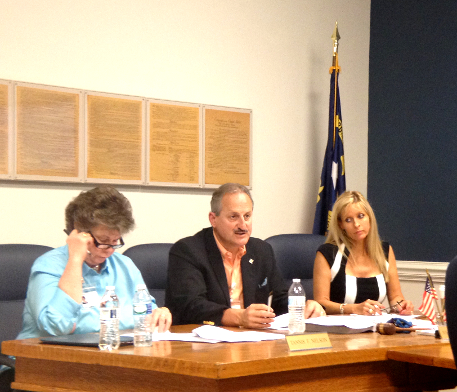
At a board meeting this afternoon, Ferrante distributed a statement that his board plans to gather evidence and communicate with authorities including the N.C. State Board of Elections and the offices of the district attorney and state attorney general.
“Robo-Calls have the potential to confuse voters, to diminish the integrity of elections and in some cases to suppress voter participation,” his statement read. “The Board takes this situation very seriously and is committed to using available resources not to pre-judge but instead to determine the origin of the Robo-Calls, those responsible for them and whether North Carolina law might have been violated.”
Story: White wants action against apparent robocall fraudster
Port City Daily readers and complaints received by New Hanover County’s government described automated calls on and before May 6–primary election day–from someone claiming to be County Commissioner Brian Berger. The familiar voice encouraged votes for then-congressional-candidate Woody White (currently the chairman of the county commission) and N.C. Senate candidate Michael Lee. Some caller IDs displayed a number that suggested the county government was its source; others displayed “Brian Berger.”
County government offices received complaints in the hundreds, spokesman Charles Smith said. To Ferrante, that indicated thousands of robocalls went out (though he said he was not a recipient).
Story: County says ‘Berger’ robocalls not originating from government
The county was quick to say it was not the source of the calls, as did the candidates mentioned. Port City Daily was not successful in reaching Berger for comment.
Officials supposed the offending party used some sort of system that can mask a call’s source with a phony one.
Board of Elections member Tannis Nelson emphasized Monday that, despite surface evidence, it’s uncertain who arranged or conducted the phoning.
“Was that individual who made the call who he said he was?” Nelson posed.
In North Carolina, robocalls are dealt with under a statute regulating automated dialing and recorded message players. It forbids unsolicited robocalls unless a number of criteria are met, like if the caller is a tax-exempt organization, a political party or candidate, a governmental official, or a company conducting an opinion poll. The person making the call must clearly identify his or her name and contact info.
For Ferrante, it’s a chipping-away search for the truth.
“All you can deal with are the facts as they are,” he said. “We have a report, it appears to be a certain person, [and] certain records could prove that or not prove that. There’s got to be a vendor that did it, right? Well, the vendor is [legally] required to keep records for 24 months…. We’ll see.”
Ben Brown is a news reporter at Port City Daily. Reach him at [email protected] or (910) 772-6335. On Twitter: @benbrownmedia
